




















Search
Evolutionary Biology

23mins
Brian Cox examines why, despite billions of stars and trillions of planets, we have found no evidence of other intelligent life.

1hr 51mins
Stoicism has been flattened into slogans about toughness, detachment, and emotional silence, a version that’s easy to sell, but mostly wrong. Massimo Pigliucci returns Stoicism to its original purpose: a […]

54mins
“How can all the diversity and, sort of, seeming order that's out there in the world emerge from a process dependent upon chance?”
12mins
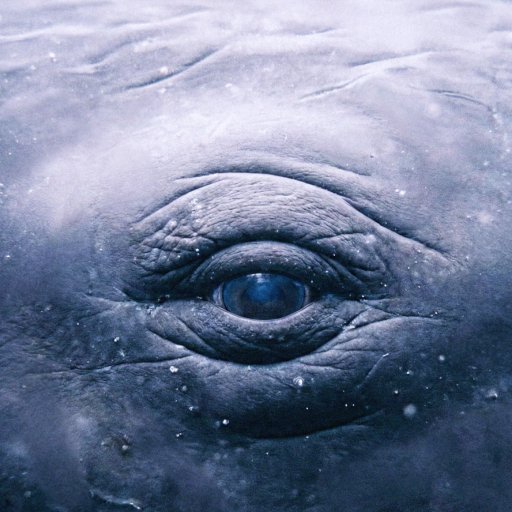
Ninety million years after our lineages split, humans are beginning to listen to whales in a new way. Marine biologist David Gruber shares the work that has become his life’s pursuit: learning how to hear the planet’s largest mammals.

13mins
“Chance invents and natural selection propagates that chance invention.”
3mins
Biologist Tyler Volk PhD, psychiatrist Bruce Greyson MD, and palliative care physician BJ Miller MD, reveal how confronting mortality can improve the way we live.
Unlikely Collaborators

1hr 13mins
“Nothing about human behavior makes sense except in the light of culture and in anthropology, and we need to understand the cultural component to our behaviors as well.”

7mins
“The idea of evolution by natural selection is, for me, probably the most beautiful idea in biology.”
2mins
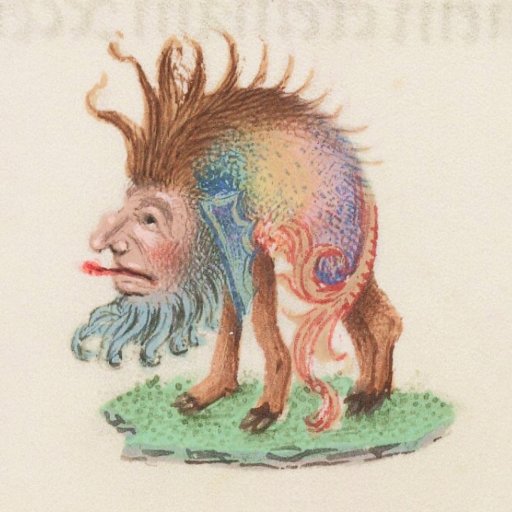
The ocean is evolving, and it’s not based on the ‘survival of the fittest.’ Astrobiologist Betül Kaçar explains how it’s not competition that has kept the ocean alive, but collaboration.
Why do we fall in love with one person over another? The late biological anthropologist Dr. Helen Fisher unpacks the evolutionary roots of romantic love, sex, and attachment. Using research […]

43mins
"If we're related to every living thing on the planet, do we not have a special responsibility for every living thing on this planet? They are really all our relatives."

1hr 11mins
“It's a remarkable series of events that were required for us to be here, and that so many things could have happened in a different way that we wouldn't be here at all, both individually, and as a species.”

13mins
What can you do to support your health during menopause? “If exercise were a drug, that would be the one thing that we would be giving to everybody.”

3mins
How do scientists measure and define life in the natural world? Dr. Lee Cronin gives us a definition, in 4 minutes:

3mins
Don’t fall into the determinism trap. Everything is, in fact, random, says chemist Lee Cronin:

7mins
“The physics of the universe doesn't predict the emergence of biology.” Glasgow chemist Lee Cronin explains how inanimate matter becomes evolutionary:

24mins
“It’s remarkable how weak the correlation between success and intelligence is.” Here’s what skills do matter, from 3 business experts.

2mins
“We wouldn’t be able to talk about minerals if it weren’t for the minerals themselves.” Mineralogist Bob Hazen explains how Earth’s rocks can teach us about our planet’s technicolor history.

3mins
The mind-blowing theory that everything is evolving—from minerals to music—explained in 3 minutes by a Carnegie scientist.

10mins
“We control nothing but influence everything.” Political scientist Brian Klaas on how every decision we make - both massive and miniscule - shapes our futures.

7mins
“We could be wrong. But if we are right, it’s profoundly important.” Leading mineralogist Dr. Robert Hazen on the missing law of nature that could explain why life emerges.
John Templeton Foundation

3mins
Journalist Steven Kotler on digital immortality and the tech that could keep us “alive,” forever.

11mins
Humanity has two giant collisions to thank for its existence, explains biologist Sean B. Carroll.

6mins
Physicist Sean Carroll on entropy, complexity, and the origins of life:

11mins
“Forget about essences.” Philosopher Daniel Dennett on how modern-day philosophers should be more collaborative with scientists if they want to make revolutionary developments in their fields.

42mins
The Santa Fe Institute is a cradle of modern research. Our host Kmele meets some of the brilliant minds who work there.

4mins
How do “you” emerge from a collection of cells? A biologist explains.
5mins
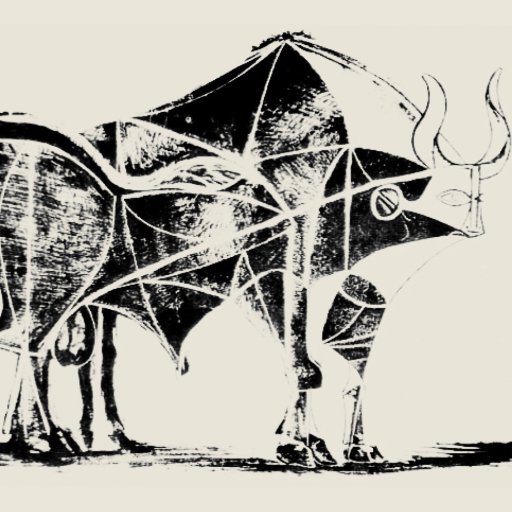
Evolution doesn’t fix things — it reinvents them. A biologist explains.
John Templeton Foundation

8mins
We know that humans are an intelligent species. But this biologist breaks down the intelligence of each of our cells — and it will blow your mind.

7mins
Plato and Carl Sagan were wrong about the human brain, says a top neuroscientist.