




















Search
Exoplanet Research

One book will gather all topics on the search for life in the Cosmos.

No planet enters retrograde more frequently than Mercury, which does so 3-4 times each year. Here’s the scientific explanation for why.

Remembering Frank Drake, who transformed the search for alien life & extraterrestrial intelligence into a full-fledged scientific endeavor.

Should we be searching for life on other planets, or technology?

Unless you have a critical mass of heavy elements when your star first forms, planets, including rocky ones, are practically impossible.

There's an extremely good chance that there is, or at least was, life on Mars. But is it native to Mars, or did it originate from Earth?

With a telescope at just the right distance from the Sun, we could use its gravity to enhance and magnify a potentially inhabited planet.

Astronomy's roots rest in the very origins of humanity. We have always looked to the skies for answers. We are starting to get them.
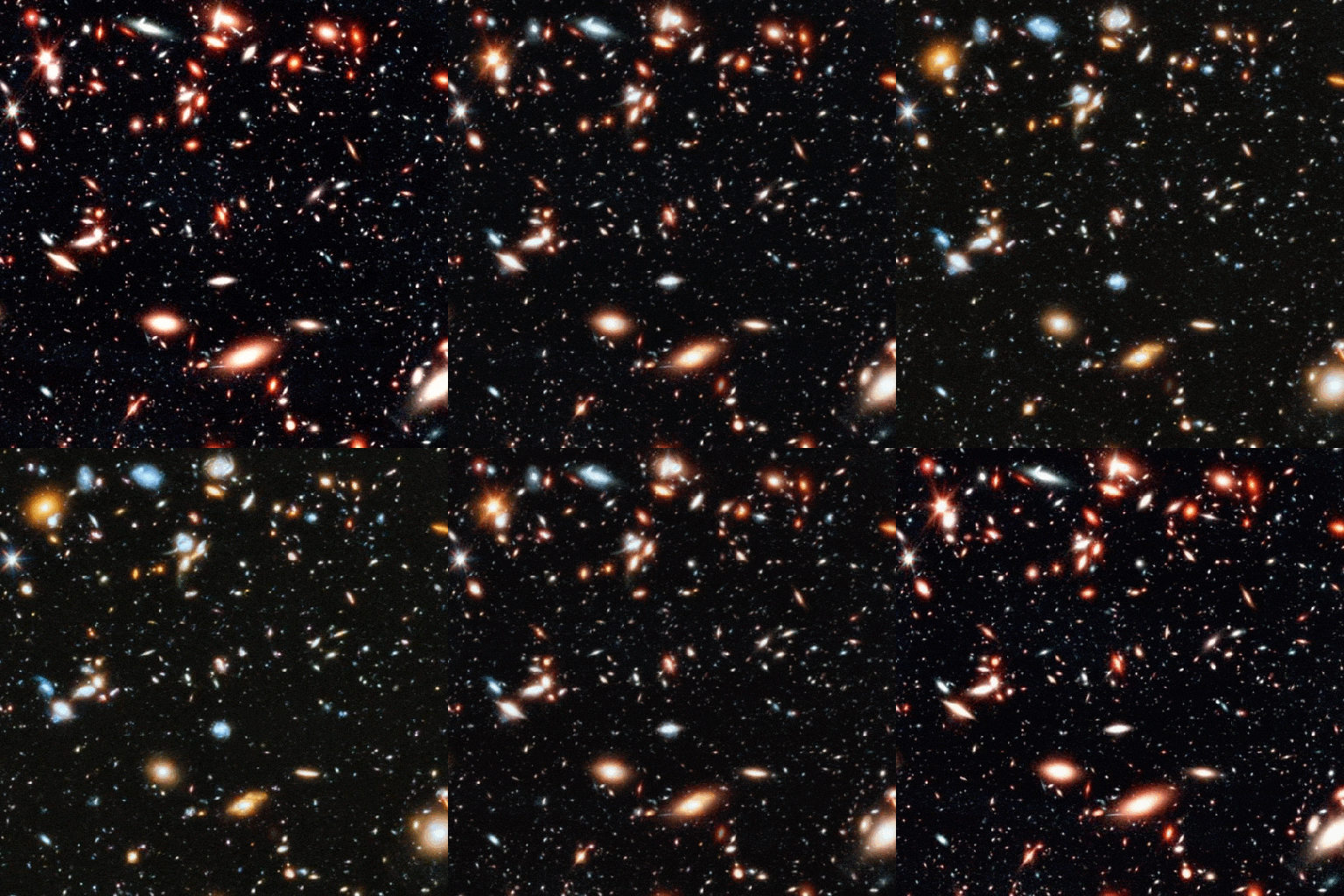
The James Webb Space Telescope has chosen 5 targets for its first science release. Here's what we know on the eve of JWST's big reveal!

On Earth, carbon can form millions of compounds, while silicon is largely stuck inside rocks. But elsewhere, silicon could form the basis of life.

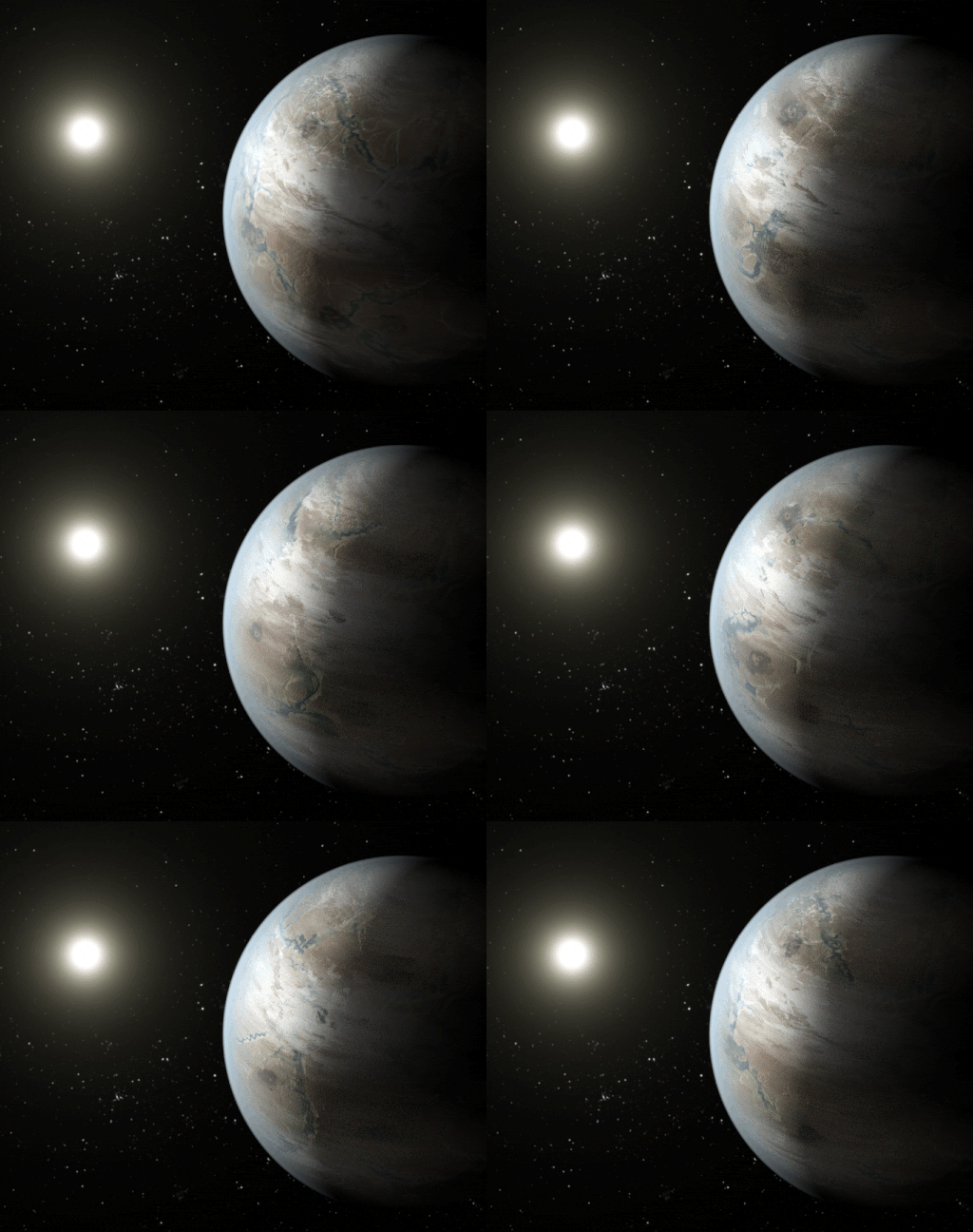
There are billions of potentially inhabited planets in the Milky Way alone. Here's how NASA will at last discover and measure them.

On July 12, 2022, JWST will release its first science images. Here are 5 ways the telescope's findings could change science forever.

Some astrobiologists believe life is rare, while others believe it is common in the Universe. How can we find out which view is correct?
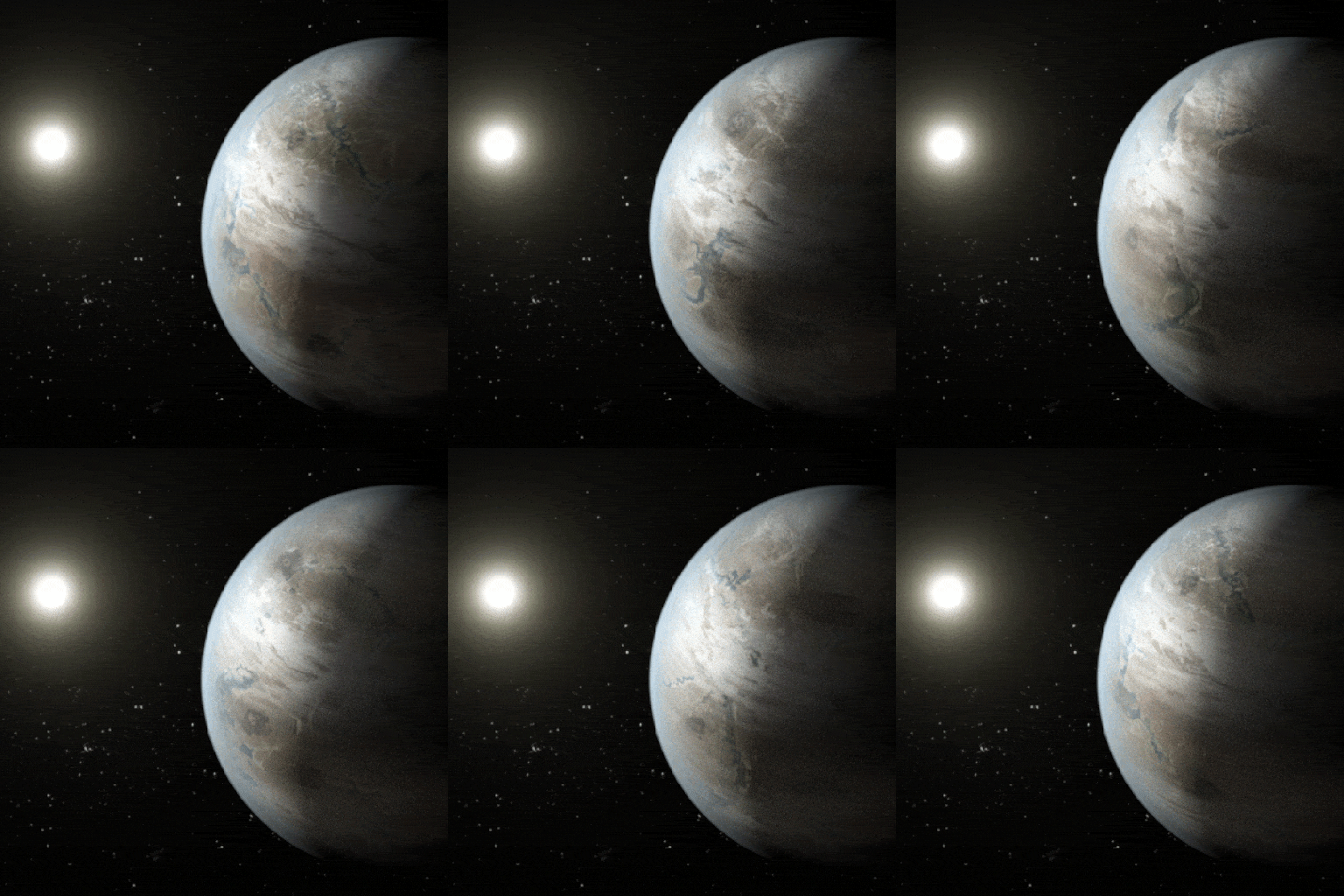
If there are human-sized creatures walking around on other planets, would we be able to view them directly?

There are pros and cons to sending interstellar messages to aliens that may or may not exist.

The story of how Jupiter, Saturn, Uranus and Neptune were made isn't a universal one. Some gas giants were built different.

The closest star system to Earth, just over 4 light-years away, has three stars and at least one Earth-sized planet. Is it time to go there?

In 1990, we only knew of the planets in our own Solar System. Today, the exoplanet count is more than 5000. Here's what we've learned.

There's a limit to how large planets can be, and it's only about double the radius of Jupiter. At least, so far.

Once science operations begin for James Webb, we'll never look at the Universe the same way again. Here's what everyone should know.

There really might be extraterrestrials out there, attempting to make contact. Here's how science, not fiction, is attempting to find them.

In terms of the planets we've discovered, super-Earths are by far the most common. What does that mean for the Universe?

In 1990, we only knew of the ones in our Solar System. Today, we know of thousands, and that's just the tip of the iceberg.

The search for worlds outside our solar system has just turned up a planet, TOI-2257 b, with a truly extreme orbit.

The boiling new world, which zips around its star at ultraclose range, is among the lightest exoplanets found to date.

Life arose on Earth very early on. After a few billion years, here we are: intelligent and technologically advanced. Where's everyone else?

A newly discovered “ultrahot Jupiter” has the shortest orbit of any known gas giant.

From hellishly hot planets to water worlds, some distant planets are like nothing in our Solar System.
Finding out we're not alone in the Universe would fundamentally change everything. Here's how we could do it.