




















Search
Galaxy Formation

With no other galaxies in its vicinity for ~100 million light-years in all directions, it's as isolated and lonely as a galaxy can be.

Archaeologists can learn how societies lived by studying what they left behind when they died. Astronomers are doing much the same thing.

The standard model of cosmology has a big new problem: Some galaxies seem to be too old.

These high-mass, rapidly star-forming galaxies have called modern cosmology into question. But hi-res simulations show no tension at all.

The best evidence for dark matter is astrophysical and indirect. Do new lensing observations point to ultra-light, wave-like dark matter?

Finding out how the Universe grew up was the biggest science goal of JWST. This ultra-early proto-galaxy cluster is one amazing discovery.

What would become the Big Bang model started from a crucial idea: that the young Universe was denser and hotter.

With infrared capabilities and image sharpness far beyond Hubble's limits, JWST looked at Hubble's deepest field, revealing so much more.

Many galaxies really are ultra-distant, but some are just intrinsically red or dusty. Only with spectroscopy can JWST tell which is which.

Speeding through the Universe and leaving a wake of new stars, this runaway supermassive black hole is likely the first among thousands.


A fascinating 90 minute podcast between Dr. Ivanna Escala and Ethan Siegel on Starts With A Bang!

Along with gravitational lensing and ALMA's incredible long-wavelength spectroscopy, JWST is reshaping our view of the early Universe.

Most globular clusters appear to form their stars all at once, but there are exceptions. JWST just observed how "second formations" happen.

Human beings are tiny creatures compared to the 92 billion light-year wide observable Universe. How can we comprehend such large scales?

JWST has seen more distant galaxies than any other observatory, ever. But many candidates for "most distant of all" are likely impostors.

Though a single measurement is not enough to definitively decide the debate, this is a major win for dark matter proponents.


2022 was a year full of scientific discoveries and the dawn of the JWST. But Hubble's still going after 32 years. Here's the amazing proof!

Leaving Hubble in the dust, JWST has officially seen a galaxy from just 320 million years after the Big Bang: at just 2.3% its current age.

By studying the dwarf galaxy Wolf-Lundmark-Melotte ~3 million light-years away, JWST reveals the Universe's star-forming history firsthand.

It's rare that one single image packs so much beauty and science simultaneously. This Hubble view of a nearby star-forming region has both.

Supermassive black holes at the centers of galaxies gobble up whatever matter ventures too close, becoming active. Here's how they work.

We're used to scientists telling us about the math and physics behind astronomical events. But what does studying space make us feel?
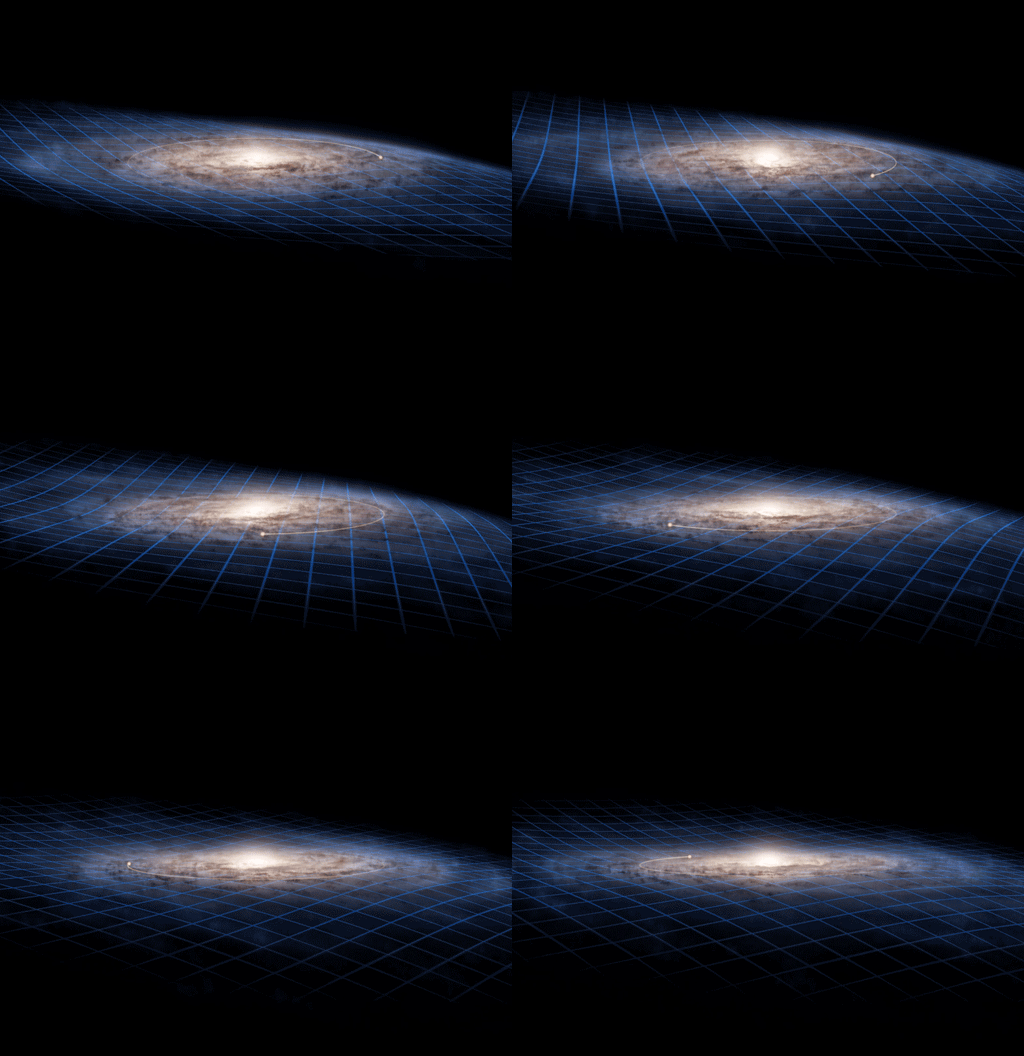
The Universe begins with negligible amounts of angular momentum, which is always conserved. So why do planets, stars, and galaxies all spin?
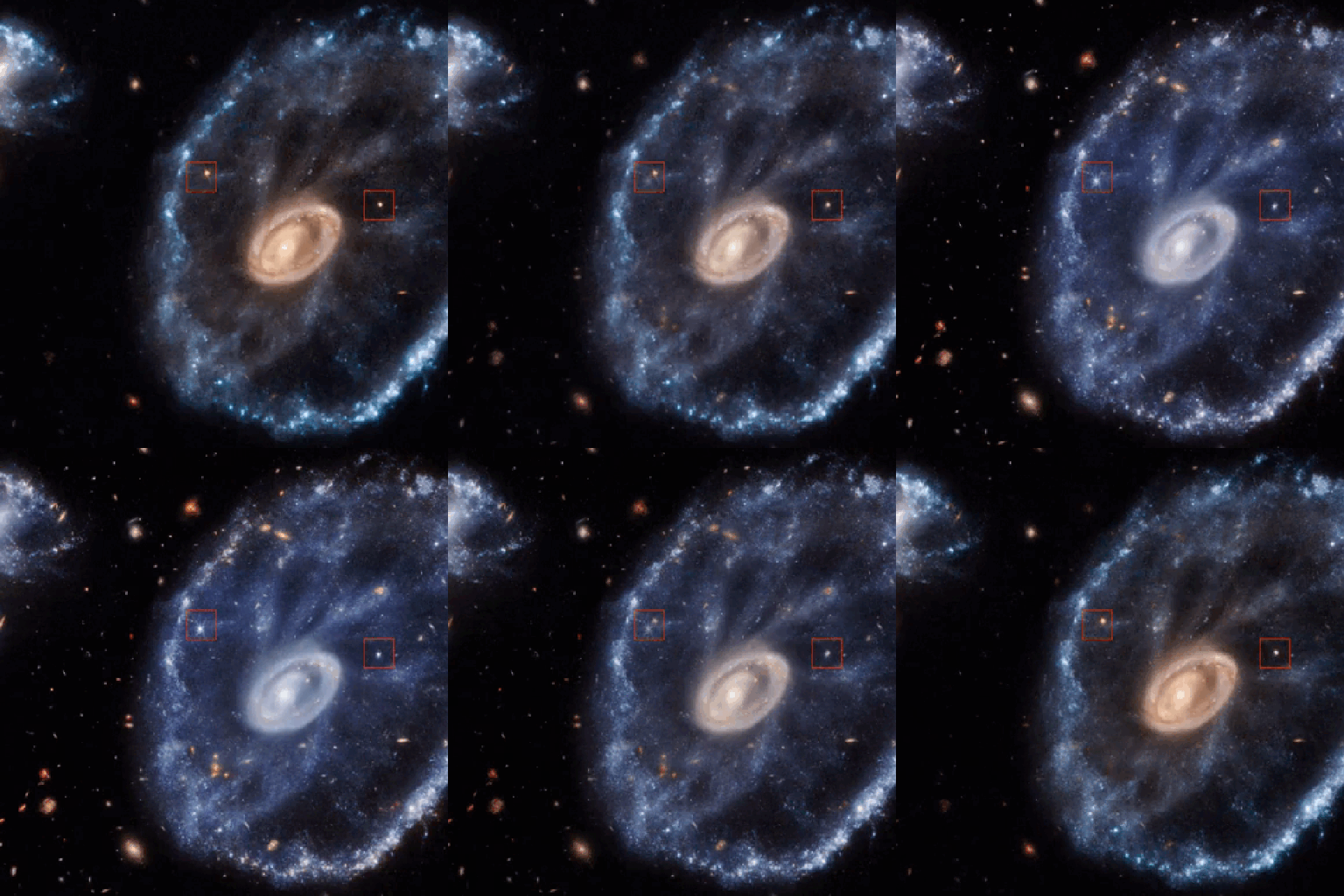
The first set of James Webb's images blew us all away. In just 2 mere months, it's seen highlights that no one could have predicted.

From black holes to dark energy to chances for life in the Universe, our cosmic journey to understand it all is just getting started.

Unexpected images of galaxies from the James Webb Space Telescope do not disprove the Big Bang. There are other likelier explanations.

Hubble revolutionized astronomy more than once. Here's what we can expect from the James Webb Space Telescope.

We knew we'd find galaxies unlike any seen before in its first deep-field image. But the other images hold secrets even more profound.