




















Search
History and Society

1hr 18mins
“Everyone's image of [Ancient Rome] is based on modern movies. In some ways, I think those were rather impressive, but they got some things terribly wrong.”
14mins
If you’ve gotten goosebumps when hearing a story about a stranger’s selfless heroism, or you’ve felt your chest swell at a concert, when the audience’s voice and the musician’s instruments align, you have felt awe. And, according to professor Dacher Keltner, who has spent his life studying it, it’s one of humankind’s most unifying traits:

15mins
"We're living in an extraordinary moment in history. We are at a moment here in 2025 where we have world historic game-changing technologies now starting to scale."

16mins
“No matter what their gods were, what they did for a living, what they wore, the songs they sang, everything varies except love, and everybody loves.”

16mins
“As a reporter, you can look into the eyes of the people you're talking to and try to evaluate what they're thinking when they say what they say. But you are not really gonna get into their brain. There's only one artistic form that allows you to do that. “

2mins
When Jesus was crucified, it led to even more followers. When books are banned, people flock to read them. Humans are fascinated by the forbidden, which is why censorship – especially in the digital age – doesn’t work. Jacob Mchangama explains.

15mins
“This is a world in which we've essentially given ourselves the tools to stop the construction of the most important product in American lives in the places where Americans often most want to move.”
2mins
Free speech may be messy, but censorship is deadly. Founder of The Future of Free Speech Jacob Mchangama explains.
6mins
Free speech can amplify hatred, but it also protects the fight against it. Founder of The Future of Free Speech Jacob Mchangama explains.

1hr 37mins
“A lot of the trends in the economy, in family life have just been much harder for working class men.”

7mins
“The idea of evolution by natural selection is, for me, probably the most beautiful idea in biology.”
3mins
Humans have always had religion. What does this say about our minds? Reza Aslan PhD, Lisa Miller PhD, and Rob Bell MDiv explain.
Unlikely Collaborators

2mins
Astrobiologist Betül Kaçar on why the simple act of asking questions (without needing a reason) is one of the most powerful things a human can do.

13mins
“All information technologies up to the 21st century were organic networks based on our organic brain.”

39mins
"One of the ways you can see the Roman Empire is it's the worldwide web of its day."

19mins
“So many things could have happened in a different way that we wouldn't be here at all, both individually, for sure, and certainly as a species.”

19mins
"It's a very, very beautiful calculation, but it's the best example I know of the relationship between these rather abstract quantities perhaps and something that you can look at in a telescope."

3mins
According to philosopher Meghan Sullivan, effective altruism may overlook the moral importance of seeing others as individuals. She explains how love should guide how we care for both present and future humans.

16mins
“CIA classifies their secrets according to different terminology. There's confidential secrets, there are secret level secrets, and then there are top secret secrets. And the way that they define each of these different levels actually has to do with the impact that would occur if the secret became public knowledge.”
3mins
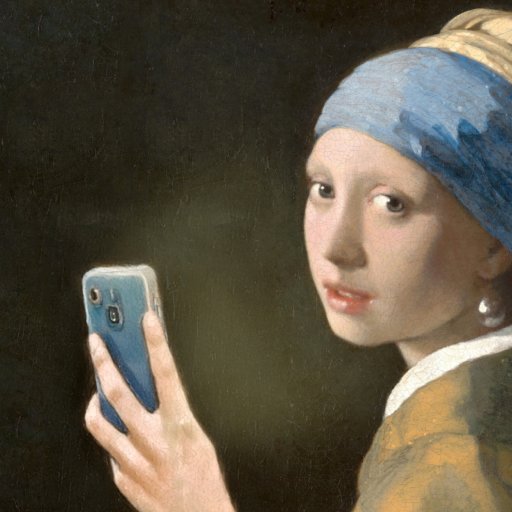
From the printing press to the internet, every technological revolution in history has reshaped human thought. Now, with AI accelerating by the day, philosopher Meghan Sullivan asks: Are we ready for the philosophical shift that must follow?
Why do we fall in love with one person over another? The late biological anthropologist Dr. Helen Fisher unpacks the evolutionary roots of romantic love, sex, and attachment. Using research […]
6mins
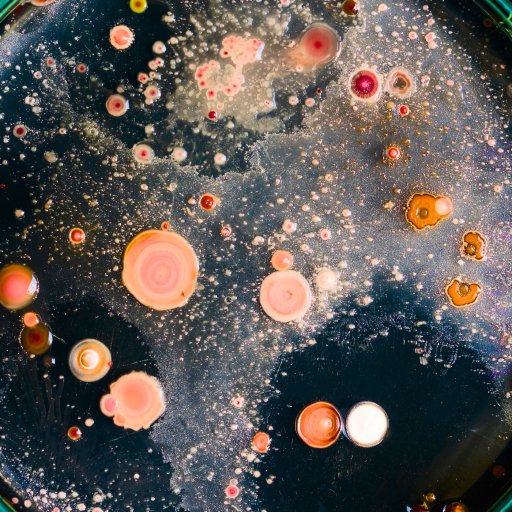
These microbes endured the unlivable. The NASA astrobiologist who studies them reveals what that means for us today

43mins
"If we're related to every living thing on the planet, do we not have a special responsibility for every living thing on this planet? They are really all our relatives."

5mins
“When you think about this interconnection of all these tiny causes and effects which add up to the way the world unfolds, it becomes impossible to imagine that we have complete control.”

1hr 11mins
“It's a remarkable series of events that were required for us to be here, and that so many things could have happened in a different way that we wouldn't be here at all, both individually, and as a species.”

20mins
“Even if there are beliefs that we hold that are true, if we prevent people
challenging those beliefs, we will lose our understanding of why they're true.”

11mins
"We are all in orbit around the center of the Milky Way galaxy. How big is this collection of stars? Somewhere between 200 and 400 billion suns in the Milky Way galaxy, about 100,000 light years across."

1hr 36mins
"It's a true fact, but a bizarre one, that the reason why hundreds of thousands of people died in Hiroshima and Nagasaki rather than Kyoto and Kokura, is because of a 19-year-old vacation and a passing cloud."

8mins
"There is interesting ethical questions about how we should actually conduct ourselves in [a space colonization] exploration phase."

1hr 18mins
"The more uncertain and scary things get in the world, the more we as humans are drawn to simple dichotomies."