




















Search
Mind and Behavior

2mins
Many of us rely on emotional advice that doesn’t actually work. Psychologist Ethan Kross offers a smarter, science-backed approach to managing emotions with flexibility and perspective.

1hr 24mins
“There's a very pervasive belief that human nature is fundamentally selfish, but I know for a fact that that can't be true in part because my life was saved by a stranger a long time ago when I was 19.”

5mins
What happens when the boundaries of “you” disappear? James Fadiman, PhD, Jamie Wheal, and Matthew Johnson, PhD explore how supported experiences with psychoactive drugs can dissolve identity and reveal a deeper reality.
Unlikely Collaborators

13mins
“All information technologies up to the 21st century were organic networks based on our organic brain.”

6mins
“What did you win? You won awkward silence. You won their contempt. You won the first to apologize. When you win an argument, you will lose their confidence, you will lose their respect, you will lose the connection.”
2mins
Your body language sends messages before your mouth does. Author Robert Greene and negotiation expert Daniel Shapiro PhD explain the key characteristics of nonverbal power and emotional presence that shape how others perceive you.
Unlikely Collaborators
7mins
Three doctors break down brain function, somatic awareness, and how to recover from bad experiences.
Unlikely Collaborators

3mins
What if emotional regulation isn’t just a trait, but a skill parents and teachers can help develop? Ethan Kross reveals what science says about shaping young minds.

1hr 1mins
“We can make ourselves more likely to be happy by building a life that includes the conditions that make for happiness.”

7mins
From trepanning to lobotomies, humans have long struggled to manage emotion. Today, we have better tools. Psychologist Ethan Kross shares what actually works, and why.

3mins
According to philosopher Meghan Sullivan, effective altruism may overlook the moral importance of seeing others as individuals. She explains how love should guide how we care for both present and future humans.

21mins
"You can't possibly exaggerate how much better it is to live in a peaceful, orderly society, and to be wealthy, and healthy, and surrounded by people who you love."
8mins
Rediscovering competition in an unexpected place helped her rewrite what was possible — and go on to win gold.
Unlikely Collaborators
Why do we fall in love with one person over another? The late biological anthropologist Dr. Helen Fisher unpacks the evolutionary roots of romantic love, sex, and attachment. Using research […]

12mins
“You can debate all sorts of things about how the texture of American life has changed. What you can't debate is the sheer, objective, existential fact that Americans are more alone than ever.”
6mins
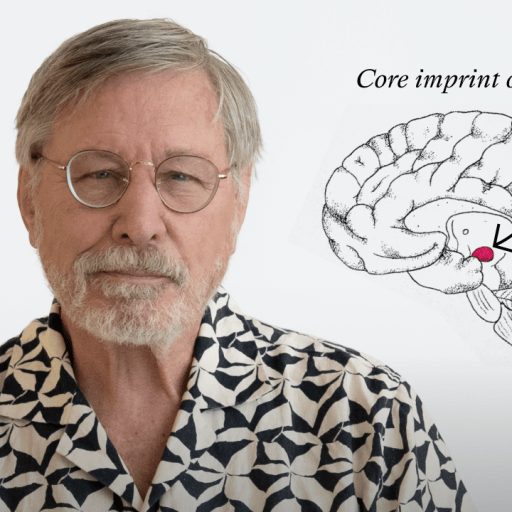
Psychiatrist Dr. Bessel van der Kolk discusses key methods for rewiring the brain, kickstarting the healing process, and opening your mind to new perspectives.
Unlikely Collaborators

1hr 16mins
“We know that as little as 10 minutes of walking can improve your mood, getting that bubble bath with the dopamine, serotonin, endorphins going. Anybody can do that.”

18mins
“We are beginning to take our first steps out into the cosmic ocean… and the water seems inviting.”

18mins
“The fear of panic has killed more people than most disasters themselves.”

10mins
“The voice in your head is not you. You are listening to that voice. It’s a heckler, trying to make you feel bad.”

12mins
“The very same time that’s making you anxious is actually your most valuable asset. You can always create more energy and more money—but you can never create more time.”

8mins
"You need to embrace these systems and try out what's going on because if you don't understand it, you really can't hope to help your organization adapt and stay in front of this momentous, world-changing technology."

1hr 36mins
"It's a true fact, but a bizarre one, that the reason why hundreds of thousands of people died in Hiroshima and Nagasaki rather than Kyoto and Kokura, is because of a 19-year-old vacation and a passing cloud."

18mins
"There's a long history of people claiming planets which look Earth-like, Earth 2.0, Earth twins."

1hr 18mins
"The more uncertain and scary things get in the world, the more we as humans are drawn to simple dichotomies."

14mins
"Being aware of your mindsets is the difference between living a conscious life, where you're making choices in accord with what you actually want and going where you actually wanna go, versus being on autopilot and having those mindsets subconsciously drive all of your decisions."

11mins
"Everything that we care about, everything we experience, everything we know, we know it through our conscious awareness of it."
7mins
She was searching for perfection - until she discovered what she truly needed by letting go of what didn’t fit.
Unlikely Collaborators

13mins
"The truth is that the skills that go into both motivation and manipulation are almost the same skills. The same level of persuasion, the same level of influence, the same level of charisma and dynamic creative thinking drives us to both be manipulated and be motivated."
6mins
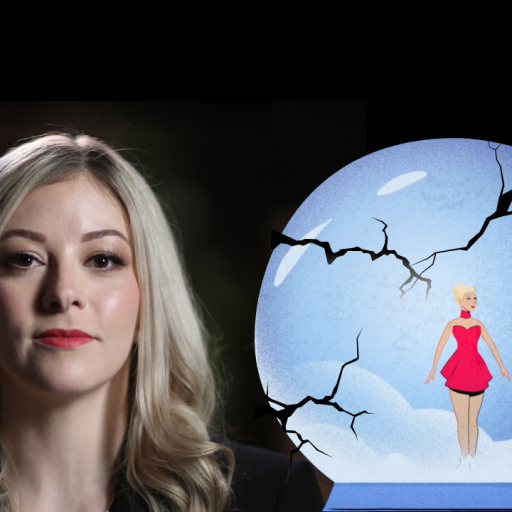
She’s a fierce competitor on the ice. But the figure skater’s toughest battle has been accepting her shortcomings and learning to love herself.
Unlikely Collaborators