




















Search
Neuroscience

17mins
"The sense that we are a solid entity, an unchanging entity that exists someplace in our body and takes ownership of our body, and even ownership of our brain rather than being identical to our brain, that is where the illusion lies."

Stuck on a hamster wheel of mindless social media scrolling? Neuroscientist Anne-Laure Le Cunff explains how to consciously redirect your reward system.

7mins
From trepanning to lobotomies, humans have long struggled to manage emotion. Today, we have better tools. Psychologist Ethan Kross shares what actually works, and why.

How deep is your kink?

18mins
“By not focusing on the outcome and instead designing a tiny experiment, what you can do is letting go of any definition of success, letting go of that binary results that you're looking for, and instead focusing something that makes you feel curious and that you want to explore.”


1hr 25mins
"Virtually everything we're taught about sexuality for the first two decades of our lives is wrong."

Evolution may have built our brains, but it didn't build them to find truth.

18mins
“We know that as little as 10 minutes of walking can improve your mood, that is getting that bubble bath with the dopamine, serotonin, endorphins going, anybody can do that.”
Why do we fall in love with one person over another? The late biological anthropologist Dr. Helen Fisher unpacks the evolutionary roots of romantic love, sex, and attachment. Using research […]

12mins
“You can debate all sorts of things about how the texture of American life has changed. What you can't debate is the sheer, objective, existential fact that Americans are more alone than ever.”
6mins
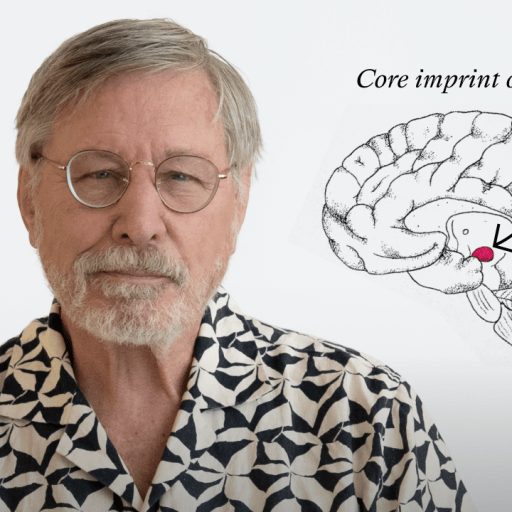
Psychiatrist Dr. Bessel van der Kolk discusses key methods for rewiring the brain, kickstarting the healing process, and opening your mind to new perspectives.
Unlikely Collaborators

1hr 16mins
“We know that as little as 10 minutes of walking can improve your mood, getting that bubble bath with the dopamine, serotonin, endorphins going. Anybody can do that.”

Neuroscience supports the notion that mindfulness and meditation should become essential assets in our workspaces.

Welcome to The Nightcrawler — a weekly newsletter from Eric Markowitz covering tech, innovation, and long-term thinking.
"Nobody expects a computer simulation of a hurricane to generate real wind and real rain," writes neuroscientist Anil Seth.

Many, from neuroscientists to philosophers to anesthesiologists, have claimed to understand consciousness. Do physicists? Does anyone?

Curiosity is often considered a personality quirk. Neuroscience paints a different picture.

12mins
“The very same time that’s making you anxious is actually your most valuable asset. You can always create more energy and more money—but you can never create more time.”

In nature, business, and life, survival doesn’t belong to the optimized — it belongs to those with a built-in buffer.

Locked inside their minds, thousands await a cure. Neuroscientist Daniel Toker is racing to find it.

14mins
"Being aware of your mindsets is the difference between living a conscious life, where you're making choices in accord with what you actually want and going where you actually wanna go, versus being on autopilot and having those mindsets subconsciously drive all of your decisions."

Surprisingly, multimodal large language models struggle to read time on analog clocks.

A look inside Mindstate Design Labs' effort to design drugs that reliably produce specific states of mind.

What can drugs teach us about consciousness?

Our brains cling to the bad. This method could help balance the scales.

A powerful psychedelic long used in African rituals shows surprising promise for treating traumatic brain injury and PTSD.

49mins
"We try to stick to routines and we try to go through very long lists of tasks, often ignoring our mental health in the process. There is a lot more to think about on a daily basis, but our brains haven't evolved."

A fresh view of intelligence — spanning living systems from bacteria to human civilization — challenges the idea that it’s merely problem-solving.

11mins
"Everything that we care about, everything we experience, everything we know, we know it through our conscious awareness of it."