




















Search
Science and Tech

4mins
When one path is blocked, a new one must be paved. How Einstein, Heisenberg and Gödel used constraints to make life-changing discoveries:
5mins
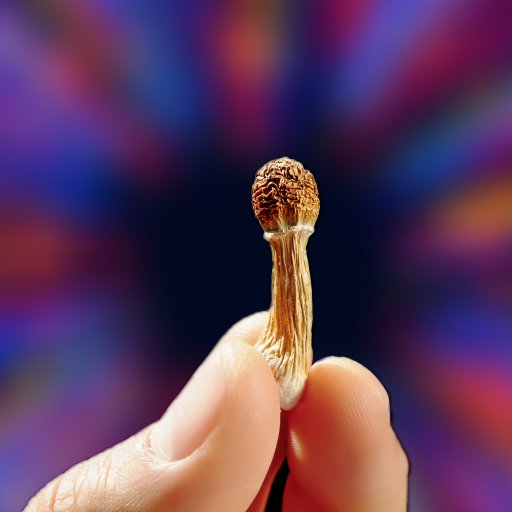
James Fadiman PhD, who has 60 years of experience in the field, believes they are.
Unlikely Collaborators

Almost every large structure in the Universe displays a 5:1 dark matter-to-normal matter ratio. Here's how some galaxies defy that rule.

Meta and NYU’s robot can navigate and clean rooms it’s never seen before.

Long overlooked, menstrual stem cells could have important medical applications, including diagnosing endometriosis

They call it “Judo T-cell therapy,” and it’s 100 times more potent than regular CAR-T cells.

Benjamin Breen on his greatest revelations while writing about the birth of psychedelic science.

The Antarctic Treaty of 1959 prohibited nations from making new land claims on the continent. But it never mentioned claims from private individuals.

Almost everything we can observe and measure follows what's known as a normal distribution, or a Bell curve. There's a profound reason why.

Research suggests you can influence your sense of time by changing the “embodiedness” of your daily habits.

In the early stages of our Solar System, there were three life-friendly planets: Venus, Earth, and Mars. Only Earth thrived. Here's why.

For thousands of years, humanity had no idea how far away the stars were. In the 1600s, Newton, Huygens, and Hooke all claimed to get there.

Whenever someone waxes poetic about terraforming alien worlds, it’s worth taking a moment to consider the ethical implications of the proposal.

The $21.5-billion project could involve tunneling hundreds of feet under Lake Geneva.

Although many of Einstein's papers revolutionized physics, there's one Einsteinian advance, generally, that towers over all the rest.

We don’t yet know if these strange “obelisks” are helpful or harmful.

An MIT study finds the brains of children who grow up in less affluent households are less responsive to rewarding experiences.

The case for why NASA should pivot to searching for current — not ancient — signs of life.

Human civilization has always survived periods of change. Will our rapidly evolving technological era be an exception to the rule?

The discovery suggests that the "Boring Billion" period of evolution on Earth wasn't so boring after all.

A $30,000 electric vehicle with 400 miles of range that charges in under 10 minutes remains a pipe dream over the near future.

Although early Earth was a molten hellscape, once it cooled, life arose almost immediately. That original chain of life remains unbroken.

The Earth that exists today wasn't formed simultaneously with the Sun and the other planets. In some ways, we're quite a latecomer.

In 1924, Edwin Hubble found proof that the Milky Way isn't the only galaxy in the Universe.

Scientists are working to map out the risks of the permafrost thaw, which could expose millions of people to the invisible cancer-causing gas.

Recent measurements of CERN data seem to disagree with standard-model predictions about how the Higgs boson decays, though further analysis is needed to confirm the observations.

The Universe didn't begin with a bang, but with an inflationary "whoosh" that came before. Here are the biggest questions that still remain.

In "Dear Oliver," neuroscientist Susan Barry describes how her 10-year correspondence with Oliver Sacks unleashed her inner author.

NASA's Juno mission, in orbit around Jupiter, occasionally flies past its innermost large moon: Io. The volcanic activity is unbelievable.

The brain-computer interface will be tested in a six-year trial in patients with quadriplegia.