




















Search
Science and Tech

10mins
“10 years ago, my colleagues and I looked at the prognosis for climate change, and it looked pretty hopeless. There really was no way out. But something happened – something good.”

1hr 7mins
Members
Neuroscientist David Linden sheds light on the biology behind phenomena that medicine has long struggled to explain, from voodoo death and broken heart syndrome to the placebo effect, and why grief shows up in autopsy results

1hr 16mins
NASA astronomer Michelle Thaller makes the case that quantum entanglement may be the underlying fabric from which spacetime itself emerges.

7mins
Jim Al-Khalili explains how the past and future are more fluid than we may think.

13mins
Jim Al-Khalili introduces the technologies emerging from the second quantum revolution.

23mins
Brian Cox examines why, despite billions of stars and trillions of planets, we have found no evidence of other intelligent life.

53mins
Sam Kean examines how rogue archaeologists are recreating the sounds, tastes, smells, and practices of the ancient past.
3mins
Thanks to modern tech, Earth is now considered a ‘detectable’ planet. Astrophysicist Sara Seager explains how this idea can lead us to discovering life elsewhere in our universe.

16mins
"The production of the silicon wafers that are used in the chip manufacturing process requires extraordinary levels of purity."
10mins
At COP30, Indigenous leaders came with a message the world can’t ignore: 5% of the global population is safeguarding 80% of Earth’s biodiversity. A $1.8B pledge was made to support their land rights — but will the money follow their lead?
Skoll Foundation
3mins
Military satellite research brought us GPS. Astronomers influenced medical imaging tech. What would be invented after we discover alien life? Professor Sara Seager explains the consequences of such a groundbreaking discovery.

54mins
Members
Chris Miller explains the hidden reason that global superpowers are obsessed with Taiwan.

1hr 3mins
Astronomer Jill Tarter explains why SETI is really about technology, patience, and learning how to tell alien signals from our own.
7mins
30 years ago, we didn’t know other stars had planets orbiting them. Now, we may be on the verge of finding Earth’s Twin. Sara Seager explains.

25mins
"In the process of mapping the heavens, it doesn't take long to realize the data problem they generated."

1hr 23mins
"The process of systematizing, correcting errors, finding approximations, and making them work as civil systems that was what really drove me to start looking at human calculation and what was the foundation that it laid for the modern computer age."

54mins
Members
"This will help people take meaningful steps to slow the rate of aging and increase what we call their health span or their kind of time of life expectancy free from disease."

54mins
“How can all the diversity and, sort of, seeming order that's out there in the world emerge from a process dependent upon chance?”

11mins
Members
“The next revolution will be quantum computers that will make the digital computer look like an abacus.”
11mins
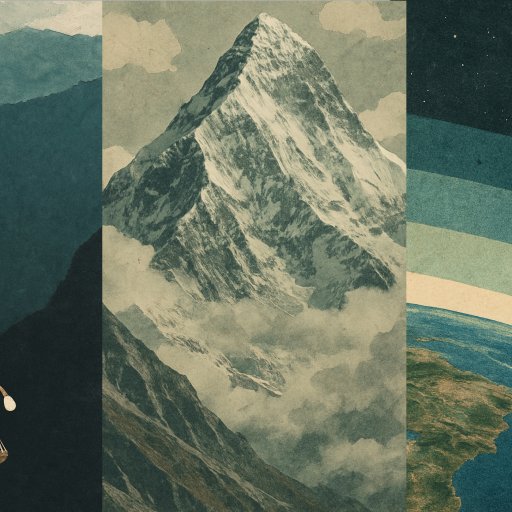
Having explored the Mariana Trench, the summit of Everest, and the edge of space, Victor Vescovo knows what awe feels like in its most dramatic forms. What surprised him most was how often that same feeling appears in everyday life.
12mins
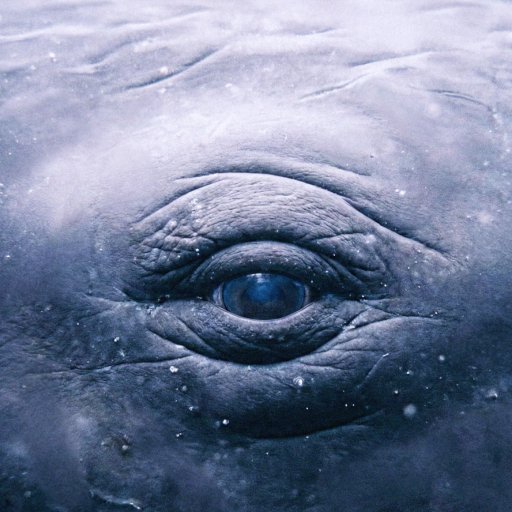
Ninety million years after our lineages split, humans are beginning to listen to whales in a new way. Marine biologist David Gruber shares the work that has become his life’s pursuit: learning how to hear the planet’s largest mammals.

15mins
“Until very recently, I thought I would die with the same genome that I was born with.”

55mins
“Old systems of the past are collapsing, and new systems of the future are still to be born. I call this moment the great progression.”

13mins
Everything ever seen — every star, mountain, and face — makes up less than 5 percent of the universe. Astrophysicist Janna Levin reminds us that the rest — dark matter and dark energy — is invisible, mysterious, and everywhere. We are the luminous exception in a universe of darkness.

41mins
“Progress happens when we choose to make it happen. It happens through choice and effort. And ultimately, to make progress happen, we have to believe in it.”

13mins
“People got skeptical, fearful, doubtful of the very idea of progress in the 20th century and we allowed that to slow down progress itself.”

13mins
“Chance invents and natural selection propagates that chance invention.”

16mins
“The messy reality of it is that all of these very smart people, including Isaac Newton, were talking to other people.”

13mins
“Over the last 10 or 15 years, scientists have really started to understand the fundamental underlying biology of the aging process. And they broke this down into 12 hallmarks of aging.”
14mins
If you’ve gotten goosebumps when hearing a story about a stranger’s selfless heroism, or you’ve felt your chest swell at a concert, when the audience’s voice and the musician’s instruments align, you have felt awe. And, according to professor Dacher Keltner, who has spent his life studying it, it’s one of humankind’s most unifying traits: