




















Search
Science and Tech
3mins
If the people controlling AI are biased, the output will also be. Free speech scholar Jacob Mchangama makes the case for completely open-source AI.

24mins
“Deep down the natural endpoint of this whole goal of looking for planets is to answer the question: are we alone?”

9mins
“The universe clicks along in perfect accord with the laws of physics forever.”

23mins
"Could black holes be the key to a quantum theory of gravity, a deeper theory of how reality, of how space and time works? Well, I think so."

11mins
"We're stuck at type zero. But what would it take to move between universes? What would it take to enter a black hole? What would it take to break the light barrier?"

1hr 13mins
“Nothing about human behavior makes sense except in the light of culture and in anthropology, and we need to understand the cultural component to our behaviors as well.”

1hr 26mins
“I like to say that physics is hard because physics is easy, by which I mean we actually think about physics as students.”

2mins
Astrobiologist Betül Kaçar on why the simple act of asking questions (without needing a reason) is one of the most powerful things a human can do.

1hr 8mins
“An equation, perhaps no more than one inch long, that would allow us to, quote, 'Read the mind of God.'”

2mins
Your brain changes when you experience something, and it changes again when you remember it. Two neuroscientists explain what that means for memory, perception, and identity.
Unlikely Collaborators

3mins
What if emotional regulation isn’t just a trait, but a skill parents and teachers can help develop? Ethan Kross reveals what science says about shaping young minds.

1hr 3mins
“The public really doesn't realize that they are much closer to CIA spies than they think they are.”

10mins
“Invention matters, but implementation matters more.”

1hr 18mins
“Could black holes be the key to a quantum theory of gravity, a deeper theory of how reality, of how space and time works?”

13mins
"We've sent out one or two little messages, but we certainly aren't investing billions of dollars shouting out into the cosmos saying, "Hey, we are here. Come say hi.""
2mins
The ocean is evolving, and it’s not based on the ‘survival of the fittest.’ Astrobiologist Betül Kaçar explains how it’s not competition that has kept the ocean alive, but collaboration.
2mins
We may be close to finding life beyond Earth. But would we even recognize it if we did? Astrobiologist Betül Kaçar explains what signs NASA is looking for.

4mins
"If we did create beings that were more like non-human animals, we ought to treat them much better than we now treat non-human animals."
6mins
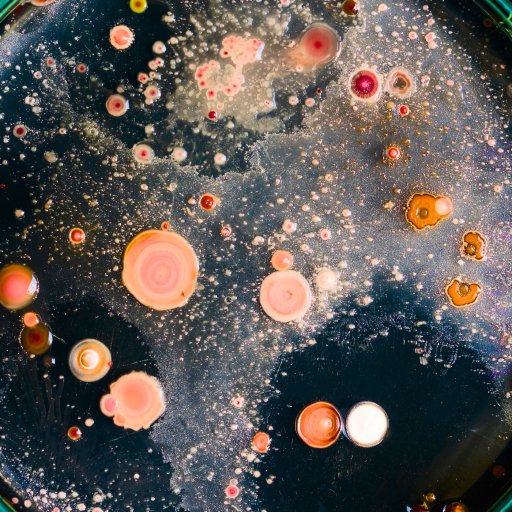
These microbes endured the unlivable. The NASA astrobiologist who studies them reveals what that means for us today

43mins
"If we're related to every living thing on the planet, do we not have a special responsibility for every living thing on this planet? They are really all our relatives."

5mins
“When you think about this interconnection of all these tiny causes and effects which add up to the way the world unfolds, it becomes impossible to imagine that we have complete control.”

1hr 11mins
“It's a remarkable series of events that were required for us to be here, and that so many things could have happened in a different way that we wouldn't be here at all, both individually, and as a species.”

18mins
“We are beginning to take our first steps out into the cosmic ocean… and the water seems inviting.”

1hr 19mins
“We don't have enough knowledge to precisely calculate what is going to happen, and so we assign probabilities to it, which reflects our ignorance of the situation.”


1hr 36mins
"It's a true fact, but a bizarre one, that the reason why hundreds of thousands of people died in Hiroshima and Nagasaki rather than Kyoto and Kokura, is because of a 19-year-old vacation and a passing cloud."

8mins
"There is interesting ethical questions about how we should actually conduct ourselves in [a space colonization] exploration phase."

5mins
“I think the key point is that doesn't mean game over. That doesn't mean we're flipped into a world, and to a point of no return.”

2hr 18mins
"Asking the question of, "Where did the entire universe come from?" is no longer a question for poets and theologians and philosophers. This is a question for scientists, and we have some amazing scientific answers to this question."

13mins
"What would a totalitarian society that is not well disposed to our own do if it had God-like power? We don't wanna find out."