




















Search
Science and Tech

Science news presents a flood of breakthroughs and discoveries that promise to change our lives. They rarely do.
![a photo of a [dog breed] on a pink background.](https://redesign.bigthink.com/wp-content/uploads/2022/04/dog2.jpg?quality=85&w=512&h=512&crop=1)
A dog's breed isn't as predictive of behavior as many think it is. Environment and upbringing play a much larger role.

Sophia, the humanoid robot, is not just mirroring emotions; she's leading a revolution in emotional intelligence.
John Templeton Foundation

Headlines have blared that quasar ticking confirms that time passed more slowly in the early Universe. That's not how any of this works.

If you want to write and speak well, use common words, not grandiose ones. Unless you're Shakespeare, you're more likely to annoy people.

Math can explain why your laces spontaneously come untied — and how to stop it.

For thousands of years, we puzzled at how far away the Moon was. Today we know its distance, at any time, to within millimeters.

Boys are four times as likely as girls to develop autism. Girls are nearly twice as likely to experience depression. The immune system may be a player in these and other brain-health disparities.

When you turn a map of East Asia upside down, Beijing’s geographic constraints and regional ambitions become much clearer.

While Saturn and its moons all appear faint and cloudy to JWST, Saturn's rings are the star of the show. Here's the big scientific reason.
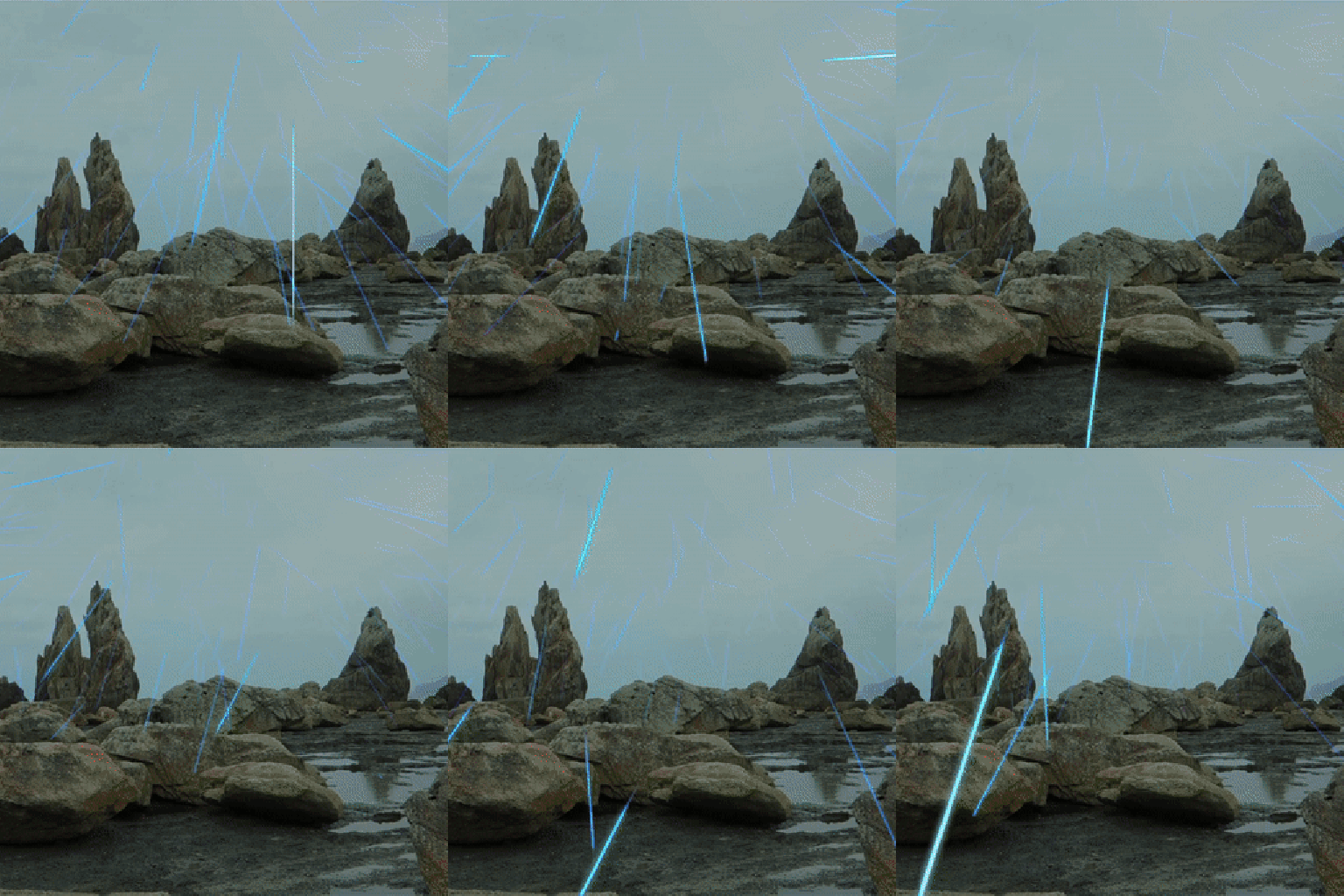
Lost in a building or underwater? A new muon-based navigation system could be your guide.

Retatrutide, Eli Lilly's innovative "triple g" drug, is setting new standards in the fight against obesity.

A marine reptile fossil from Svalbard challenges ideas about evolution and Earth’s greatest mass extinction.

Quantum physics is starting to show up in unexpected places. Indeed, it is at work in animals, plants, and our own bodies.

3mins
Age expert Dr. Morgan Levine explains why living to 100 is the wrong goal.

For better and worse, the Columbian Exchange plugged the Americas into the global system — and there was no going back.


They had the technology. So why didn't they use it?
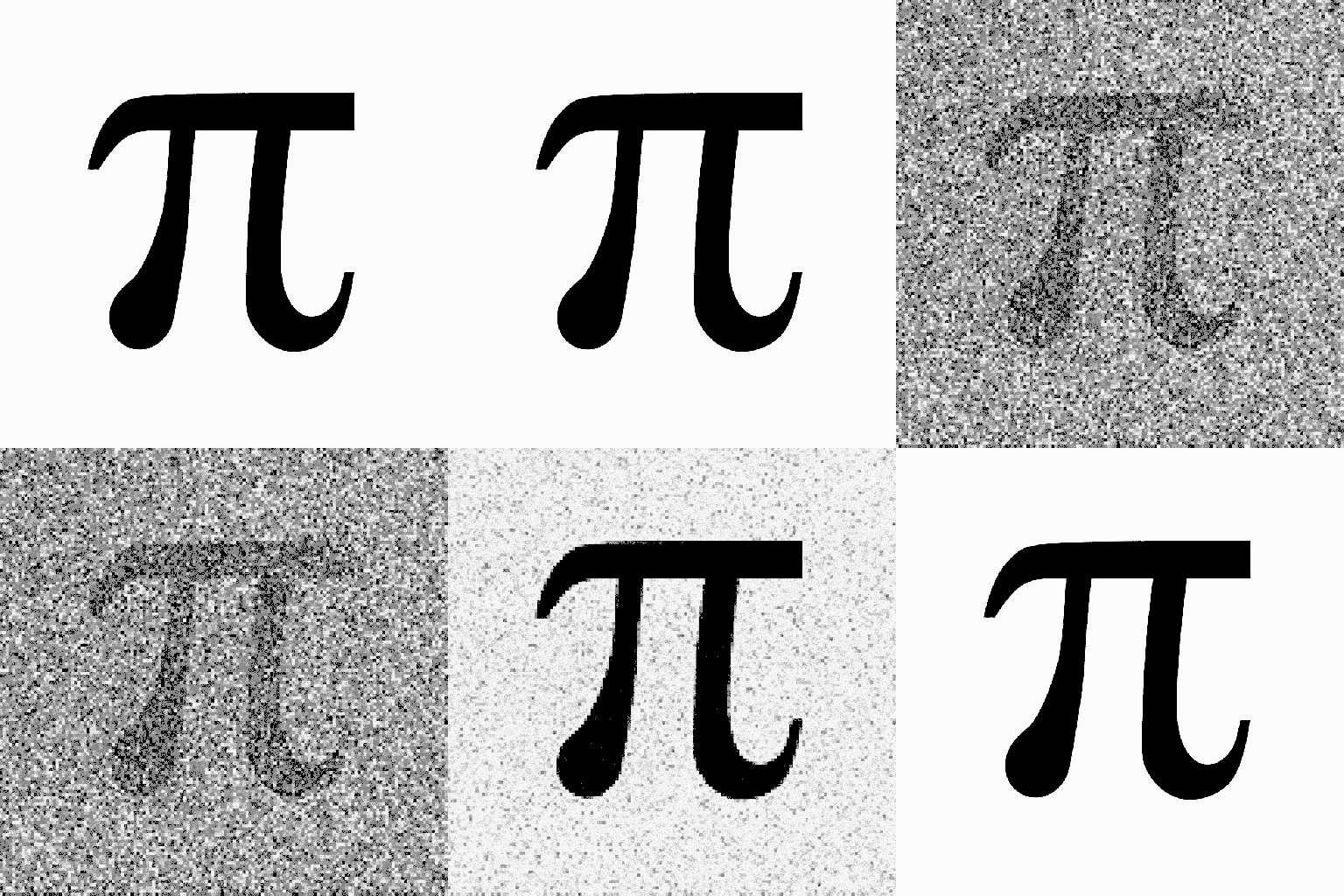
Is mathematics woven into the very fabric of reality? Or is it merely a product of the human mind?

Neuroscientists think a cluster of cells in the brain that stimulate appetite could be a target for eating disorder therapies.

Due to export controls from China, the Europeans had to invent their own forms of porcelain. One type involves dead cows.

We should acknowledge that there are faith-based myths running deep in science's canon.

In history, every major technological advance has been used, for good and bad.

Michael Faraday's 1834 law of induction was the key experiment behind the eventual discovery of relativity. Einstein admitted it himself.

In one experiment, the Viking landers added water to Martian soil samples. That might have been a very bad idea.

A cute mathematical trick can "rescale" the Universe so that it isn't actually expanding. But can that "trick" survive all our cosmic tests?

Genetic profiles of many dog breeds appear as if siblings mated.

In a distant galaxy, a cosmic dance between two supermassive black holes emits periodic flashes of light.

As the Earth spins and wobbles on its axis and revolves elliptically around the Sun, each day changes from the last. "24 hours" isn't right.

Particles behave differently when freed from the force of gravity. A new space factory aims to use this to synthesize pharmaceuticals.