




















Search
Stellar Evolution

The most common element in the Universe, vital for forming new stars, is hydrogen. But there's a finite amount of it; what if we run out?

A deep dive into the chaotic journey of star formation.

No matter how you define the end, including the demise of humanity, all life, or even the planet itself, our ultimate destruction awaits.

Given enough time, all galaxies will expel their star-forming material and wind up dead. Is this the earliest one, or is it just asleep?

For now, our Solar System's eight planets are all safe, and relatively stable. Billions of years from now, everything will be different.

There are plenty of life-friendly stellar systems in the Universe today. But at some point in the far future, life's final extinction will occur.

So far, gravitational waves have revealed stellar mass black holes and neutron stars, plus a cosmic background. So much more is coming.

For thousands of years, humanity had no idea how far away the stars were. In the 1600s, Newton, Huygens, and Hooke all claimed to get there.

Beyond the planets, stars, and Milky Way lie ultra-distant objects: galaxies and quasars. Here's how far back we've seen throughout history.

The Earth that exists today wasn't formed simultaneously with the Sun and the other planets. In some ways, we're quite a latecomer.

It took 9.2 billion years of cosmic evolution before our Sun and Solar System even began to form. Such a small event has led to so much.

Stars are born, live, and die within the spiral arms of galaxies like the Milky Way. These 19 JWST spirals deliver unprecedented riches.

If our Milky Way were located in the Virgo cluster instead of the Local Group, chances are we'd already be a "red and dead" galaxy.

Our own galaxy, the Milky Way, is both completely normal and absolutely remarkable in a number of ways. Here's the story of our cosmic home.

Want to avoid getting "spaghettified" by a black hole? Steer clear of the smaller ones.

Here in our Solar System, we only have one star: a singlet. For many systems, including the highest-mass ones, that's anything but the norm.

Life became a possibility in the Universe as soon as the raw ingredients were present. But living, inhabited worlds required a bit more.

Today, supermassive black holes and their host galaxies tell a specific story in terms of mass. But JWST reveals a different story early on.

One newly discovered, ancient star has a composition unlike any other. Explaining its existence is already blowing astronomers' minds.

Planets can be Earth-like or Neptune-like, but only rarely are in between. This hot, Saturn-like planet hints at a solution to this puzzle.

A new measurement offers insights on the density of the mysterious force driving the Universe's expansion.

The cosmic scales governing the Universe are almost unbelievably large. What if we shrunk the Sun down to be just a grain of sand?

Figuring out the answer involved a prism, a pail of water, and a 50 year effort by the most famous father-son astronomer duo ever.
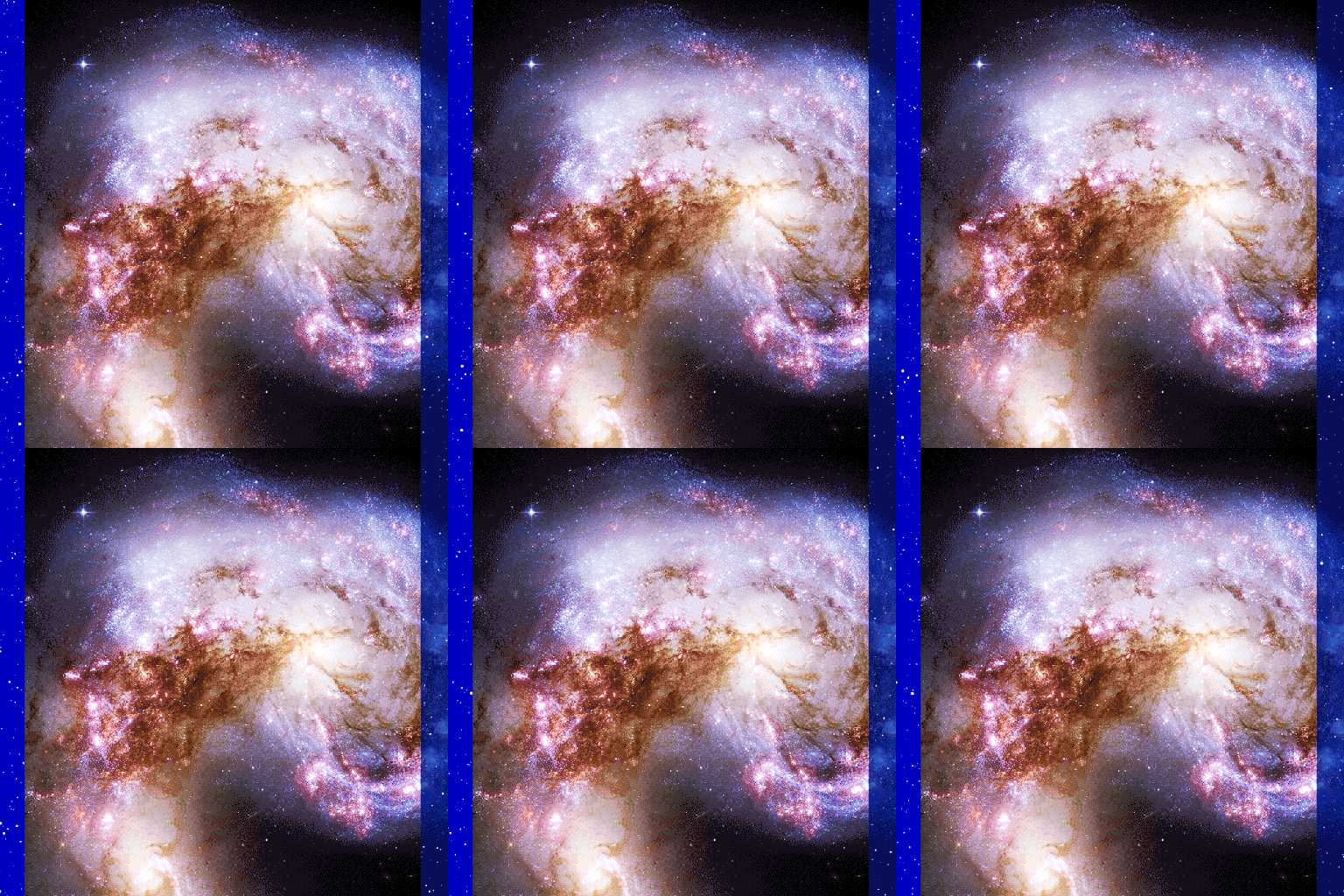
Today, the star-formation rate across the Universe is a mere trickle: just 3% of what it was at its peak. Here's what it was like back then.

As early as we've been able to identify them, the youngest galaxies seem to have large supermassive black holes. Here's how they were made.
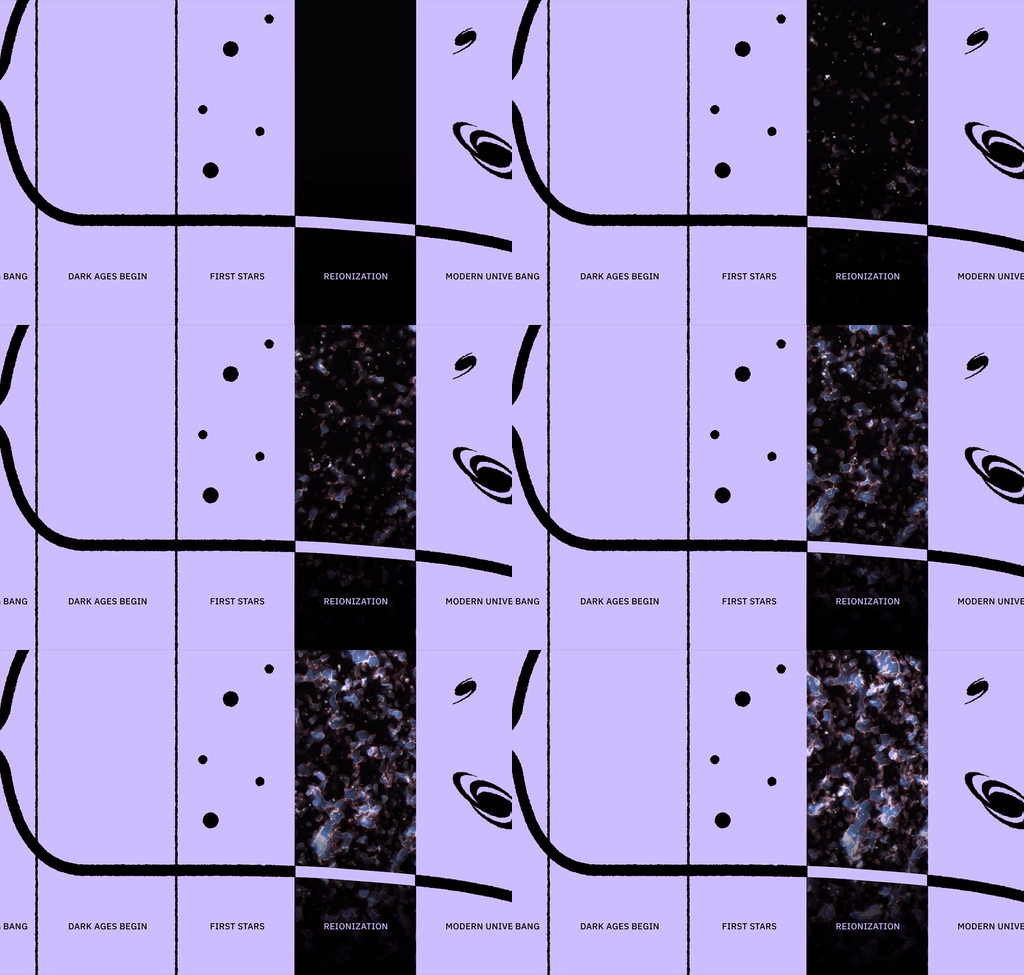
For 550 million years, neutral atoms blocked the light made in stars from traveling freely through the Universe. Here's how it then changed.

Even after the first stars form, those overdense regions gravitationally attract matter and also merge. Here's how they grow into galaxies.
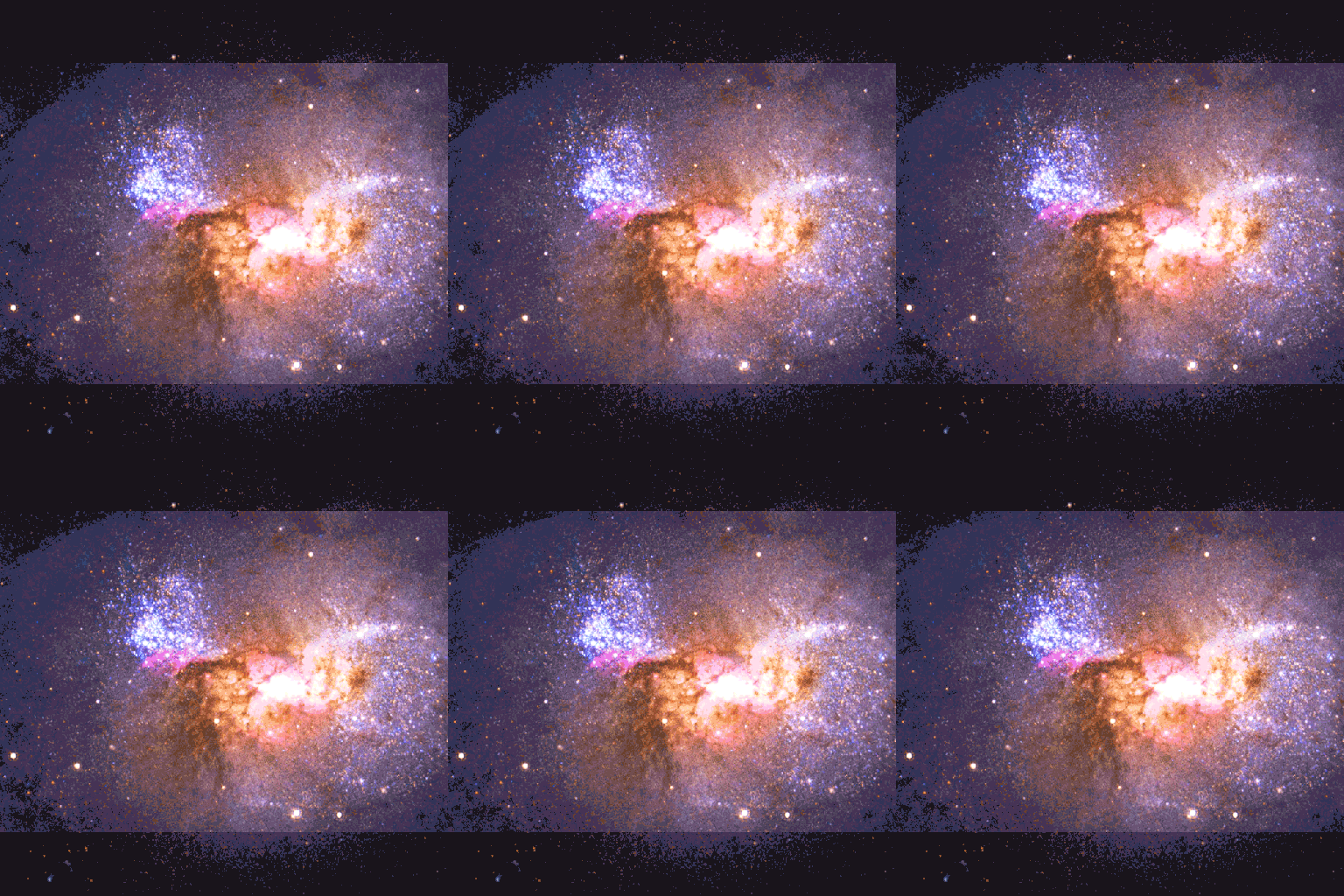
The first stars in the Universe were made of pristine material: hydrogen and helium alone. Once they die, nothing escapes their pollution.

The first stars took tens or even hundreds of millions of years to form, and then died in the cosmic blink of an eye. Here's how.

The Big Bang's hot glow faded away after only a few million years, leaving the Universe dark until the first stars formed. Oh, the changes!