Here in our Universe, there were many profound steps that needed to occur in order for creatures like humans to be able to arise. We needed to forge heavy elements in previous generations of stars: elements that the Universe wasn’t born with, but that are required to enable molecules that can link up to form complex bonds and macroscopic structures. We needed enough of those elements so that when new stars formed, rocky planets could arise around them. And we needed enough time to pass so that life could not only arise, but thrive and evolve to give rise to highly differentiated organisms. Some 4.5 billion years after the formation of planet Earth, here we are, asking and answering many profound aspects of one of the grandest questions of all: how did we get here?
Many variants of these grand questions often arise when we engage our curiosity. Where did we come from? What enabled our existence? What path did the Universe take to give rise to us? At just three years old, this week’s inquiry — exactly in line with this way of thinking — comes from our youngest-ever question asker, Otto Been, who wants to know,
“How do planets form, and how long does it take?”
It’s an outstanding question, because not every star that’s ever formed can have planets, and the question of “how long” is one that we’re only beginning to answer here in the 21st century thanks to the outstanding new observatories that we’re operating. Here are the best answers we have today.
A recipe for making planets
If you take a close examination of anything that exists today, you’ll find out that it’s made of smaller, more fundamental ingredients. Human beings, for example, are made up of many components: muscles, bones, organs, blood, and connective tissue among them. If you look at any of those pieces of you, you’ll find that they’re made of cells: it requires trillions of cells to compose even a very young child’s human body. And inside every cell are smaller structures still: molecules. All living creatures are composed of many different types of molecules, which are chains of atoms of a wide variety of types, all strung together, that enable us to eat, breathe, metabolize food, grow, and reproduce.

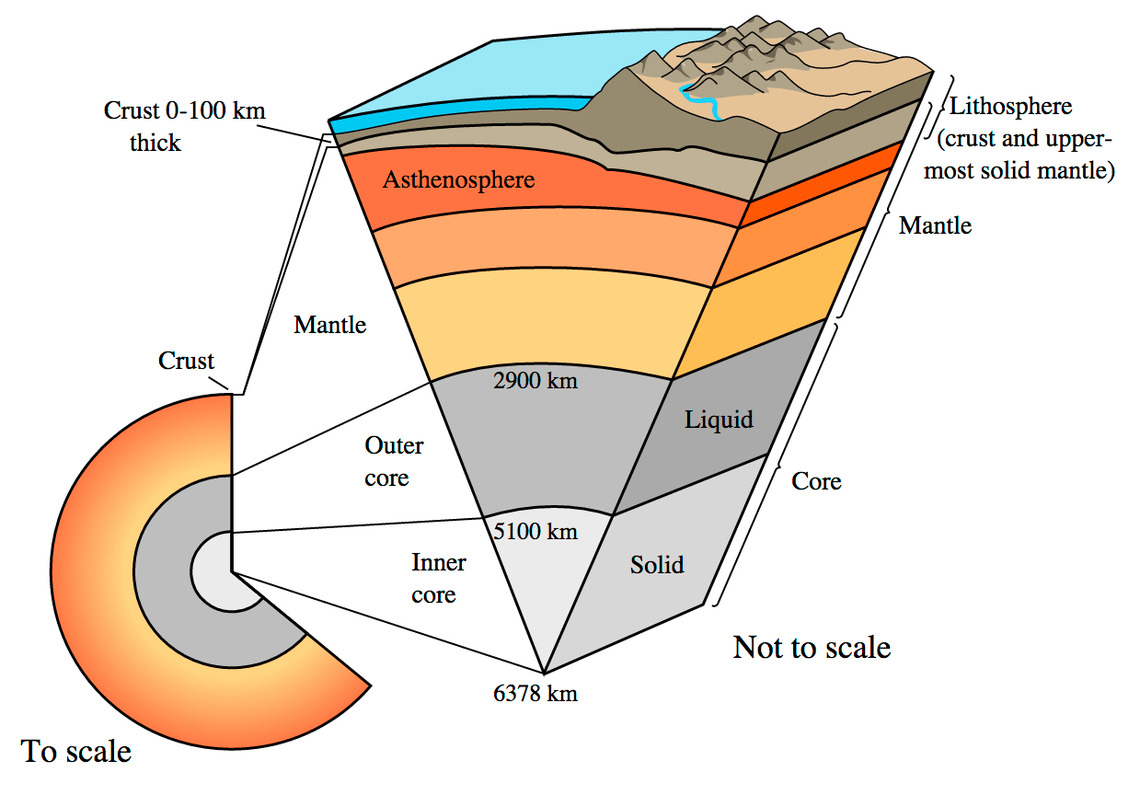
Even though they’re not alive, planets are also made up of atoms and molecules, as is the Sun. However, whereas the lightest species of atom — hydrogen and helium — primarily make up the stars, in order to have a rocky planet like Earth, you need heavier species of atoms. The Earth is a solid mass of material, made up of many layers:
- we have a metallic inner core,
- surrounded by a hot, compressed layer of liquid known as the outer core,
- where a thick, rock-rich mantle floats on top of that outer core,
- and finally Earth’s crust, oceans, and atmosphere lie atop the mantle.
Only the oceans and atmosphere are substantially composed of those light elements: hydrogen and helium. For everything else, you need heavier elements.
What’s the difference between having them and not?
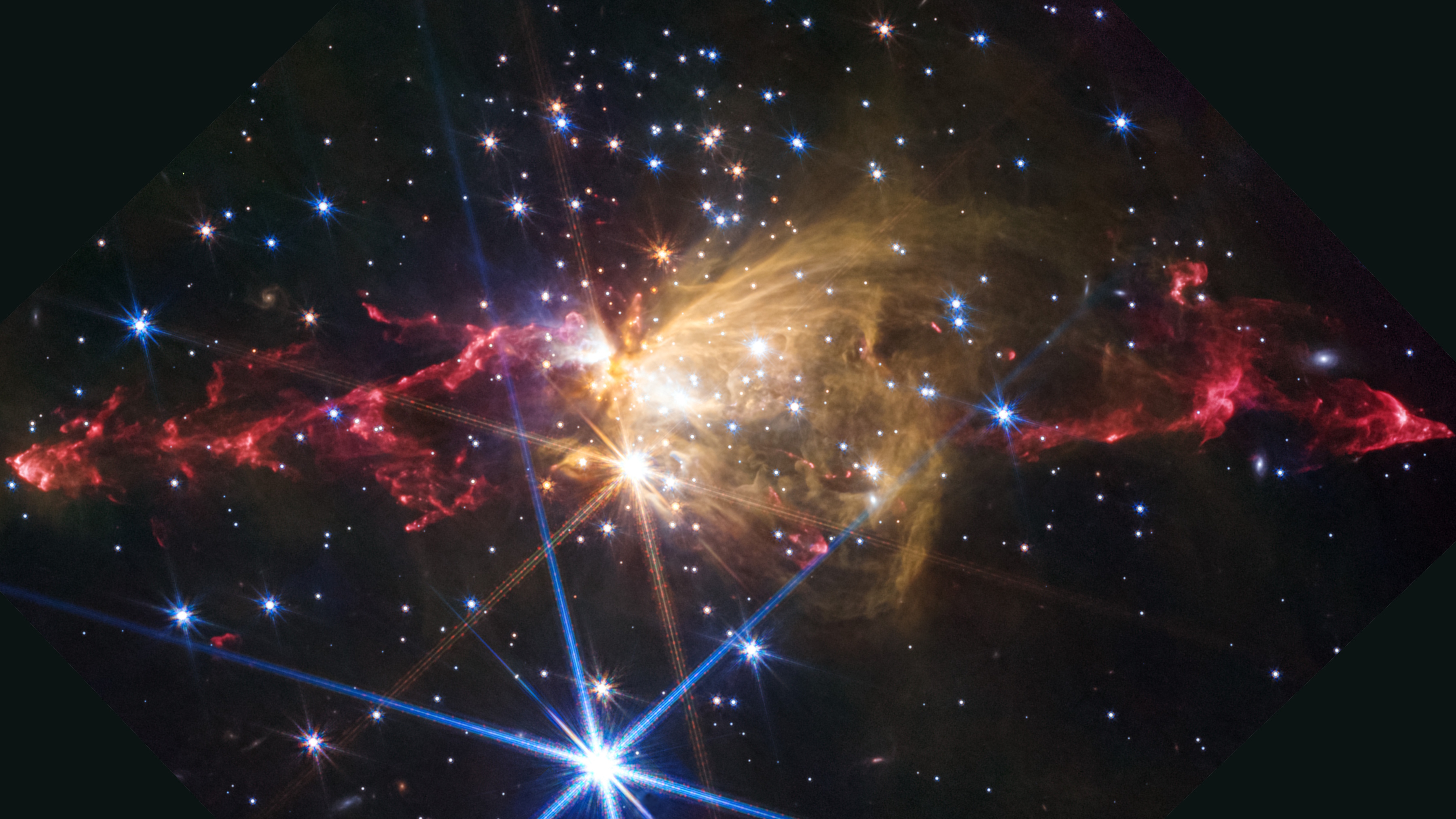
Why would these heavier elements be so important to whether you can have a planet or not? Because the place where planets form is related to the place where stars form. In fact, there are two theoretical ways to make a planet, and both are related to the formation of stars. In order to form stars, you need a large, massive cloud of gas to begin with. Then, when the cloud gets massive enough to begin contracting under its own gravity, the following things happen.
- The densest regions in the cloud begin contracting and attracting more matter into them the fastest.
- The ones that grow to the heaviest masses the fastest collapse first, grow the most massive, and heat up.
- When they have enough mass, nuclear fusion ignites inside of their cores, transforming these hot clumps from protostars into full-fledged stars.
- And then, those stars shine brightly and blow off the material surrounding them.
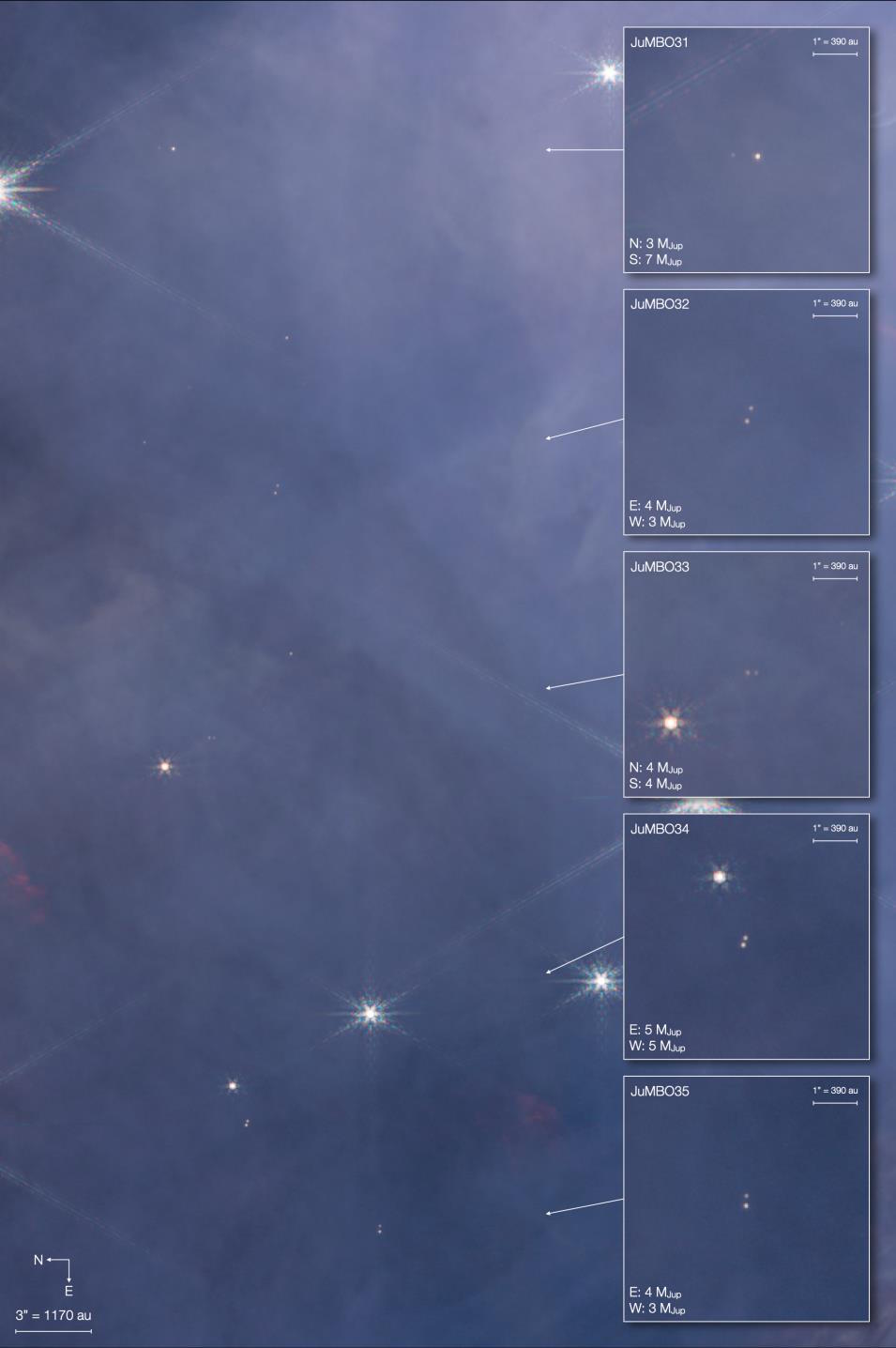
When those stars form, it’s easiest for them to blow the lightest elements away in the places that surround them. If there are heavier, harder-to-blow-away elements around them, planets can form around them, and if there are clumps of matter in the same cloud that haven’t quite grown enough to form stars when the rest of the material in the initial cloud blows away, what remains can be a planet, too.
So where are planets like Earth made?
While it might be possible for massive, gaseous, giant, puffy planets to be made mostly or even exclusively out of light ingredients alone, in order to have a rocky planet, you need heavier ingredients, too. The only solids we can make out of hydrogen and helium are ices, and those require extremely cold temperatures: temperatures below 20 K (-253 °C/-424 °F), and the only way to have a hotter solid is to keep them at incredibly high pressures. If you have material around newly forming stars — the kind of conditions you need to make planets around stars — if there’s only hydrogen and helium, you can’t have a rocky planet.
We can actually test whether this idea is correct or not by examining the thousands of exoplanets we’ve discovered so far! We can’t measure how rocky or gaseous these planets are directly, but we can measure three important things:
- the mass of the planet,
- the radius/size of the planet,
- and the percentage of the star that’s made of heavier elements than hydrogen and helium alone.
We’ve probed hundreds of thousands of stars in our search for these exoplanets, and while not all stars have them, we now believe that most of them do. Only a fraction of all stars can have their planets detected, but every star can have their percentage of heavy elements (what astronomers call metallicity) measured.
What kinds of stars have, and don’t have, planets?
We know the Sun has planets, because we live on one of them. So when we look at the other stars in the Universe, it’s only natural to compare them to the Sun. Out of the thousands of known exoplanets orbiting around stars other than our own, here’s what we find.
- If you have the same amount of heavy elements (or more) than our Sun, you almost certainly have planets orbiting you.
- In fact, if you only have as little as 25% of the heavy elements found in the Sun, you again almost certainly have planets orbiting you: 98.2% of all known exoplanets orbit around stars with a quarter or more of the heavy elements found in the Sun.
- But if you look to star systems with fewer heavy elements, the percentage drops. If you only have between 10-25% of the heavy elements found in the Sun, there are only about 100 known systems with exoplanets. You’re much less likely to have any planets at all with so few heavy elements.
- If you have between 4-10% of the heavy elements found in the Sun, it’s really, really hard to make planets at all; there are only 8 known exoplanets around stars with so few heavy elements: fewer than 1-in-10 stars with so few heavy elements have planets.
- And if you have fewer than 4% of the Sun’s heavy elements, there are only two known examples of a star with an exoplanet: Kepler-1071 and Kepler-749. Neither one is rocky, either; both are Neptune-like.
This confirms for us that you need to have enough heavy elements to make rocky planets, and that means you need for generations of stars to live-and-die before your gas is rich enough in those raw ingredients to allow for rocky planets to form.

So how do you form a planet?
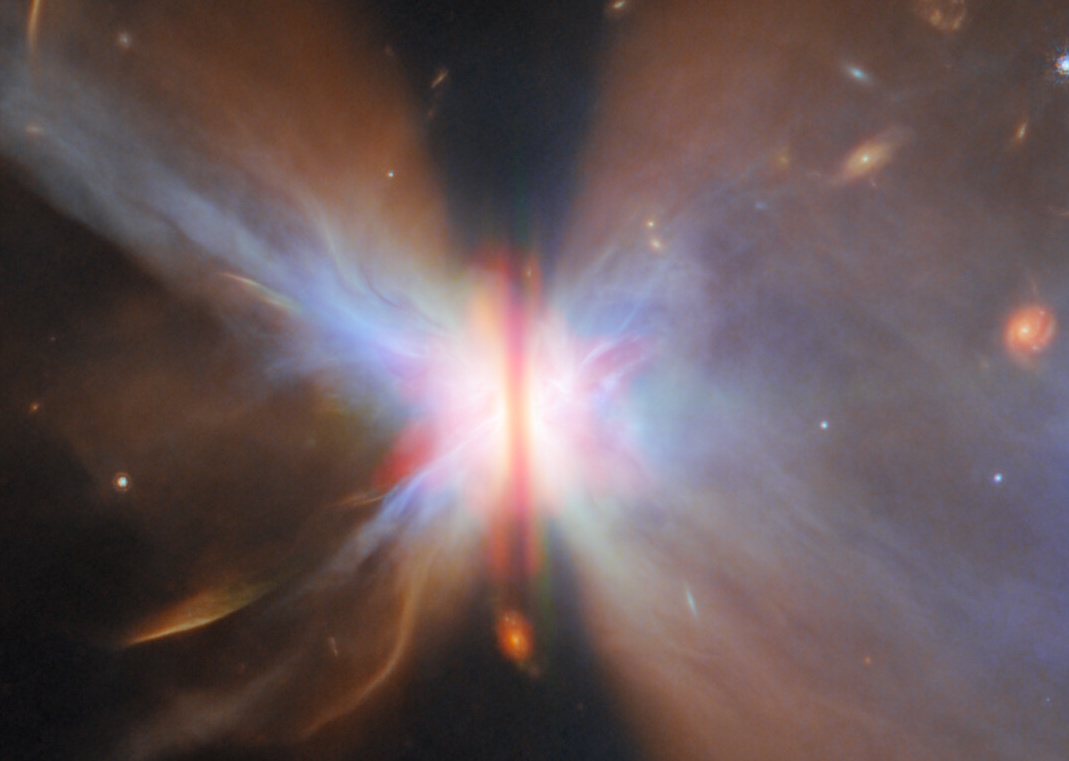
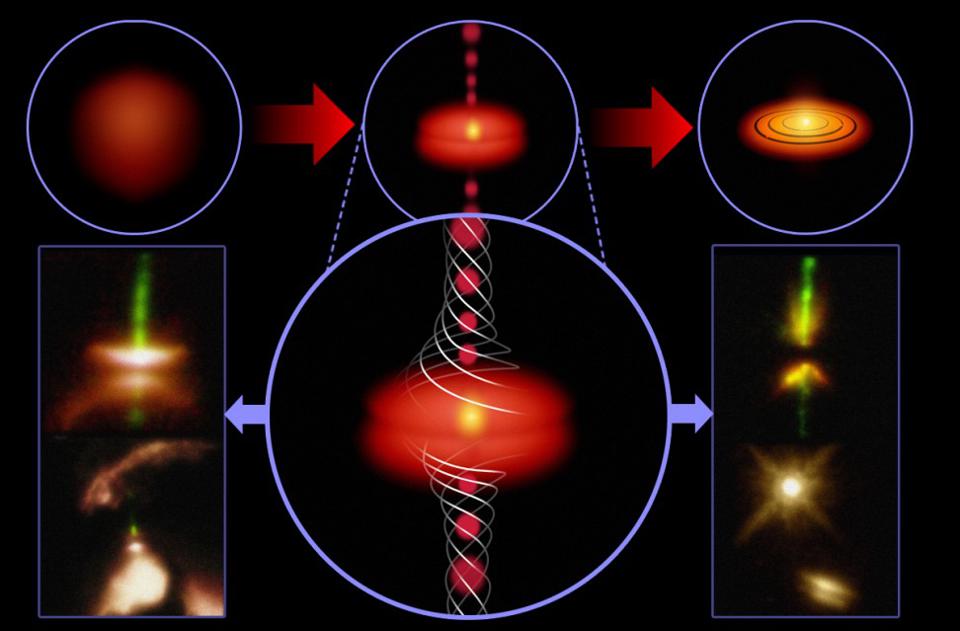
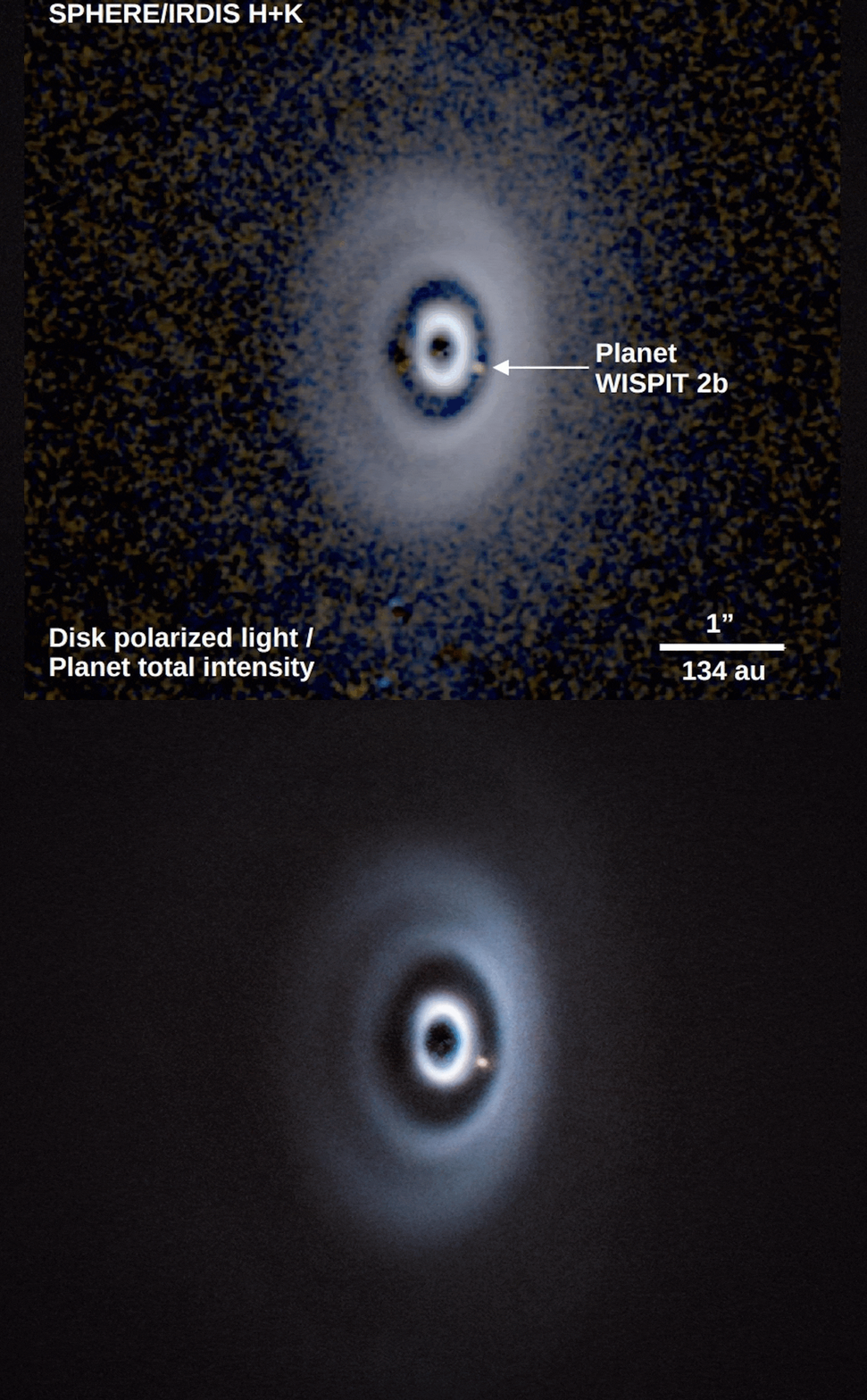
Assuming you have enough heavy elements in the gas cloud that’s contracting, fragmenting, and collapsing to form new stars, you’re going to wind up with not just a massive, hot clump of matter — a protostar — that will eventually evolve into a full-fledged star, but there’s going to be a disk of material surrounding that star: a protoplanetary disk. Before and up to the moment where the star is truly born, when nuclear fusion ignites inside its core, that disk remains uniform, meaning there are no “clumps” that form in the disk. You need clumps to arise in order to form planets, because those initial clumps, arising from instabilities in the disk, are where gravitation will eventually work to pull in the surrounding matter.
After some amount of time, the first clumps, or non-uniformities, will begin to form in the disk. These aren’t quite planets yet, but rather are the seeds of what could initially become a planet. Some seeds get devoured by their parent star; some seeds get ejected from their stellar system; some seeds get swallowed by other seeds; some seeds get blasted apart by further interactions. But occasionally, those seeds attract their surrounding matter, grow to be massive, rocky, and spheroidal, carve gaps in the disk, and persist, even after the last of this protoplanetary material has been blown away by the young star. That’s the story, to the best that we know it, of how planets like Earth are made.
How long does it take?
This is the other key part of the main question: if that’s the story of how planets form, then how long does it take? If we start the clock from the time when nuclear fusion in the main, parent star ignites, that allows us to arrive at a meaningful answer. It turns out that there’s a range of possibilities for what will occur, but in general, here’s what the timeline looks like.
- For the first half-a-million (500,000) years, no stars begin forming planets. All protoplanetary disks remain uniform, without clumps or gaps in them at all.
- From half-a-million to two million years (0.5-2.0 million years) after the star is born, protoplanetary disks begin displaying clumpy features in them, and can begin to have gaps, spirals, and other interesting, non-uniform shapes. These might include protoplanets, or objects that will eventually grow up into full-fledged planets, but they can also include what we call proto-protoplanets, which might not ultimately survive in an active, planet-forming environment.
- Then, from two million years to ten million years (2-10 million years) after the star is born, full-fledged planets form and grow up, giving rise to modern day planets.
After 10 million years, planet formation is pretty much over; the protoplanetary disks have evaporated and all of that early material, needed to form planets, is gone. All that persists where the disks once were are the surviving planets and moons, plus any asteroids and icy objects, often found in belts and clouds, that remain.

Okay, but how long does it take overall?
This story we’ve just recounted — about planet-formation in general — assumes that we started with a cloud of gas that did have enough heavy elements in it to form rocky planets. But the Universe wasn’t born with those heavy elements; it was made pretty much exclusively of hydrogen and helium. In order to make those heavy elements, it has to make stars, and that takes time.
It takes somewhere between 30-100 million years to make the first stars of all. When they burn through their fuel and die, the heavy elements they’ve made inside of them get returned to the interstellar medium, which enriches the material that forms the next generation of stars.
But even after that occurs, they still haven’t yet made enough heavy elements for rocky planets to form around those new stars; several generations need to form, live, and die in order for rocky planets to arise. This probably takes at least several hundred million years in even the richest places in the Universe, and probably a billion to several billion years in more typical places.
Our Milky Way, for example, might not have made the first rocky planets until 2-3 billion years had passed since the Big Bang first occurred, and our own star didn’t form until a whopping 9.2 billion years of time had elapsed. Although many rocky planets, and chances for life, came into the Universe before planet Earth was ever born, “billions of years” is likely the norm, not the exception.

Is this what happened in our own Solar System?
In our own Solar System, it’s very hard to say exactly how our planets formed and grew up. The reason it’s so hard is because we have no record of what things were like in the distant past; today, all we can see are the survivors. All we can do is look at what remains today, run simulations based on the laws of physics and conditions that we know, and then see if we can recover the Solar System we recognize. When we run those simulations, we find some very interesting, and surprising, things out.
- The large, massive planets we have in our Solar System — the giant planets — probably weren’t the only ones we’d ever formed, but rather there used to be a fifth, and it was probably kicked out early on due to gravitational interactions.
- The inner, rocky planets are unusual, and probably only formed after one or more inner worlds were swallowed by the young Sun, leaving only a little bit of matter left to form what became Mercury, Venus, Earth, and Mars.
- And that Earth, about 50 million years after the Sun became a full-fledged star, actually collided with another large protoplanet, kicking up a cloud of debris that wound up creating our modern Earth-Moon system.
This is no proof that all of these things happened; this is just the best we can scientifically say, 4.5 billion years after the fact, based on the evidence that remains and the laws we know today.
So in order to form planets, you need enough heavy elements as part of a mix of a massive cloud of gas: one that will gravitationally collapse to give rise to a new episode of star-formation. You can’t make that enriched gas after just one generation of stars forms; you need several generations to live-and-die before forming rocky planets is possible. And once you do form a star with enough heavy elements, you need to wait for instabilities to arise in the initial protoplanetary disk: a process that takes between half-a-million and two million years to get started. Once it begins, however, you only have a few million years before the protoplanetary material is all gone, and planet-formation is then complete.
It’s remarkable that we know all of this, today, because just 35 years ago — in the early 1990s — we didn’t know any of it. We didn’t know about any other exoplanets, we had never resolved a protoplanetary disk before, and our simulations of how the Solar System grew up weren’t good enough to learn really any meaningful lessons about it. All we had an inkling of is that the Earth-Moon system was created by a giant impact, and that was largely due to the Apollo program, which brought Moon rocks back to Earth, where we (quite surprisingly!) found that the Moon and the Earth were made of the same “stuff” as each other. If you find this story interesting, and want to extend what we know even further, it’s important to stay curious. You just might grow up to become one of the scientists who discovers the answers to questions we’re only beginning to know we need to ask today!
Send in your Ask Ethan questions to startswithabang at gmail dot com!

The Energy Transition