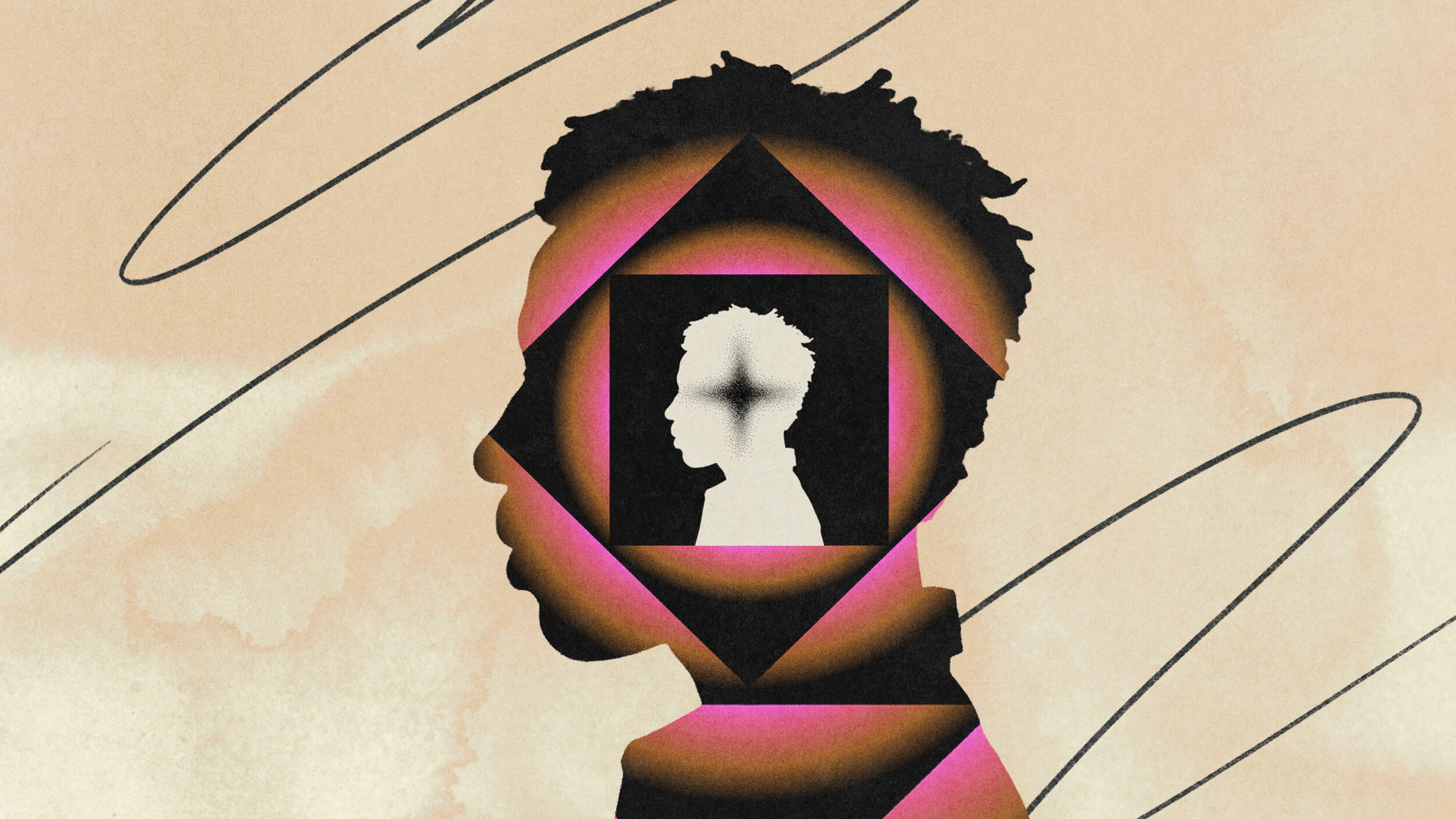


What makes us who we are? Most of us might say that it is our background that creates our identities: our families, where we’ve lived, how we were brought up and educated, the people who have influenced us, the jobs we’ve held. But there is something far more fundamental that makes us who we are, and which transcends social and cultural experiences. This is our brain. Our brains create us. No matter where you are from, where you live or have lived, the language you speak, the color of your skin, it is our brains that give us our identities.
In the past, some disagreed, arguing instead as Descartes did that our personal identity — our “self” — is separate from the brain. Most modern views, however, consider the brain to be the basis for all the experiences we have of our selves. Using new scanning techniques, some neuroscientists have even attempted to define the brain region where “the self” might reside. However, as the philosopher Daniel Dennett drily put it: “It is a category mistake to start looking around for the self in the brain.” We’re not going to find it because our self is made up by the entirety of our brain functions.
Indeed, many thinkers have proposed that the self is simply an illusion or even a fictional narrative created by our brains. It doesn’t exist, so therefore it cannot be localized to any particular brain region. Others have argued that there are multiple selves: The processes we attribute to a unitary self actually reflect the workings of a distributed mechanism. The self is simply an emergent property of our entire brain.
That this is the case is made starkly real when we lose even one aspect of our cognitive abilities, one aspect of that “society”: such as our memory or motivation, perception or language, the ability to pay attention, make good decisions, empathise with other people, plan or think ahead. Then it may become apparent that we are not the same person we used to be, that we have lost a piece of our selves — our personal identity.

Studies of people with brain disorders demonstrate that the self — our personal identity — is composed of many different cognitive processes. If you lose one, you lose a particular faculty — such as episodic memory, or semantic memory, perception, attention, control over behavior or representation of body parts. But crucially, they also show us that people don’t lose their entire sense of self through the loss of any one of these cognitive modules.
In effect, these different cognitive processes together give rise to our self. These cognitive processes are the fundamental entities from which minds are built: They are what constitute what Marvin Minsky, the AI pioneer, referred to as the “Society of Mind.” When part of that “society” becomes dysfunctional, there is still a society left, but a different one: a different personal identity.
Identities are not just about individual personal identities though. A crucial component of the self, some have argued, is social identity. Henri Tajfel and John Turner, two very eminent social psychologists, proposed that social identity is how we define ourselves by our relationships to others, including the social groups we belong to. Thus, whereas personal identity defines how a self (“I”) is distinguished from other selves, social identity refers to how they are connected to other members of a group they belong to (“We”).
Brain disorders can change personal identity, but they can also have a huge impact on people’s social identities. Some social psychologists argue that our selfconcept (our beliefs about the personal qualities that make us who we are) has two distinct parts: personal identity and social identity. But it is not easy to separate our personal self from our social groups. As David Carr, an American philosopher puts it: “Personal identity is social identity.”
Group membership is a key part of social identity. According to social psychologists Baumeister and Leary, the need to belong to groups is fundamental to human existence. It can lead to greater selfesteem and satisfaction with life, giving it more meaning and purpose. Some also argue that there is an evolutionary advantage for individuals to be embedded in socially integrated groups. By being part of a network which cooperates for the greater good of the group, they are better protected, more likely to survive to adulthood, reproduce and raise offspring.
Without group memberships, many people become unhappy, distressed and sometimes unable to function. Their well-being is affected. Loneliness is associated with a significantly increased risk of coronary heart disease, stroke, depression, anxiety, greater cognitive decline and earlier death.
Joining a group though can be enormously challenging for a newcomer. First, they have to understand how the group works. What are the conventions and norms? What is not tolerated and what is accepted? Second, they need to establish good relations with group members, ideally influential ones who might lobby for their access to this network. Finally, they must show that they abide by the group “culture” and its ethos.
None of this is straightforward. It requires the fundamental cognitive abilities: to perceive and attend successfully to important information that characterises a group; to understand its meaning and retain it in memory; and to have the motivation to use this knowledge in different social contexts without upsetting people.
[P]atients with brain disorders poignantly reveal how even very basic brain functions play a key role in determining who we are. They are crucial parts of the “society of the mind” that creates our self, but they are also crucial to keeping us within society.
A newcomer needs to have the cognitive abilities required to assimilate or integrate successfully. Some people are capable of doing this, successfully adapting to new circumstances to allow them to gain insider status — to “fit” into a group. But not everyone is.
Even if they do successfully gain access to a group, remaining an insider isn’t guaranteed. Crucially, retaining membership, even if this has been longstanding, requires people to continue to conform to the norms: the rules or standards of behavior that are accepted by the group. When they cease to do so, their relationship with other people comes under threat. They risk their existence within a group.
People with neurological conditions can often be confronted by this very real possibility because their behavior has changed so significantly. As a consequence of the cognitive effects of their brain disorder, they are no longer considered acceptable within their social networks. An important corollary to this is that the cognitive processes that became dysfunctional in these individuals are normally crucial to maintaining our social identity — our relationships to other people — as well as our personal identity.
Fundamental cognitive functions such as perception, attention, episodic and semantic memory, motivation, control over behavior and the body schema all contribute to our identities. Personality traits and emotional responses are, of course, also important in defining the self. But patients with brain disorders poignantly reveal how even very basic brain functions play a key role in determining who we are. They are crucial parts of the “society of the mind” that creates our self, but they are also crucial to keeping us within society.
Professor of Neurology and Cognitive Neuroscience at the University of Oxford

The Energy Transition