This article is part of Big Think’s monthly issue The Roots of Resilience.
You haven’t been home in 10 long years. You’re exhausted, battle-scarred, and desperate to see your family. At last, a fair wind is at your back, and you stand on the deck of a bounding longship, sails set for home. For days you have strained your eyes against the horizon and now your native land appears. Closer and closer it comes. You can see the familiar flames of the harvest stubble fires. You recognize the cries of the shore birds and the scent of the pine trees. Finally you can relax. You haven’t slept for a week. You allow yourself to close your eyes … and you awake to a howling storm with no land in sight. You’ve been blown hundreds of miles away.
This, of course, is what happens to Odysseus in Homer’s Odyssey. After 10 years of fighting at Troy, Odysseus gets within touching distance of Ithaca, only for his men to open the Aeolian bag and release its unfavorable winds. Thrown disastrously off course, it takes him another 10 years to get back to his wife and son. Towards the end of his journey, he recalls that heartbreaking moment of disappointment:
“I awoke, and knew not whether to throw myself into the sea or to live on and make the best of it; but I bore it.”

Odysseus is a model of resilience, bearing trial after trial on his epic journey home — and so is his wife, Penelope, who remains in Ithaca, patiently resisting an entourage of would-be suitors. For 20 long years she trusts, against all hope, that her husband will return.
We are at a moment in history when resilience is a particularly desirable quality. As humane values and common decencies are threatened around the world by reactionary politics and nationalist rhetoric, we are faced, like Odysseus and Penelope, with a choice: Do we despair, or do we “make the best of it”? Can we persist and trust, even if hope is scarce?
As individuals, we can sometimes feel powerless, but an easily accessible source of strength is literature. “Fiction,” the author George Saunders says, “is a kind of compassion-generating machine.” When we read, we are transported to other times and other places: We see the world through other eyes, and we expand our understanding of what it means to be human. We can seek reassurance in stories, and we can also be stirred to action.
Do we despair, or do we “make the best of it”? Can we persist and trust, even if hope is scarce?
Literature offers many models of resilience — from Robinson Crusoe, who survives 28 years on his desert island, to Candide, who endures flogging, war, and earthquakes. There’s the Count of Monte Cristo, who waits 14 years before taking his delicious revenge, and Jo March, who overcomes social constraints and emotional heartbreak to become an author. But perhaps the most fascinating example of literary resilience is the tale of Patient Griselda. The Clerk in Geoffrey Chaucer’s Canterbury Tales tells Griselda’s story like this:
Walter, the marquis of Saluzzo, marries Griselda, a local peasant girl, and makes her promise to obey his every wish. When Griselda gives birth to a baby girl, Walter tests her loyalty by having the baby seized and taken away, apparently to be killed. Griselda, true to her promise, makes no complaint. Some years later, she gives birth to a boy, and Walter has him seized too. Griselda bears it patiently. Not content with these proofs, however, a few years later Walter decides on a final test: He presents Griselda with a forged papal annulment of their marriage and informs her that he intends to remarry. He then brings their two grown-up children back from Bologna, where they have been raised in secret, and presents their daughter as his new wife-to-be. He tells Griselda to arrange the wedding feast, which she does, asking only that he be less cruel to his next wife. Moved to tears, Walter reveals the truth; Griselda swoons, revives, and embraces her children; and they all live happily ever after.
This tale is clearly a monstrous depiction of unhinged psychological abuse and self-destructive passivity. Yet, the first remarkable thing about it is how popular it was in 14th-century Europe, as demonstrated by the fact that the three greatest poets of the age all wrote their own versions: Chaucer, writing in English in the 1380s, was translating Petrarch’s Historia Griseldis, written in Latin in the 1370s, which was itself a retelling of the final, climactic tale in Giovanni Boccaccio’s Decameron, written in Italian in 1350.
For Petrarch, Griselda exemplifies the medieval female ideal of “constancy,” which may explain the story’s widespread popularity, at the time, among a largely male readership. The other two poets seem less comfortable with presenting an abusive relationship as a moral exemplar. Boccaccio has his narrator, Dioneo, worry about Walter’s “senseless brutality.” Chaucer is even less equivocal. He includes two epilogues, one from the Clerk, who describes Griselda’s trials as “inportable” (“unendurable”), and one in which Chaucer himself incites wives to speak their minds: “Lat noon humilitee youre tonge naile” (“Let not humility nail your tongue”).
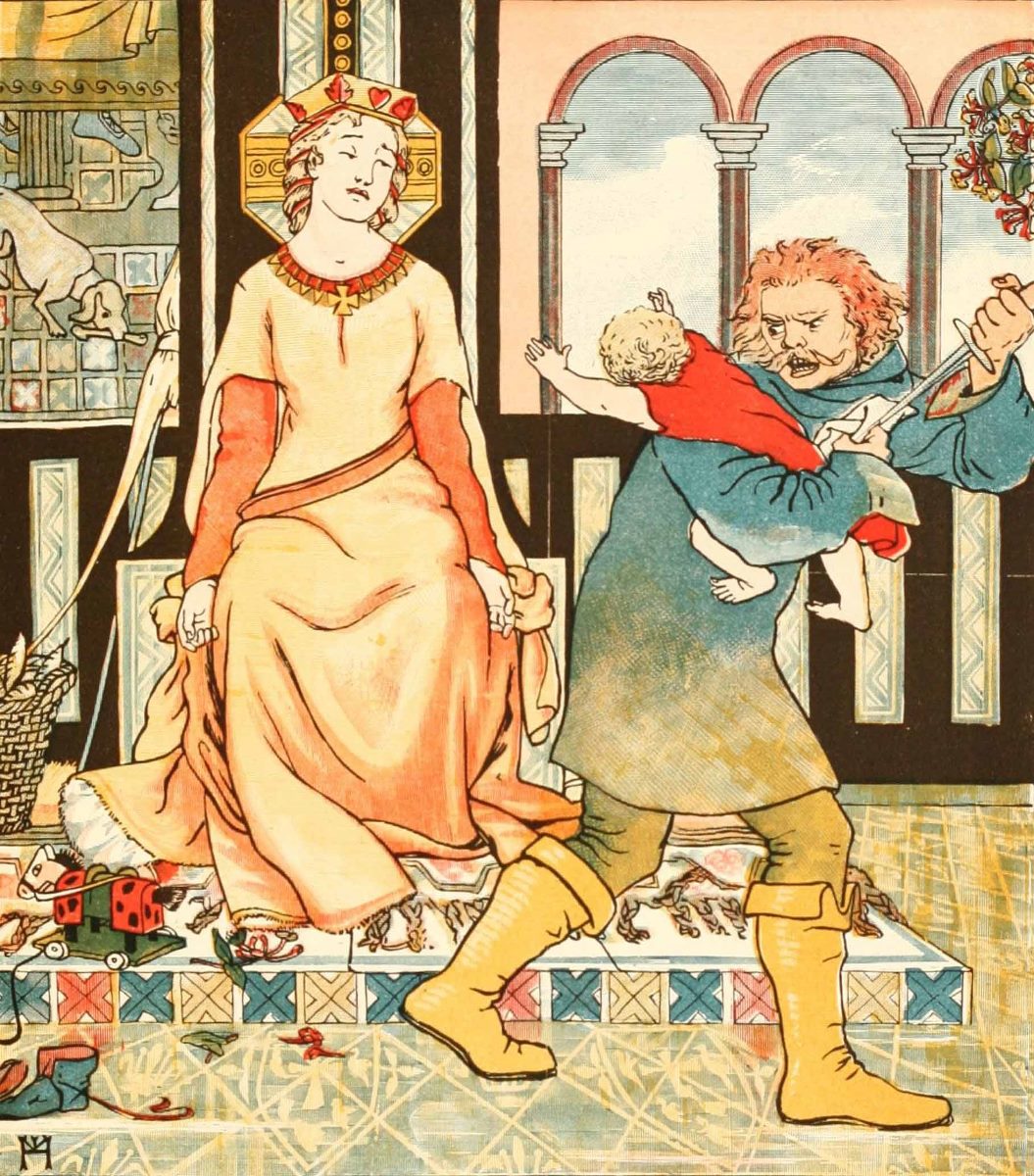
Another remarkable thing about this story is how long it has endured. Thomas Dekker, the Elizabethan dramatist, collaborated on a stage adaptation of Patient Grissel (1599) — from which, incidentally, Paul McCartney took the lyrics for the song “Golden Slumbers.” Charles Perrault, the French author of fairy tales, wrote Griseldis (1691). The story has been adapted into operas by Scarlatti, Bononcini, Vivaldi, and Massenet, and Griselda’s influence can be indirectly felt in works ranging from William Shakespeare’s The Winter’s Tale (c.1611) to Samuel Richardson’s Pamela; or, Virtue Rewarded (1740) and even Kazuo Ishiguro’s Never Let Me Go (2005).
But most remarkable of all are the ways that Griselda’s story has been reimagined by women writers over the years. As early as 1405, Christine de Pizan included Griselda in her Book of the City of Ladies, subtly reframing the story as a demonstration of the female capacity for patience rather than as a model to be replicated. In The Modern Griselda (1804), Maria Edgeworth reverses the roles: Beautiful Mrs. Granby repeatedly tests her husband’s love until their marriage collapses. Charlotte Brontë’s Jane Eyre (1847) can be read as an anti-Griselda story: Jane’s marriage to Rochester parallels Griselda’s, but Jane demands respect and dignity.
“I am no bird,” she famously declares, “and no net ensnares me; I am a free human being with an independent will.”
In the opening scene of Caryl Churchill’s play Top Girls (1982), Griselda herself sits down in a restaurant with other historical and fictional women, but in comparison to the others’ tales of adversity, her “constancy” starts to imply complicity in her own abuse. Recently and most radically, Margaret Atwood’s short story “Impatient Griselda” (2020) is narrated by an alien and features twin sisters — Patient Griselda and Impatient Griselda — who club together to cut Walter’s throat and devour him.
So if, in this strange time, you are seeking a role model of resilience, I recommend reading The Odyssey, Robinson Crusoe, or Jane Eyre. But if you want to get angry, if you want to be inspired to creative action, if you want to join a 700-year-old debate, then read one of the strangest, most enduring, most resilient stories in the history of literature: the tale of Patient Griselda.
This article is part of Big Think’s monthly issue The Roots of Resilience.

The Energy Transition