

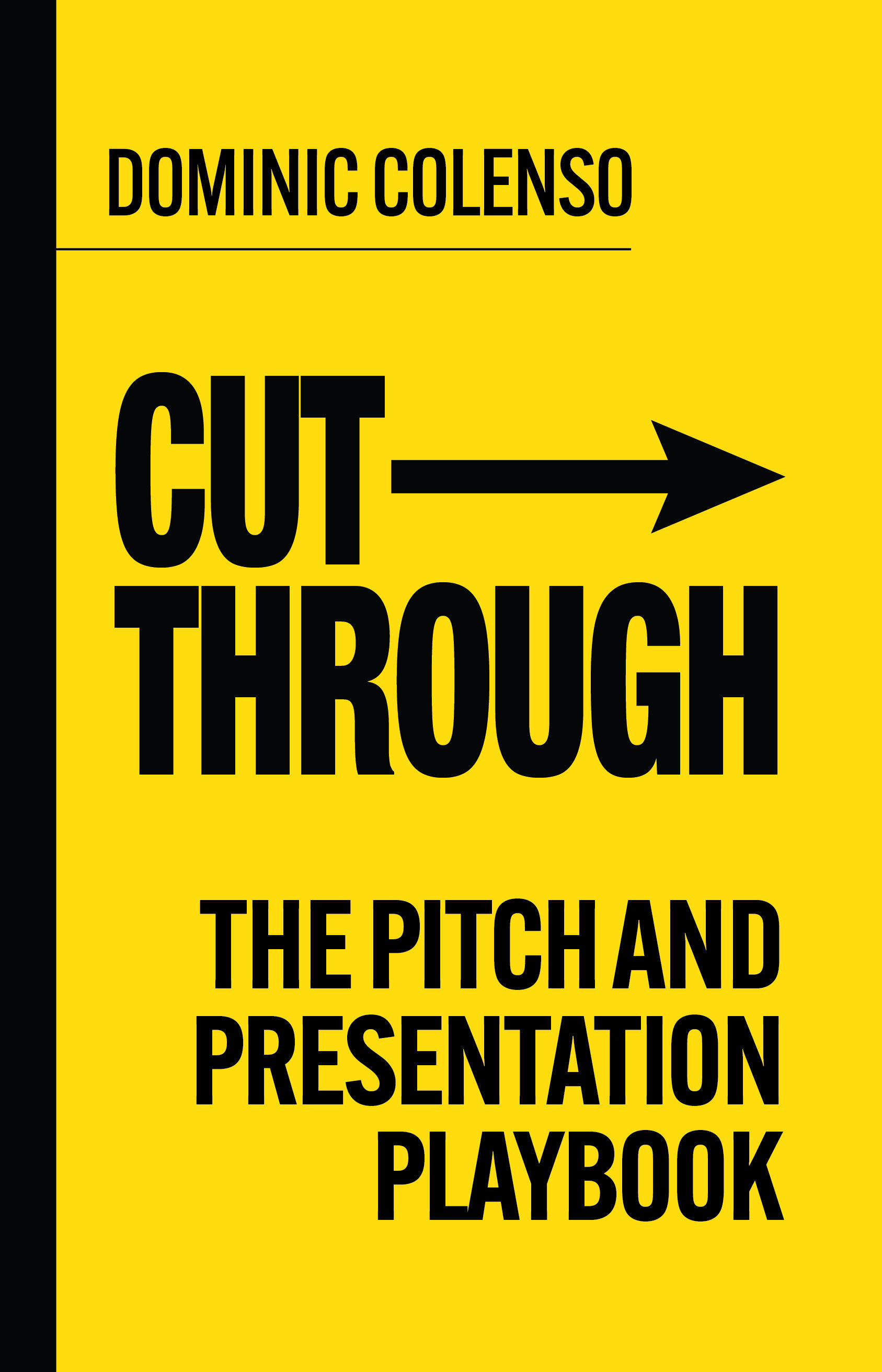
There are some people in life we feel compelled to listen to. There’s something about the way they deliver their message that draws us in. Interestingly, when we look deeper, the detail of what they say seems to be less important than their delivery and their ability to capture an idea in a simple way.
The world is full of influencers, politicians and celebrities that — when you scratch beneath the surface — have remarkably little to say but nevertheless have scores of people queuing up to hear them say it. Rather than get frustrated by this conundrum, we need to learn from it. In almost every line of work, whether we’re salespeople, managers or leaders, trying to influence our friends, our families or our boss, we want what those lucky few get: cut-through.
The Cambridge English Dictionary defines cut-through as ‘success in getting people’s attention and influencing them’. The aim of a great pitch or presentation should be nothing more and nothing less.
Of course, you need to strive for more than just soundbites and clickbait. If there’s no substance to your message people will quickly be distracted by the next shiny thing. But cut-through is the Trojan Horse. It gives you a foot in the door and gifts you the possibility of opening your audience to what comes next.
In their book Smart Brevity, Jim VandeHei, Mike Allen and Rory Schwartz, co- founders of media platform Axios encourage us to “adapt to how people consume content – not how you wish they did or they did once upon a time. Then change how you communicate immediately.” It’s sound advice.
The world of presentations and pitching has changed little in the last few decades. Yes, we have moved on from overhead projectors, but for the most part, people’s approaches have remained largely unchanged. And that’s not a good thing.
Emotion. Simplicity. Energy. If you want to create cut-through, you need to bring these three elements together in every pitch and presentation you deliver. They are the secret sauce.
If we look instead at the world of my former career as a TV and film actor, the contrast is stark. Go back and find a drama made 30 years ago and the majority of them will feel plodding and ponderous. I loved the BBC series All Creatures Great and Small as a child and back then I was completely captivated. Revisiting it now, it appears painfully slow. The FX series The Bear by contrast is like being on a rollercoaster. The choppy editing and searing soundtrack left me feeling, in moments, quite unable to breathe. News available 24 hours, overflowing social media feeds and incessant digital marketing have primed the modern human brain for a different type of engagement.
Rather than resisting, we need to learn to adapt. The first thing to embrace is emotion.
Emotion is the currency of attention, and it stops distraction in its tracks. If you can make your audience feel something, if you can leave them in a different emotional state at the end of your interaction compared to where they were at the beginning, you have earned the right to be remembered. You have taken the first step towards cutting through the noise. However, emotion alone is not enough. The second element required to create cut-through is simplicity. Complexity is a sure-fire way to lose your audience. Instead, you need to be able to take complicated ideas and deliver them in a way that is easy to understand.
Without straying into politics, there is a clear trend at present for simple slogans and phrases of as few words as possible. At least initially, audiences don’t seem to have an appetite for detail, they want to connect with the high-level concept before they will entertain the nuance. That means you need to aim for economy. The simpler your message, the more likely it is to land.
Finally, to ensure that you leave a lasting impression, the third element needed for cut-through is energy. You must be seen to believe in what you’re saying, otherwise you can’t expect others to. Energy in a pitch or presentation context may seem somewhat intangible but as an audience member you know when you’re on the receiving end of it. As a presenter it’s your job to find the right energy to breathe life into your ideas.
Emotion. Simplicity. Energy. If you want to create cut-through, you need to bring these three elements together in every pitch and presentation you deliver. They are the secret sauce. Their intersection is the sweet spot you should be aiming for.

The Energy Transition