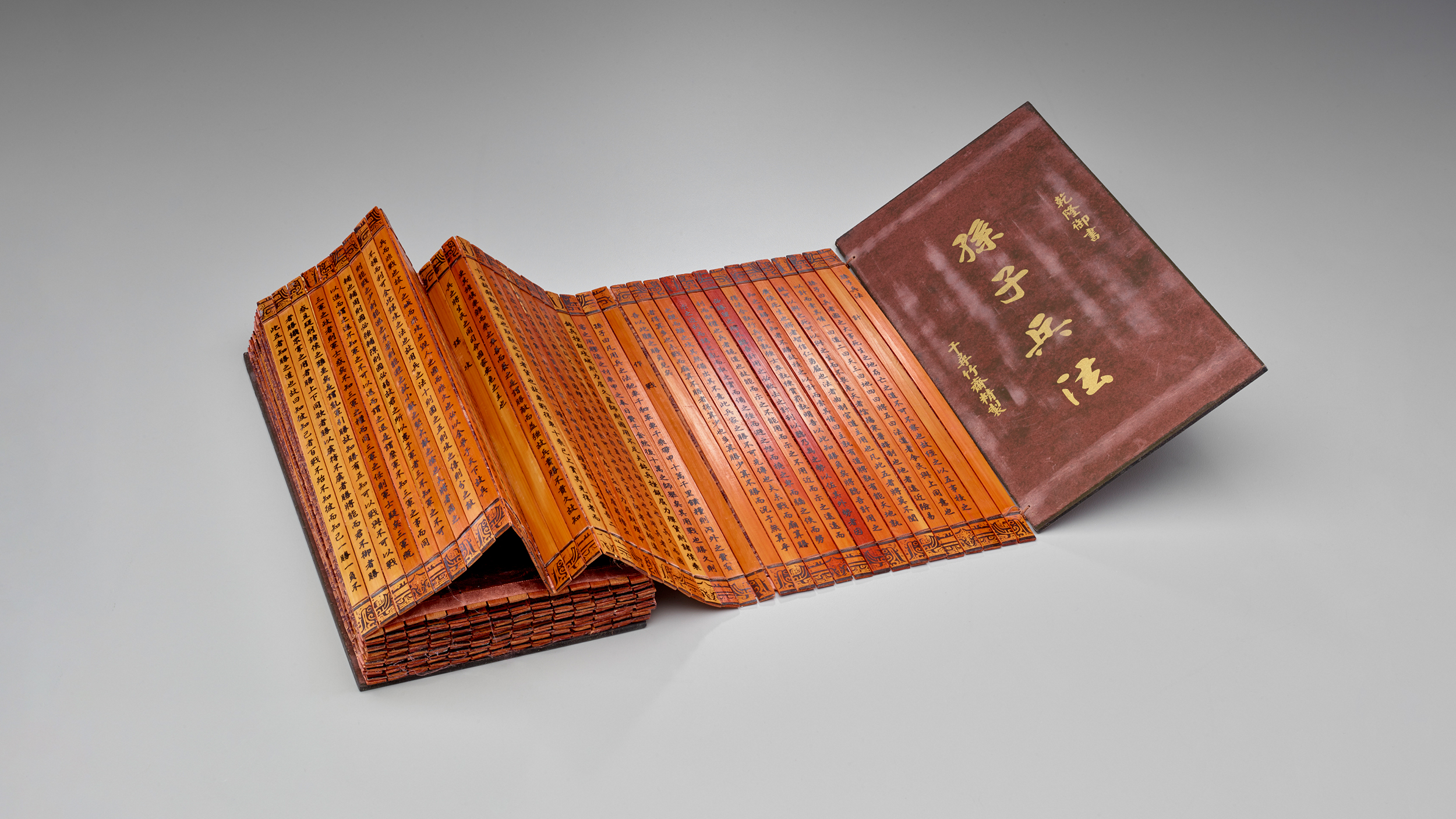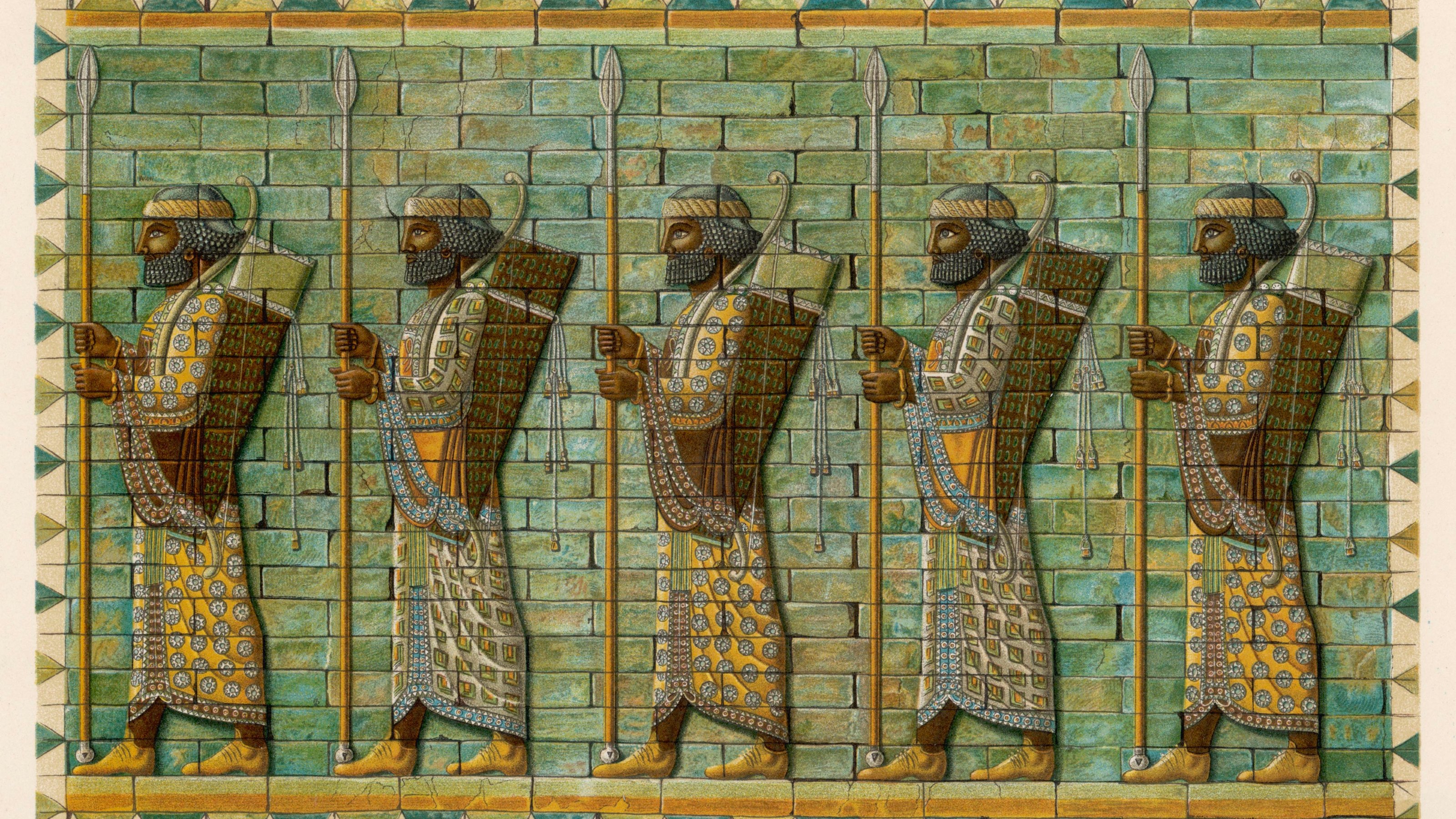


That certain concerns about technology are, for lack of a better word, universal, should be evident to any historian. Early Daoists cautioned against technologies that sully the spirit and ignite chaos. The Zhuangzi [one of the foundational texts of Daoism] warns against the use of “clever machines” and suggests that they are better left alone by those walking the righteous path. This is not unlike the apprehension that many European intellectuals harbored toward the technologies of their respective times, whether that be the early widespread resistance in Western Europe to Hindu-Arab numerals, the reluctance of the Catholic Church to embrace perspectival painting and scientific method in the early Renaissance, or the anxiety that swept over the European continent during the introduction of photography, the film camera, the microscope, and the steam engine. “To try to capture fleeting images is not just an impossible undertaking, the very wish to do such a thing is blasphemous,” reads a nineteenth-century German critique of early daguerreotype technology. “Man is made in the image of God, and God’s image cannot be captured by any machine.”
Yet admonition and derision are far from being the only reactions. Humanity’s enthusiastic embrace of technology, which is so patent in practice, can also be found in the realm of ideas. In China, Mohists took an artisan position, forcefully arguing against the Confucian ideal to transmit rather than create. The Neo-Confucian, Shen Kuo (1031–1095), whose Brush Talks from Dream Brook documents scientific innovations in physics, astrology, mathematics, and medicine, claimed that there was no contradiction between Confucius’s teachings and technology. Despite the apparent Daoist rejection of machines, there is arguably a Daoist attitude that views the emergence of technology as consistent with the Way. The ideal of wuwei (无为, effortless action) is commonly illustrated by the famous story of Cook Ding, who learned to follow the hollows and openings of an animal’s body and effortlessly wielded his knife to carve an ox. Such “effortless action” is arguably aligned with bottom-up trends in machine learning and recent discoveries in neuroscience regarding the spontaneous intelligence of nonconscious cognition.
Perhaps the most significant contribution to any “pro-machine” tendency in Chinese thought, however, comes from the profound influence of Buddhism. Buddhist culture and ideas, which spread across Asia through the trade routes and communication networks of an early urban cosmopolitanism, have long had a deep affinity with technoculture. Buddhists were amongst the first adopters of print technology, and have since then actively incorporated a wide range of “technologies of salvation” including photographs, WeChat dharmas, smartphone rituals, and robot monks. Buddhist modernity made a deep impact on thinkers like Tan Sitong who saw in the emerging world of electromagnetic communication an expression of New Confucian philosophy.
These traditions are occasionally called upon to justify why China, according to some studies, scores high on the social acceptance of robotics and low on AI fear. To explain why “China does not fear AI,” for example, Bing Song [Director of the Berggruen Institute China Center] draws upon schools of thought whose early practitioners often rebuked machines; she writes that “notions of living with other intelligent beings, most of which are more powerful and long-lasting than humans, abound in Daoist and Buddhist thinking.” Indeed, the Mahayana conception that even non-sentient beings have Buddha Nature seems to resonate with the possibility of “artificial” intelligences.
[Philosopher] Gai Fei points out that contrary to a perceived organic prejudice amongst Daoists, practitioners of inner alchemy actively rejected a plant-based diet in favor of ingesting more durable materials such as crystals and metals. In their quest for immortality, they sought to create a metallic body, enacting a kind of proto-cyborgian becoming. Confucianism has also been called upon to accommodate artificial intelligence: contemporary philosophers such as Li Chenyang and Yao Zhongqiu argue that, rather than threatening harmonious human social order, AIs may belong within the Confucian ethic of “graded love” and be counted among the creatures (wu, 物) with which we partake in friendly and mutually beneficial relationships. Likewise, Stephan Angle proposes that the capacity to program software, which can encourage certain virtues, suggests that the ubiquity of AI may be of use in constructing a society with Confucian values.
The Mahayana conception that even non-sentient beings have Buddha Nature seems to resonate with the possibility of “artificial” intelligences.
Yet attitudes and narratives around artificial intelligence both inside and outside of China are ambivalent and contradictory. Arguments suggesting an inherent sympathy between AI and traditional Chinese philosophy can easily serve national business interests and bolster geopolitical aspirations. A few years ago, China “plunged into an artificial intelligence fever,” as enthusiastically described by the well-known executive and investor, Kai-Fu Lee. In 2016, more than 280 million Chinese viewers tuned in to watch Google’s AlphaGo defeat Lee Sedol in the ancient game of Go. In 2018, the bookshelves behind President Xi Jinping in his New Year speech displayed two AI-related publications, Pedro Domingos’s The Master Algorithm and Brett King’s Augmented: Life in the Smart Lane, and Xinhua News Agency unveiled its new AI anchors, Qiu Hao and Xin Xiaomeng.
There are hopes amongst both government officials and corporate leaders that AI and robotics can finally resolve the flaws of a centralized planned economy. For some, the future of the party lies, ultimately, in the realization of a “fully automated luxury communism” with Chinese characteristics. Yet, despite a 2015 government declaration that China would become a leading AI power by 2030 and the optimistic prognosis of entrepreneurs such as Lee, and even accounting for disruptive breakthroughs from China, it is still in America where the most advanced, cutting-edge research takes place, and it is still American technoculture that reigns supreme in the popular imagination.


The Energy Transition