
Test Special Issue

Game Change

Do elite athletes really make elite employees?

Sports, we tend to assume, offer a sharp-edged reflection of business life in microcosm — leadership under pressure, the winning mentality, valuable lessons drawn from loss. It’s all there. Just kick back with a beer and a pizza and watch your pathway to workplace success unfold on game day. Well, it turns out that the connections are often far more nuanced than we might have presumed. Do elite athletes really make elite employees? What’s the connection between Swedish pragmatics in soccer and a thriving startup culture? Have you factored in the difference between “wicked” and “kind” environments (and what does that even mean)? We investigate all of these pivotal tangents, and much more, in this Big Think special collection of essays, interviews, and curated book excerpts. Forget everything you’ve been told about the synergies between sports and business. It’s time to rewrite the rules.

Blue background with the words "Game Change" in white, surrounded by strategic game symbols and graphs in the background.
Presented by
John Templeton Foundation
A black background with the text "ARC PRIZE" in pixelated white and grey font. Two colored squares, one pink and one yellow, are placed above the letters "I" and "Z" in the word "PRIZE.
His $1 million ARC Prize competition is designed to put us on the right path.
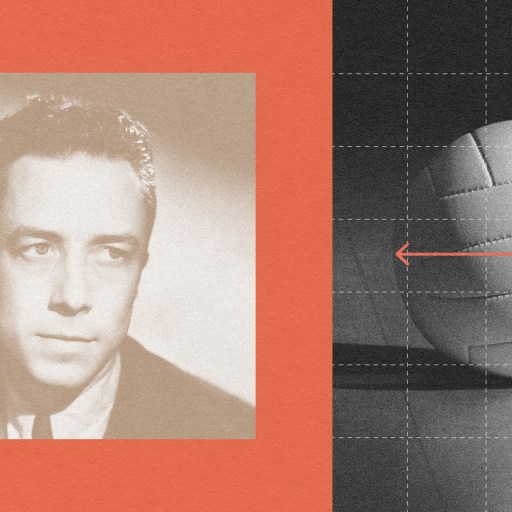
A photograph of a Albert Camus on the left and an illustration of a volleyball with arrows indicating its dimensions on the right, set against a dual-colored red and gray background, evokes a sense of alienation.
How do you cope when joining a team shatters your confidence? Albert Camus and Harry Stack Sullivan can help.
A green die showing two and a gray die showing five are placed on a gray surface, perhaps hinting at a stroke of luck.
Unraveling the subtle mechanics of luck can help us better steer the wheel of fortune.
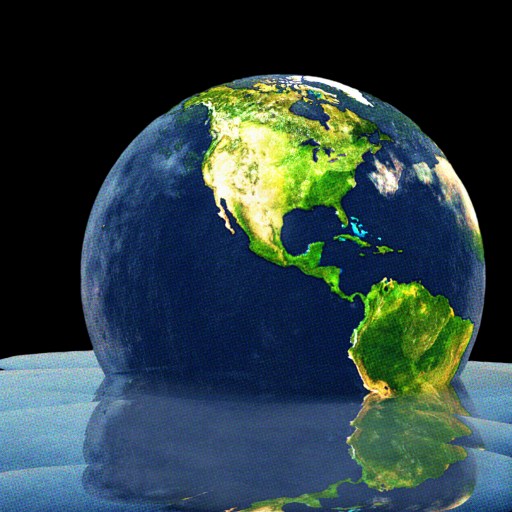
The Earth partially submerged in water, symbolizing climate change and rising sea levels, against a black background.
12mins
“You can find examples of really big environmental problems that we've already solved.” Climate change is solvable, argues Hannah Ritchie.
A hand is tossing two white dice with black dots against a dark background.
3mins
Don’t fall into the determinism trap. Everything is, in fact, random, says chemist Lee Cronin:
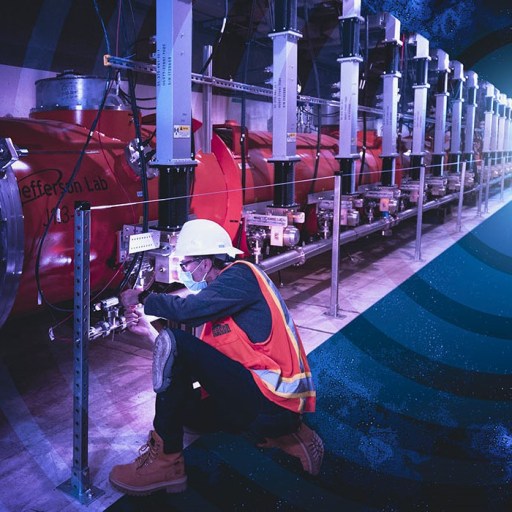
A worker in a hard hat and safety vest adjusts equipment in a facility alongside large red machinery labeled "Jefferson Lab." The scene fades into concentric circles, as if drawn by the powerful collider, leading to a bright light.
The largest particle accelerator and collider ever built is the Large Hadron Collider at CERN. Why not go much, much bigger?
With our new Analytics feature, you can easily identify trends and success metrics to maximize your learning program’s effectiveness.
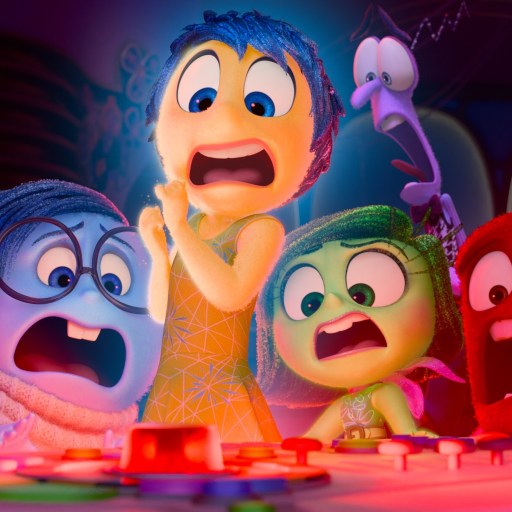
Five animated characters with various expressions of alarm gather around a control panel with a red button.
Meg LeFauve and Dave Holstein drew inspiration from psychologists as well as their own children, becoming more understanding parents in the process.
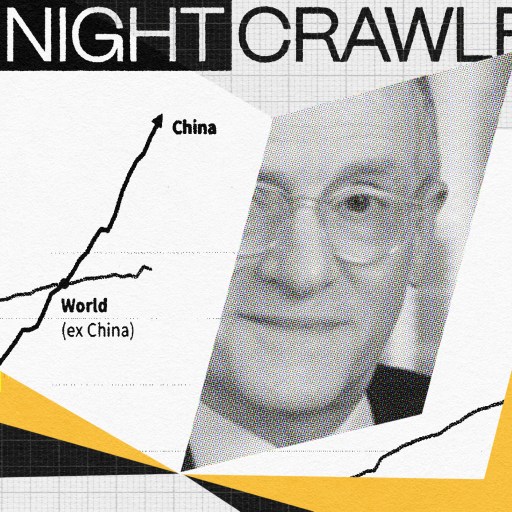
Cover of "The Nightcrawler" featuring a chart showing China's economic growth surpassing the rest of the world, with a pixelated face overlaid. Emphasizing second-level thinking, the "Et . business" logo is in the bottom right corner.
Welcome to the Big Think debut of The Nightcrawler — a weekly newsletter from Eric Markowitz covering tech, innovation, and long-term thinking.
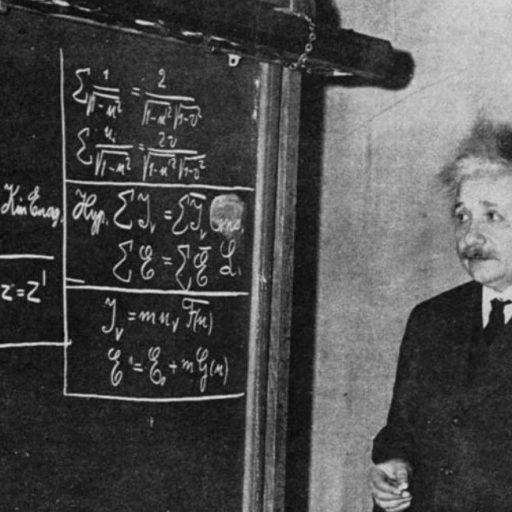
Einstein
More than any other equation in physics, E = mc² is recognizable and profound. But what do we actually learn about reality from it?
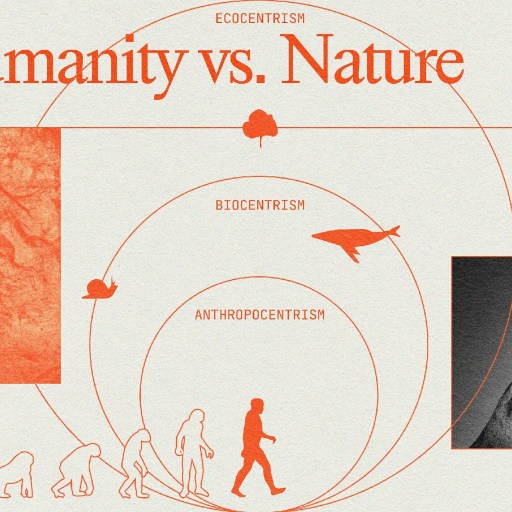
Illustration depicting "Humanity vs. Nature" with diagrams of evolution, ecocentrism, biocentrism, and anthropocentrism, featuring images of a tree, human evolution, and a whale.
Slowing growth and limiting development isn’t living in harmony with nature—it is surrendering in a battle.
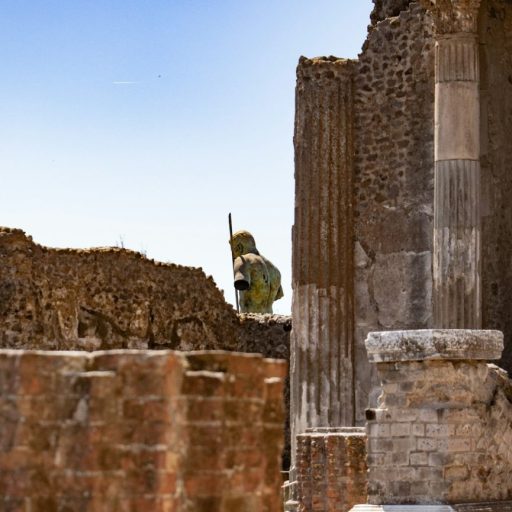
Ancient ruins with stone columns and damaged walls, featuring a statue partially visible in the background. Clear blue sky above.
In popular culture, the eruption is usually depicted as an apocalyptic event.
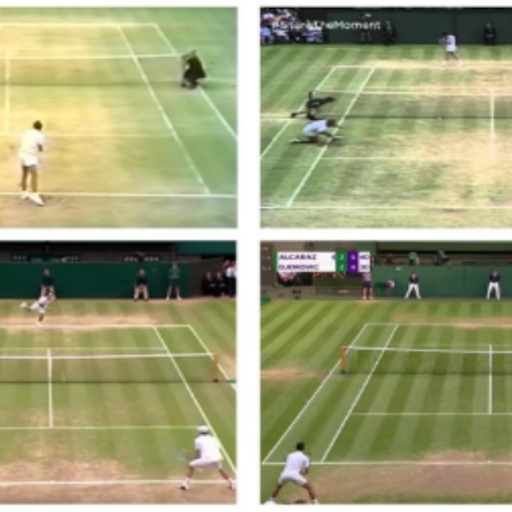
Four images of tennis matches on grass courts, showing different stages of play, each with two players. The courts show varying degrees of wear from fresh to significantly worn.
How has tennis changed in recent decades? The wear and tear on Wimbledon’s Centre Court may tell the tale.
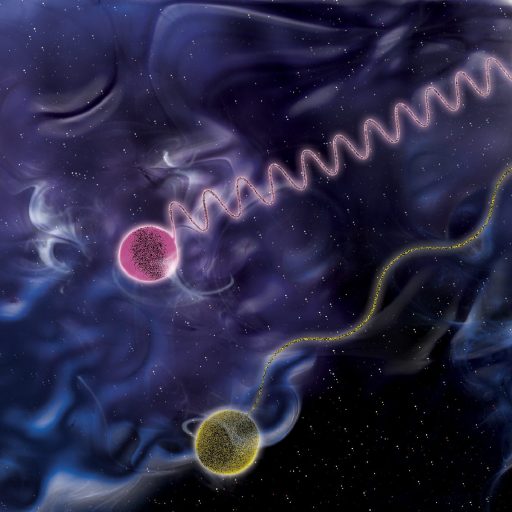
two particles different wavelength speed of light
The Michelson-Morley experiment of 1887, despite expectations, revealed a null result: no effect. The implications were revolutionary.
A glowing light bulb is in the center of the image, surrounded by various mathematical formulas and equations on a blue background.
Why dispelling the notion that it's all about getting the correct answer is so powerful.
Abstract illustration of multicolored arrows pointing upwards on a light background, symbolizing growth, progress, and the limitless potential of AI stratosphere.
In new business use cases where AI is the default, the potential results are phenomenal — but humans should play a key strategic role.
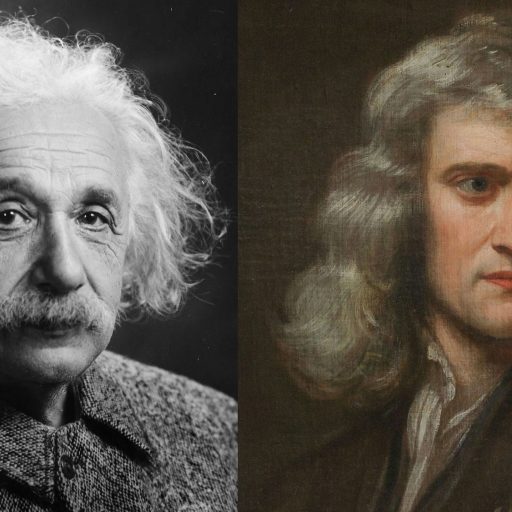
For centuries, Newton's inverse square law of gravity worked beautifully, but no one knew why. Here's how Einstein finally explained it.
A close-up digital rendering shows a glowing blue orb with intricate internal patterns, resembling a microscopic or sci-fi object, set against a dark background with scattered lights.
Quarks and leptons are the smallest known subatomic particles. Does the Standard Model allow for an even smaller layer of matter to exist?
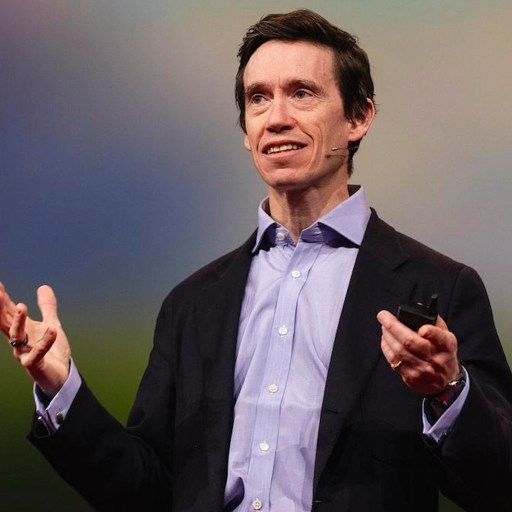
A person in a suit stands on stage, gesturing with both hands while speaking into a headset microphone, passionately discussing direct giving in their presentation.
Big Think guest writer Rory Stewart — former UK Secretary of State for International Development and co-host of The Rest Is Politics podcast — made a profound discovery about leadership while working with GiveDirectly.
how many planets
From size to mass to density and more, each world in our Solar System is unique. When we compare them, the results are truly shocking.