




















Search
History & Society
Trace how culture, power, and ideas shape societies across time.

Somewhere, at some point in the history of our Universe, life arose. We're evidence of that here on Earth, but many big puzzles remain.

Even just by examining the Moon with the unaided eye, we can learn an incredible amount about the Moon, Earth, and more.

Some books are remembered for their lyrical prose or engaging stories. Others are remembered for simply being weird.

It makes no sense to talk about a “religious life” and a “public life” — there is just life.
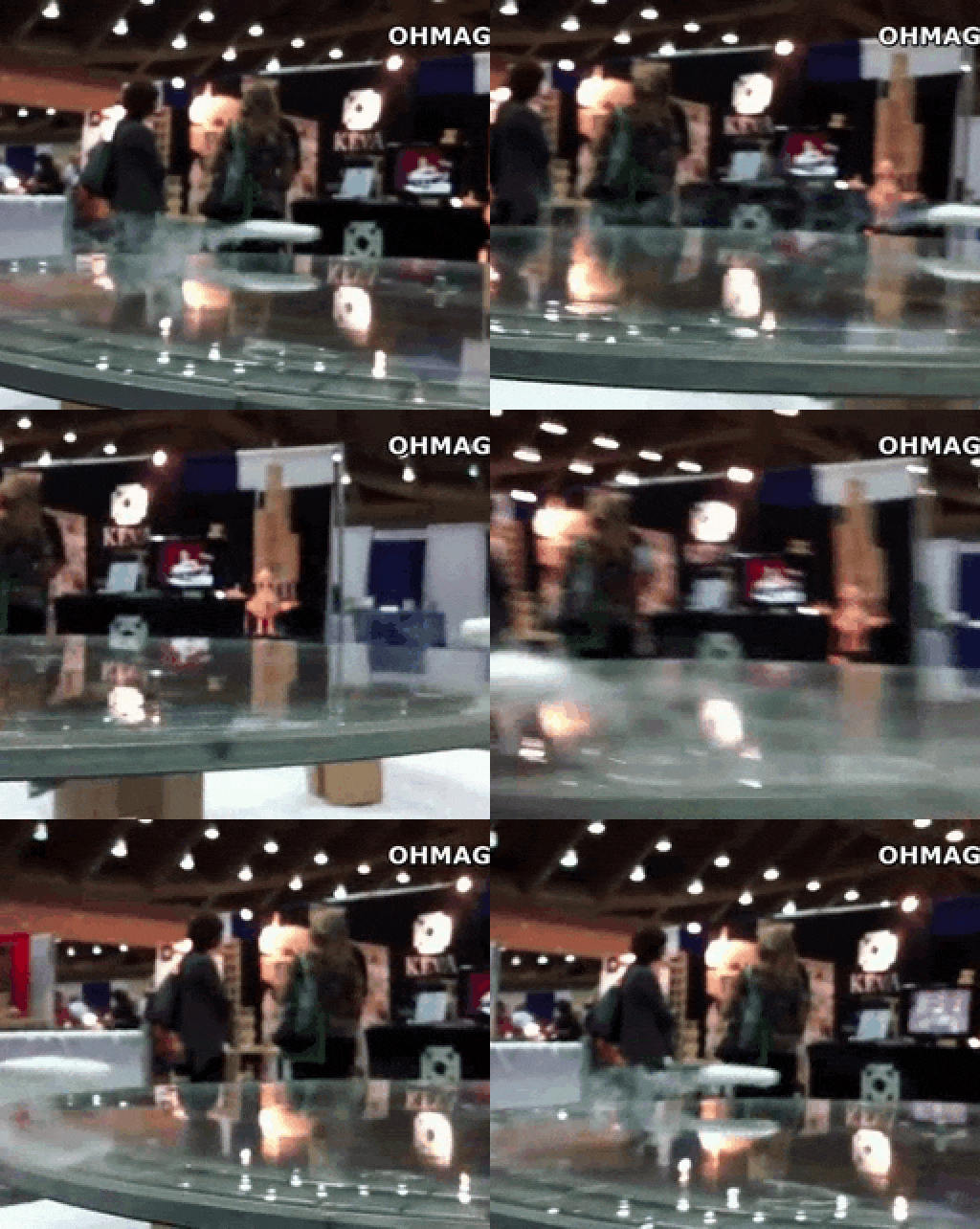
With the right material at the right temperature and a magnetic track, physics really does allow perpetual motion without energy loss.

In "The Headache," Tom Zeller Jr. explores one of the human brain's most enduring, and painful, enigmas.

The JFK Memorial at Runnymede provides a link between America's and Britain's founding documents.

Once you cross a black hole's event horizon, there's no going back. But inside, could creating a singularity give birth to a new Universe?

Before becoming America’s most infamous assassin, John Wilkes Booth was a magnetic actor who was beloved by audiences and courted by critics.

Welcome to The Nightcrawler — a weekly newsletter from Eric Markowitz covering tech, innovation, and long-term thinking.

From high school through the professional ranks, physicists still take incredible lessons away from Newton's second law.

After more than a million years of separation, two branches of humanity reunited around 300,000 years ago, suggests new research.

In "Dinner with King Tut," Sam Kean examines how a burgeoning field is recreating ancient tasks to uncover historical truths.
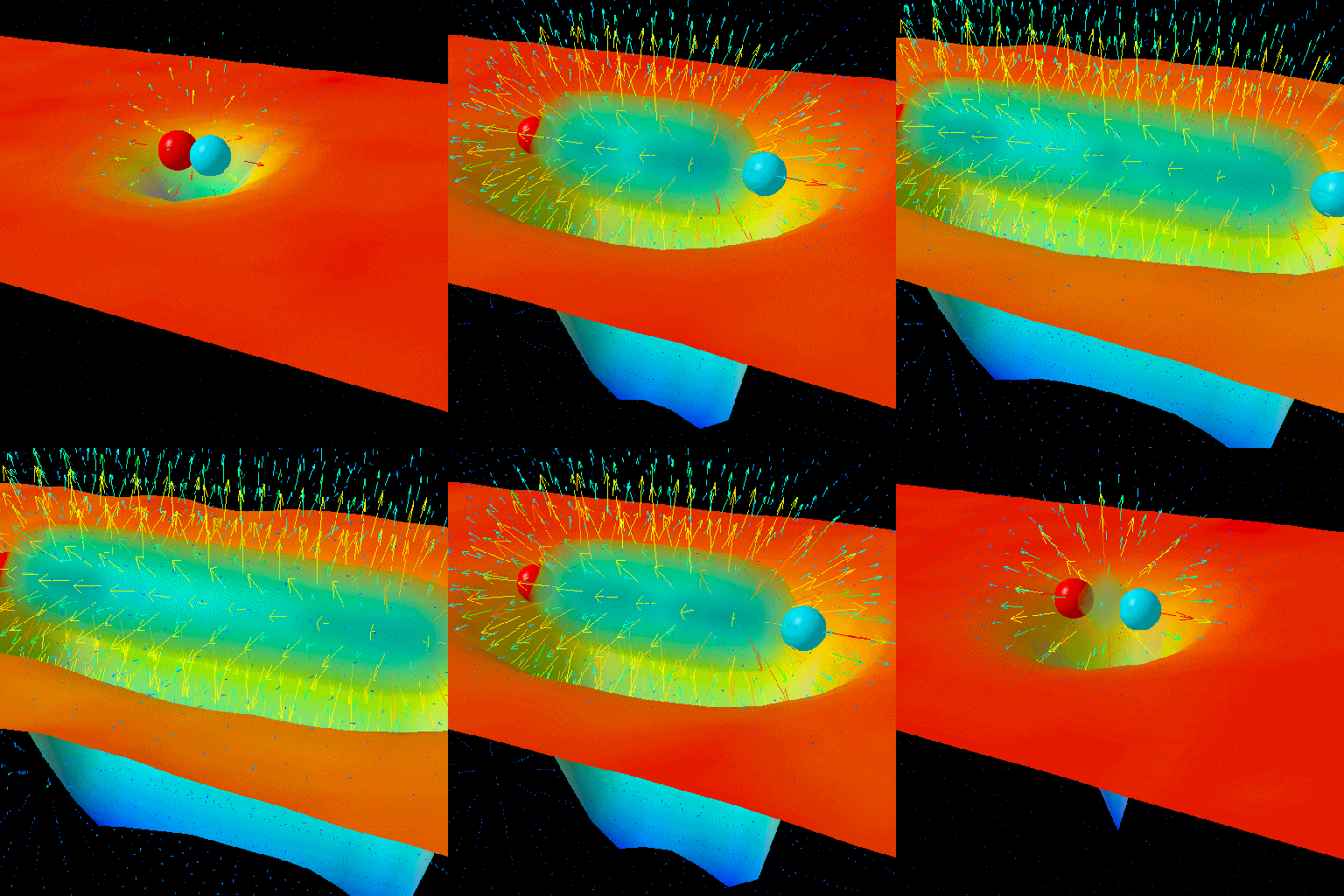
The measured value of the cosmological constant is 120 orders of magnitude smaller than what's predicted. How can this paradox be resolved?

Welcome to The Nightcrawler — a weekly newsletter from Eric Markowitz covering tech, innovation, and long-term thinking.

Can the top quark, the shortest-lived particle of all, bind with anything else? Yes it can! New results at the LHC demonstrate toponium exists.

In "Human History on Drugs," Sam Kelly explores what the research can tell us about one of history’s most brilliant — and troubled — artists.

A mid-flight scare reveals how embracing death can bring purpose and meaning to everyday life.

First 'Oumuamua, then Borisov, and now ATLAS have shown us that interstellar interlopers are real. Here's what the newest one teaches us.

In "The Microbiome Master Key," Brett and Jessica Finlay argue that we need to stop waging war on all germs and start working with the microbes that make us who we are.