




















Search
Latest Articles
The newest essays, interviews, and features from Big Think.

6mins
Over 250 million records sold and more than 70 platinum hits later, Jason Derulo sits down with us to talk about goals, insecurities, and why he still doesn’t feel like he’s “made it.”
Unlikely Collaborators
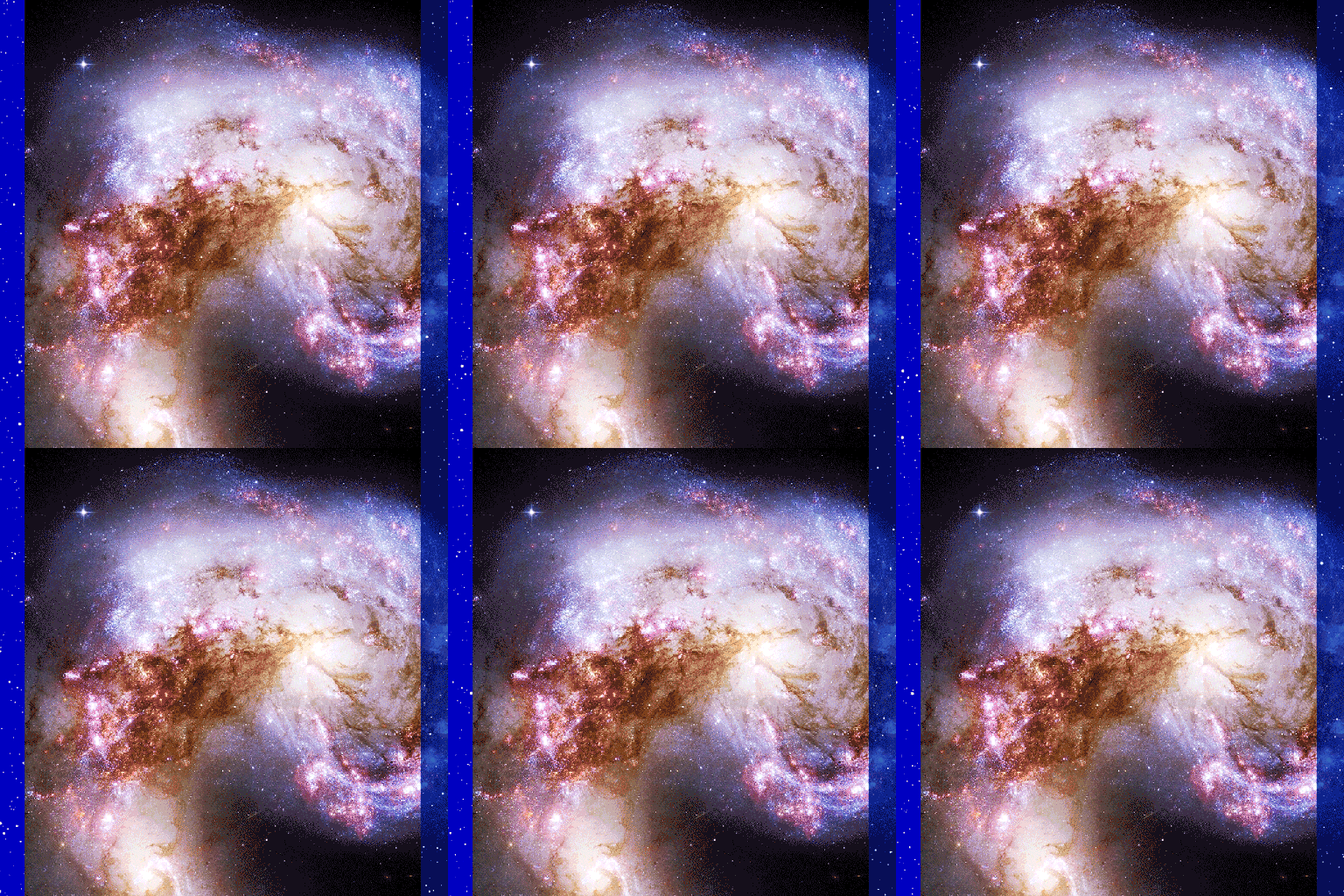
Today, the star-formation rate across the Universe is a mere trickle: just 3% of what it was at its peak. Here's what it was like back then.

Earth wasn't created until more than 9 billion years after the Big Bang. In some lucky places, life could have arisen almost right away.


Millions of people have had a near-death experience, and it often leads them to believe in an afterlife. Does this count as good proof?

The first-of-its-kind map, which goes all the way down to the level of a single cell, could help prevent common birth defects.

8mins
Eastern religion meets Western psychology: meet the Harvard professor who’s also a Zen priest as he explains how to relieve suffering using both faith and neuroscience.

As early as we've been able to identify them, the youngest galaxies seem to have large supermassive black holes. Here's how they were made.

The ominous cloud of acid rain hasn't vanished but rather drifted toward the developing world.

A basement renovation project led to the archaeological discovery of a lifetime: the Derinkuyu Underground City, which housed 20,000 people.
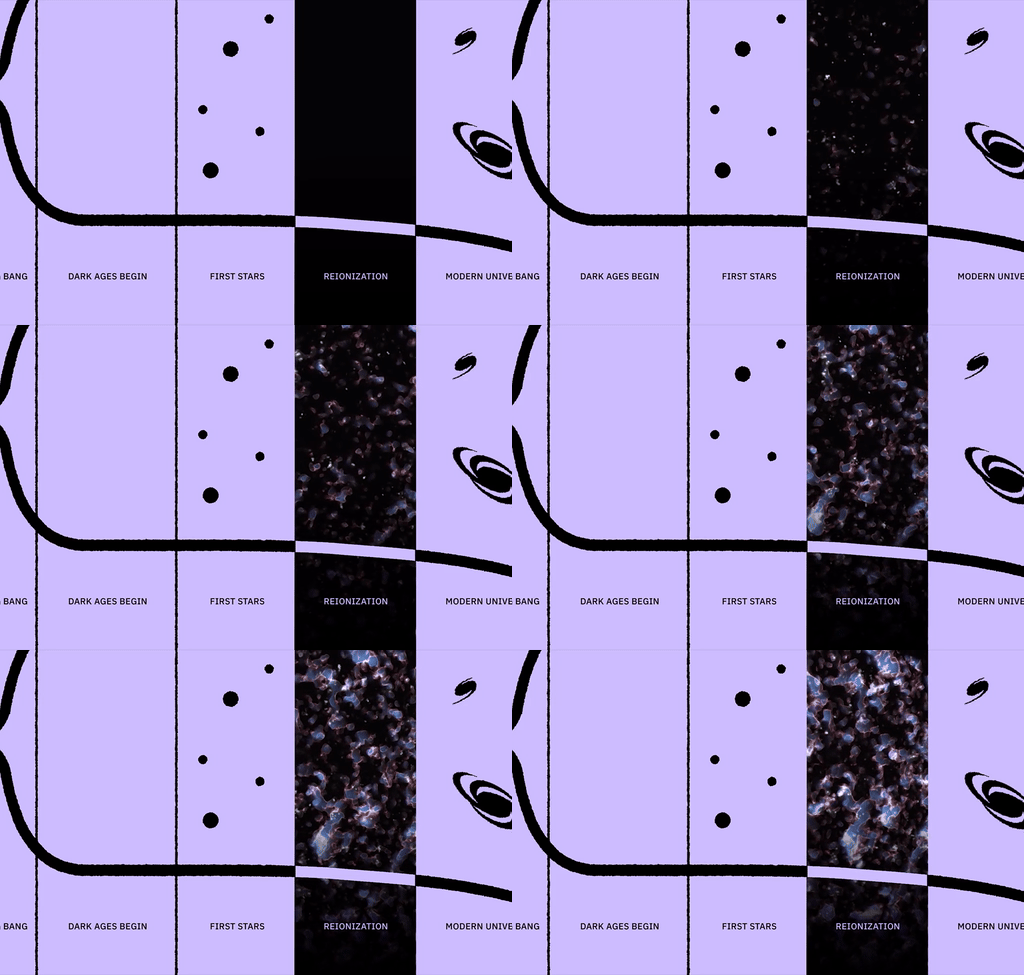
For 550 million years, neutral atoms blocked the light made in stars from traveling freely through the Universe. Here's how it then changed.

As wind power grows around the world, so does the threat the turbines pose to wildlife. From simple fixes to high-tech solutions, new approaches can help.

Wolfgang Pauli was a brilliant, well-liked physicist and a scathing critic of balderdash.

We each have the same 24 hours in the day. How will you spend yours?

Even after the first stars form, those overdense regions gravitationally attract matter and also merge. Here's how they grow into galaxies.

Teller and Sagan debated fiercely over nuclear proliferation. But was the conflict as personal as it was intellectual for Teller?

A volley of new insights reignites the debate over whether our choices are ever truly our own.

Many conversations start awkwardly and derail from there, but a few simple techniques can put them back on track.
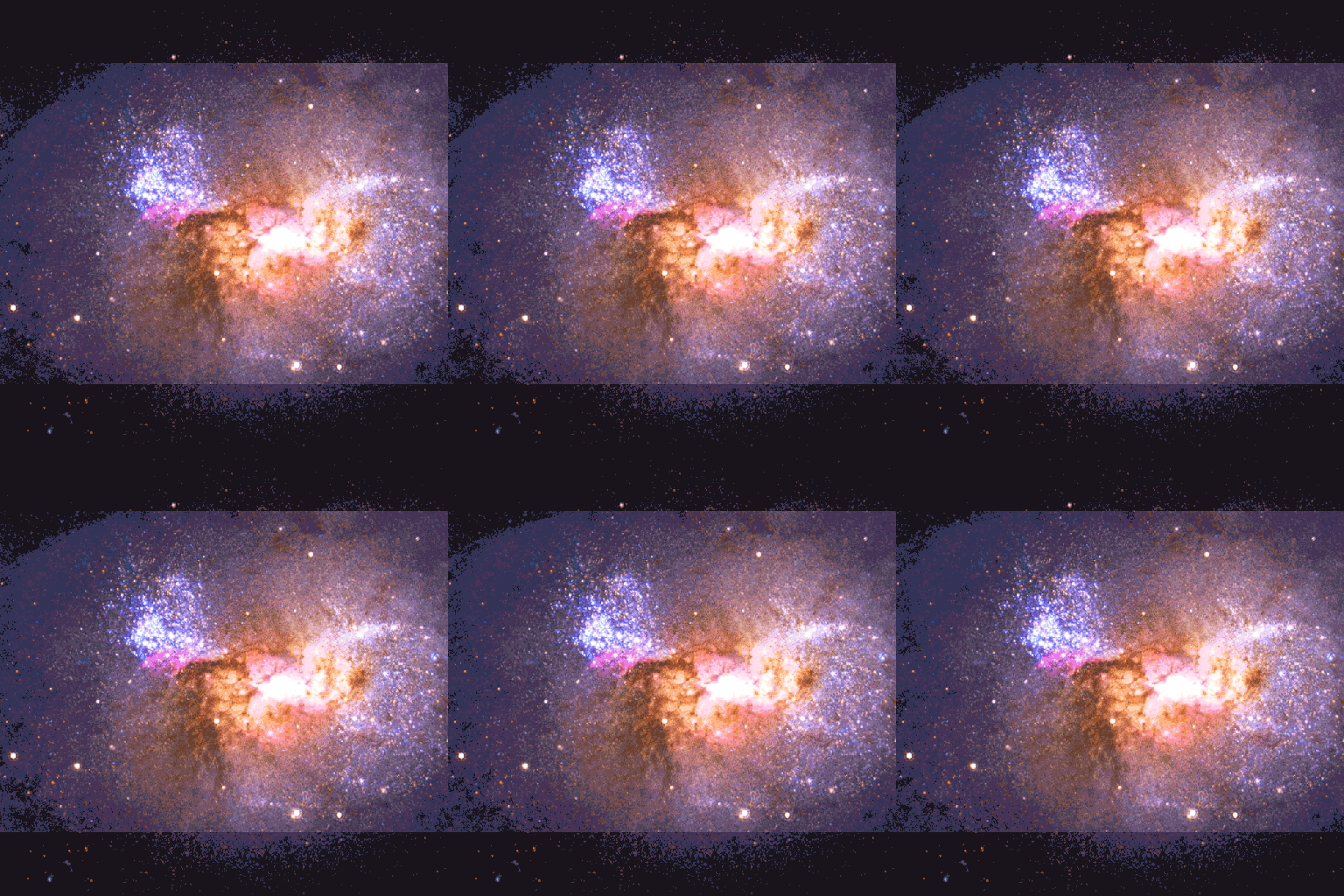
The first stars in the Universe were made of pristine material: hydrogen and helium alone. Once they die, nothing escapes their pollution.

When battles raged in ancient cities, their rocks blazed so brightly that they could be reoriented according to Earth's magnetic field.