




















Search


These prior beliefs help us make sense of what we are perceiving in the present.

When it comes to lifelong conditions like autism spectrum disorder, we tend to be biased in a way that obscures reality.

Two Apollo 11 astronauts question NASA's planetary safety procedures.

The first church to marry gay couples in Oklahoma. The merging of a congregation founded by a white supremacist with the members of a black Pentacostal congregation. The film American Heretics explores the complexities of religious life in the Bible Belt as it intersects with politics and race.

It’s very different from the colloquial meanings of “true-and-false” or “right-and-wrong.” In many ways, the human endeavor of science is the ultimate pursuit of truth. By asking the natural world […]

2mins
Ask very silly questions to spur very serious innovation.

The future of food sounds bleak, but it doesn't need to be this way.

On the first episode of The Portal, Eric Weinstein and Peter Thiel discuss the future of education.

Here's why you might eat greenhouse gases in the future.

The study — which involved more than 2 million children — is the largest of its kind.

This new research could help individuals recover from one of the most dreaded types of injury.

Considering the U.S.'s history of biological warfare, maybe this theory isn't as crazy as it sounds.

Hunting for dark matter, neutrinos, and other elusive signals isn’t just a satisfying endeavor, it’s a way of life for Dr. Laura Manenti. We know that there’s more to the Universe […]
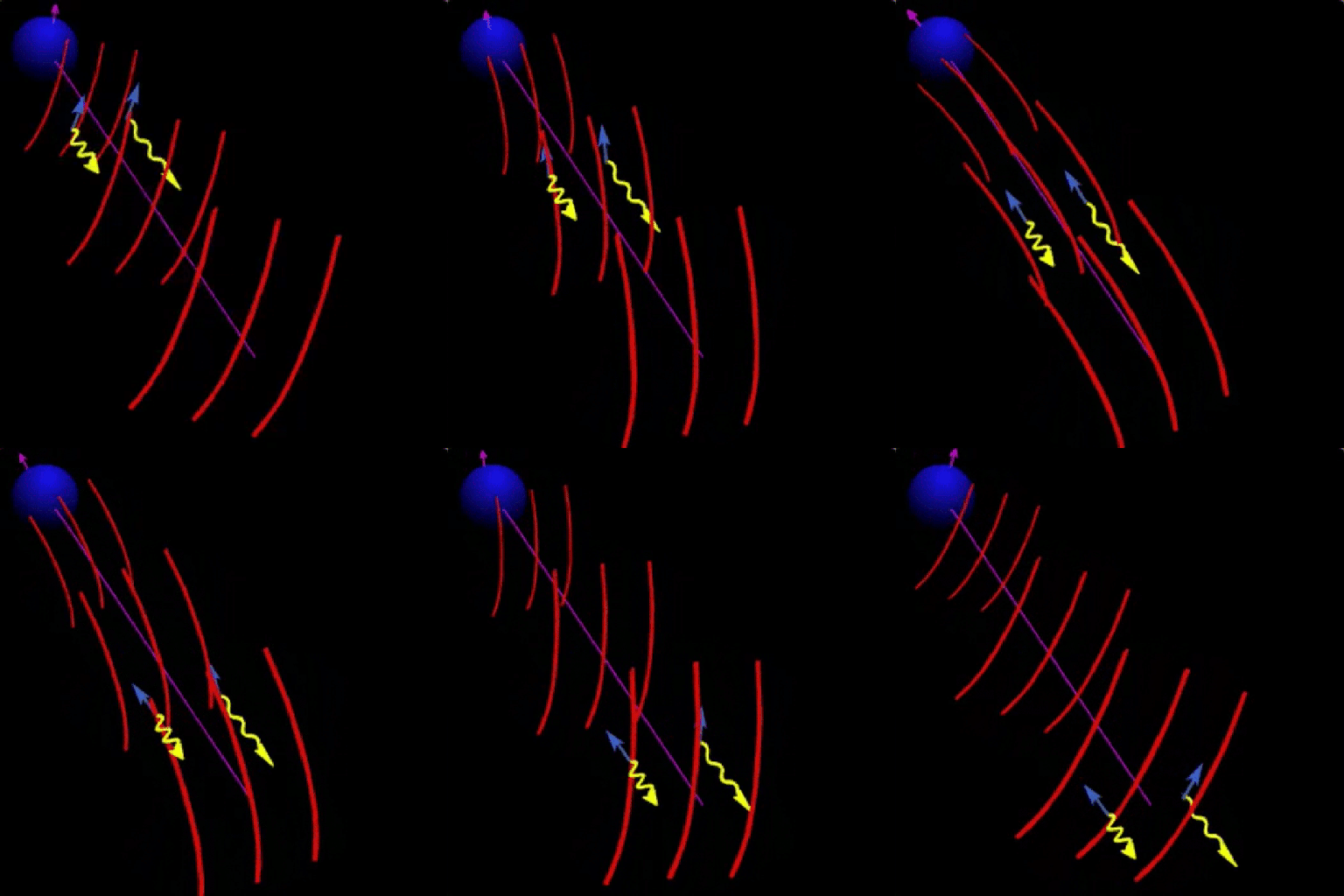
The nature of our quantum Universe is puzzling, counterintuitive, and testable. The results don’t lie. Although our intuition is an incredibly useful tool for navigating daily life, developed from a lifetime […]

3mins
Pulitzer Prize-winner Jared Diamond explains why some nations make it through epic crises and why others fail.

New report shows the extent of China's hidden power as the developing world's creditor.

Fingerprinting and facial recognition may lead the way in air travel.

The latest phones have more than one million (1,048,576 to be exact) times more memory than the Apollo computer had in RAM.

The FBI has been called to investigate it.

At 18 percent of the population, Hispanics account for 67.2 percent of U.S. net homeownership gains.