




















Search


Slack’s recent radical upskilling booster week highlighted the urgent need for new approaches to L&D: here are some of the most groundbreaking.

The cosmic scales governing the Universe are almost unbelievably large. What if we shrunk the Sun down to be just a grain of sand?

The U.S. ranked 59th worldwide.

Actor and science communicator Alan Alda shares his three rules of three for effective and empathic communication.

Intentions tend to get mangled by overreach in every complex organization — so dial up the charisma and the clarity.

Figuring out the answer involved a prism, a pail of water, and a 50 year effort by the most famous father-son astronomer duo ever.

Fantasy, meet statistics: The census comes to Middle-earth!

Here's why the answer may forever elude scientists.

Well-rounded business teams can be built by distilling key insights from sporting data. Bottom line: don't overstock on superstars.

8mins
He revolutionized hospitality, twice. Chip Conley shares his secrets to being able to evolve in an ever-changing world.

With the invention of the leap year, the Julian calendar was used worldwide for over 1500 years. Over time, it led only to catastrophe.

Sometimes called “the new gold,” sand is the second most exploited natural resource in the world after fresh water.

Like many of us, the Roman emperor Marcus Aurelius hated waking up early, but his stoic philosophy always helped him get out of bed.

Engagement with generative AI is a business essential — but all companies should be vigilant.

6mins
Over 250 million records sold and more than 70 platinum hits later, Jason Derulo sits down with us to talk about goals, insecurities, and why he still doesn’t feel like he’s “made it.”
Unlikely Collaborators
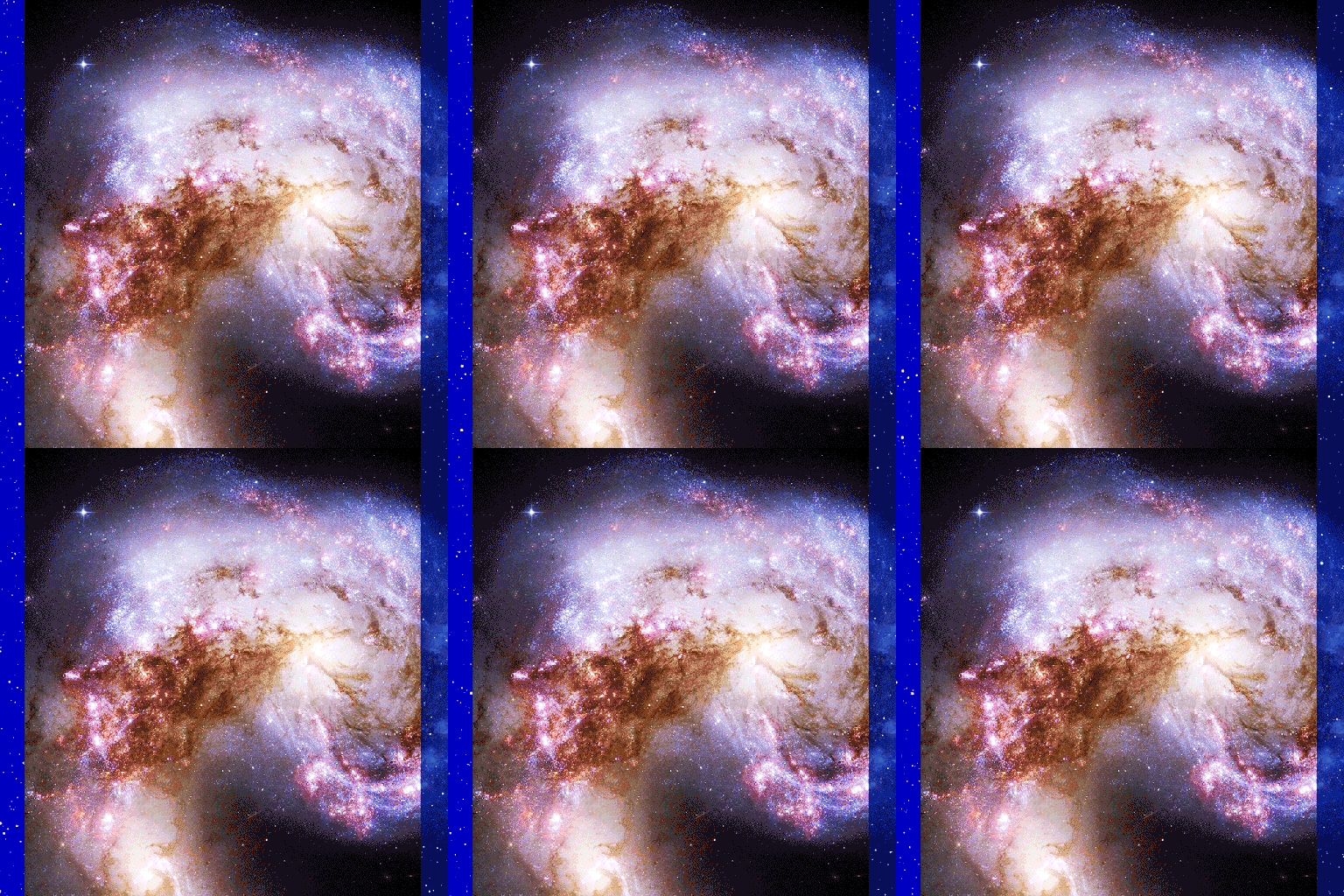
Today, the star-formation rate across the Universe is a mere trickle: just 3% of what it was at its peak. Here's what it was like back then.

Earth wasn't created until more than 9 billion years after the Big Bang. In some lucky places, life could have arisen almost right away.


Millions of people have had a near-death experience, and it often leads them to believe in an afterlife. Does this count as good proof?

The first-of-its-kind map, which goes all the way down to the level of a single cell, could help prevent common birth defects.