

















The Latest from Big Think

Text reading "The Latest" in a large, serif font on a light background.
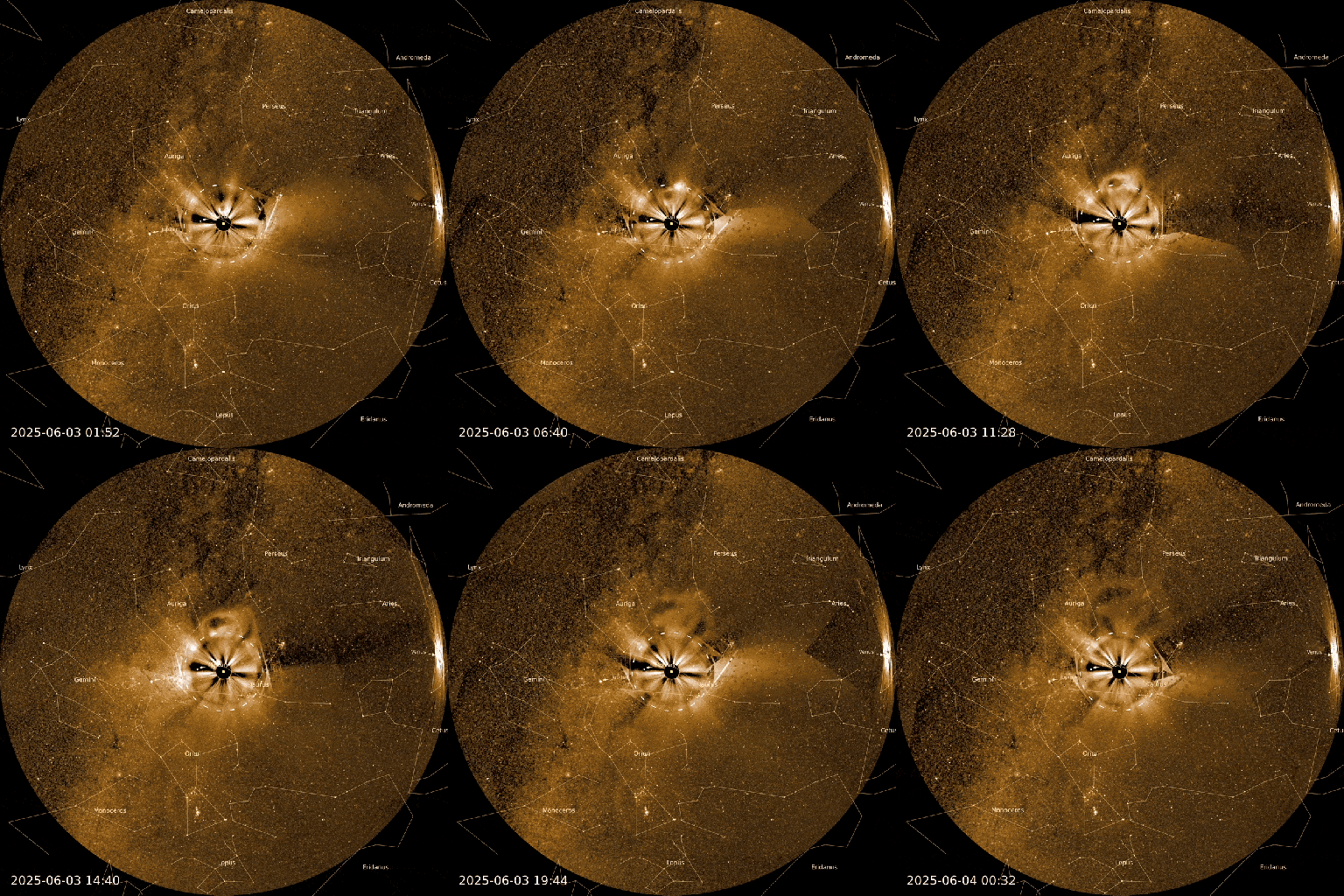
Circular astronomical image showing constellations and celestial objects labeled against a dark sky, reminiscent of a NASA PUNCH video sun corona visualization, with a timestamp of 2025-06-03 01:52 at the bottom left.
Launched in March, the PUNCH mission has viewed two incredible coronal mass ejections, tracking them farther from the Sun than ever before.
A flowchart with a large question mark at the top leads to boxes containing photos, abstract patterns, and arrows connecting each step on a textured green background.
Annie Duke, a poker champion turned decision scientist, talks with Big Think about how to choose well under uncertainty.
A person is being recorded on video by a camera mounted on a tripod, with the display highlighting visual literacy as the subject appears in focus and the background is artfully blurred.
Leaders may not realize it — they’re not just being watched, they’re being interpreted, filtered, and judged, frame by frame.
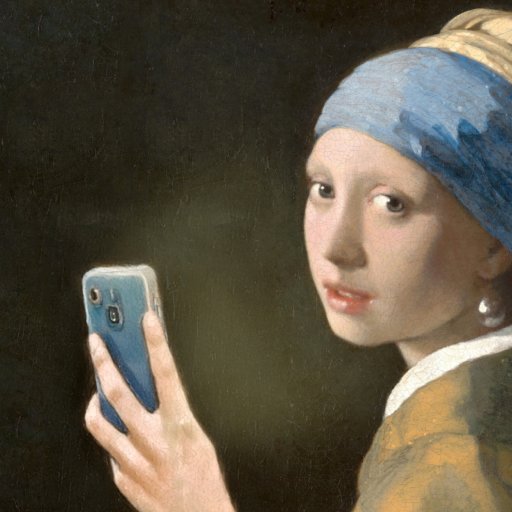
A woman in a blue and yellow headscarf and pearl earring holds a smartphone, looking over her shoulder, mimicking the style of a classic painting.
3mins
From the printing press to the internet, every technological revolution in history has reshaped human thought. Now, with AI accelerating by the day, philosopher Meghan Sullivan asks: Are we ready for the philosophical shift that must follow?
The tiniest galaxies of all are the most severely dominated by dark matter. Could black holes be the cause of the extra gravity instead?
Map of Bhutan showing its borders with China and India, highlighting several disputed regions with labels indicating their names and locations.
As Beijing encroaches on the territory of the Himalayan kingdom, its ultimate aim is leverage over India.
Why do we fall in love with one person over another? The late biological anthropologist Dr. Helen Fisher unpacks the evolutionary roots of romantic love, sex, and attachment.  Using research […]
A digital illustration showing a glowing blue particle on the left, evoking cosmic inflation, transitioning into a geometric, grid-like structure on a purple background on the right.
A few physical quantities, in all laboratory experiments, are always conserved: including energy. But for the entire Universe? Not so much.
A woman, resembling a paranormal investigator, holds a rectangular glass dish above her eyes, which are illuminated by light shining through the dish in a dark setting.
For his new book, “The Ghost Lab,” Matt Hongoltz-Hetling spent time with paranormal investigators to understand their relationship with science and society.
Two men in suits stand in front of a graphic collage featuring technical drawings and a building with solar panels, overlaid with the text "The Nightcrawler," evoking innovation that stands the test of stellar age.
Welcome to The Nightcrawler — a weekly newsletter from Eric Markowitz covering tech, innovation, and long-term thinking.
A heart shape is cut out of paper, revealing a circuit board with computer chips and code underneath.
4mins
"If we did create beings that were more like non-human animals, we ought to treat them much better than we now treat non-human animals."
Timeline of the universe from the Big Bang, as described in cosmology, showing inflation, formation of atoms, stars, galaxies, and expansion to the present day over 13.8 billion years.
If you want to understand the Universe, cosmologically, you just can't do it without the Friedmann equation. With it, the cosmos is yours.
A large yellow hot air balloon with a smiley face is shown on the left; on the right, a bunch of parfit smiley face balloons float against a cloudy sky.
If happiness is an absolute good, would 1 billion slightly happy people be better than 1 million incredibly happy people?
A man wearing a black blazer, graphic T-shirt, and backwards cap stands against a plain background with his hands raised in a questioning gesture.
6mins
“You might as well go for it. You might as well do the thing that you dream about doing for heaven's sake.”
A blue planet with visible rings and several small, bright Uranus moons is set against a darkened black background.
Viewing Uranus's largest moons with Hubble, astronomers hoped to find darkening on the trailing side. They found the exact opposite instead.
A worker in protective gear operates machinery in an industrial facility, with a partial overlay of solar panels and geometric patterns above—hinting at the innovative spirit found in stellar societies.
The cofounders of think tank RethinkX are convinced that humanity is undergoing civilizational phase change.
A white dinosaur skull silhouette on a black background with red, rough, scribbled lines evokes the intrigue of the dinosaur myth.
In "The Shortest History of the Dinosaurs," Riley Black reveals the bold mammals that thrived in the Age of Reptiles.
Book cover titled "Speak, Memorably: The Art of Captivating an Audience" by Bill McGowan and Juliana Silva, featuring a red background and blue and orange text, inspired by the storytelling flair of Francis Coppola.
The “primacy/recency effect” is used by celebrated movie-makers, Broadway composers, and restaurateurs — it can work for you too.