This article is part of Big Think’s monthly issue The Roots of Resilience.
I’m sitting on some grass. Picnic detritus surrounds our little camp, and my two boys are wrestling not far away. It won’t be long until one of them starts crying, but until that time, I’ll enjoy a chicken wrap and a swig of my drink.
A mother walks along the path in front of us. She’s pushing a stroller and looking flustered. She’s looking flustered because her son is being an ass. “No, Matt,” she shouts. “Stop it. Stop. It!”
Matt is carrying a stick and whacking flowers. He walks a few paces, then whack. Walk, whack. Walk, whack. In his horticultural wake lie dozens of broken leaves and scattered petals. Matt is just another little boy spending his days decapitating daffodils, driven by a prepubescent need to get attention and assert his will. It’s the manifestation of a repressed, Freudian death drive. Or perhaps he’s just a boy who likes whacking things.
Now, I don’t really care about flowers. They’re pretty enough, and the world is undeniably better for their existence, but one rose is just as sweet as all the others, in my opinion.

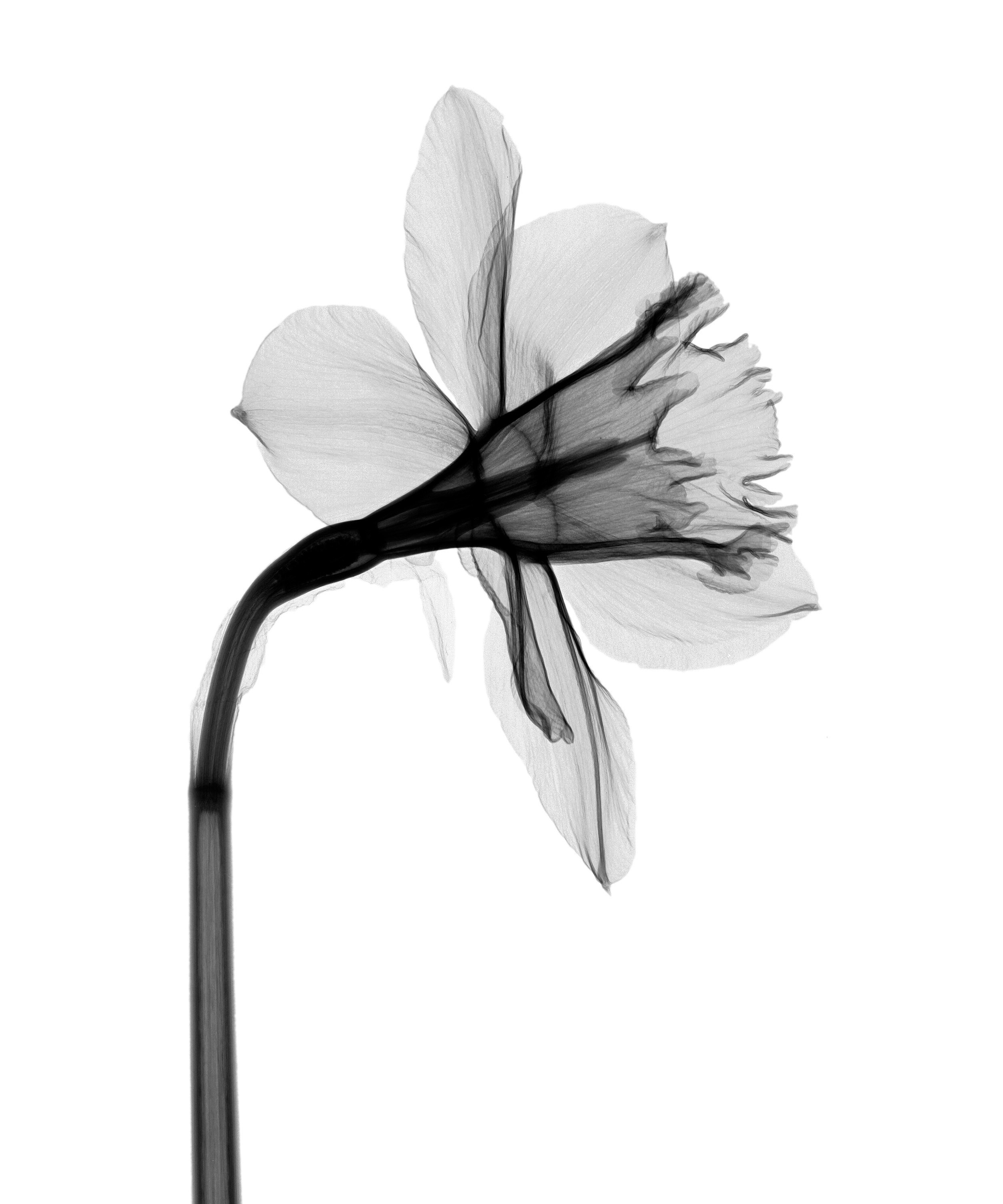
Daffodils, though, are different. Daffodils are not just a flower; they are a symbol, one of the first signs of spring. They have long been recognized as the great heralds of the thaw — their yellow heads trumpeting out: “The long, cold winter is done.”
And Matt was whacking them with his stick. A herald muted by a boy.
But a daffodil does not die when you hack it to bits. It bows out of the season, no doubt. It loses a few months’ opportunity to grow and reproduce. It retreats into itself. It reinvests its energy. It waits out the winter, and it waits out Matt. It grows again.

The stick of suffering
A daffodil has no spikes. It has shallow, weak roots and thin, delicate petals. Its stalk is snappable, its fragrance is delightful, and its bright beauty is highly conspicuous. And so, a daffodil is vulnerable to the world. A romantic, swooning lover picks it to give to his date. A slug chews ragged holes in its leaves. A thoughtless jogger tramples it underfoot. Matt comes nearer with his stick.
The world has always been dangerous for daffodils — rife with slugs, Matts, and other threats — but across 30 million years of evolution, they have cultivated a remarkable form of floral resilience.
A daffodil’s generative source lives underground in its bulb, a specialized storage organ composed of fleshy leaf bases that house concentrated starches and nutrients. As long as the basal plate — the thick tissue at the bottom of the bulb — is undamaged, the plant can lose its entire stalk and flower without dying; it simply retreats into a state of dormancy. In the wake of a catastrophic stick, the bulb stops wasting energy on repair and instead focuses on wintering. It isolates the damaged tissues, preserving its internal embryonic bud for the following spring.
It’s only after we accept the man in the long, black robe and the boy with his stick that we can actually live without fear.
Humans are no less delicate and remarkable than daffodils. We have powerful muscles, impressive brains, and fairly robust skeletal systems, but invincible we are not. You might be as strong as a bodybuilder, as smart as a professor, or as rich as Elon Musk, but the world will come for you. Alexander the Great — widely considered the most formidable military leader the world has ever known — is said to have died from a mosquito bite.
When Siddhartha Gautama peeked over the gilded walls of his pleasure garden, he saw the great, unavoidable evils of existence: age, sickness, and death. We can postpone these. We can negotiate and bribe our way out of some of them. Give up smoking. Walk a bit more. Soon enough, you’ll be able to get Botox at Walmart. But the three great sufferings of the Buddhist canon cannot be kept at bay forever. We get old, we get ill, and we die. Matt with his stick; the reaper with his scythe.
The Roman philosopher Cicero famously wrote that the job of philosophy “is nothing but to prepare one’s self to die.” Because, if we fear death, we give it power over us. When we deny the realities of inevitable suffering and mortality, we become enslaved by a hopeless desire to avoid them. But if we make peace with death, we can find peace in being alive.
It’s a compelling argument. And it’s not for nothing that memento mori has become a philosophical meme: Remember that you will die, so that you can free yourself of the unhappy clinging to this world. Because it’s only after we accept the man in the long, black robe and the boy with his stick that we can actually live without fear.
The wintering
A daffodil is not a Stoic. It is no more capable of reflecting on the finitude of existence or the three marks of suffering than I am of photosynthesizing. But while daffodils might never pick up a book, they have certainly mastered the ars moriendi — “the art of dying.” It comes with practice.
Every year, the daffodil dies. In good years, it manages to avoid hungry slugs and plucking lovers. It makes it through spring and basks in the Sun. It might have a romantic tussle with a bee or two. But even if it avoids catastrophe, when it gets to early summer, the daffodil dies. Its petals turn brown, its stalk droops, and the plant disappears. You’ll be walking down a path or driving along your commute and suddenly realize the world is far less yellow than it once was. The daffodils are wintering.
The daffodil is a reincarnate species. Or, less poetically — less flowery — it is an asexual species. A mother bulb creates “offsets,” or daughter bulbs, from its base. These offsets are genetically identical to the mother, but the plants that grow from them are unique — they may have brighter or duller petals, more or fewer leaves. Every spring, plants biologically identical to the mother emerge from the soil, but the daffodil is never the same from one year to the next.
The wisdom of the daffodil is to recognize that there is something remarkable in submitting to destruction.
In philosophy, there is a theory known as episodism, first popularized by Galen Strawson and later championed by the likes of Ian McEwan. It argues two things. The first is that our lives should be understood as a series of discrete, self-contained “bundles” of existence that have varying — and often little — connective fiber. The second is that viewing our lives as a “story” — as one coherent narrative — is dangerous.
Episodism says that we do not have some essential continuity. We are not bound from birth to death by a soul or immortal filament. As Strawson put it, “I am not a protagonist in a drama. I am simply the one who is here now, and when this episode ends, another will begin. … The ‘Narrative’ view of the self is a psychological type, not a universal truth of human nature.”
Or, as the philosopher Simon Critchley puts it, “Your life is not a fucking story.”
The metamorphosis
The reason a narrative view of the self — one that treats identity as a single, coherent story stretching across a life — is so problematic is because it denies something very important: people metamorphose.
A metamorphosis is not just “a change.” It’s not a new wardrobe or a new favorite band. A metamorphosis is a root-and-stalk reconstruction of who you are. It’s often triggered by a catastrophe — a divorce, a diagnosis, or a boy with a stick — but it’s just as often the endpoint of a gradual wintering. When we walk out of our homes into the long, cold night, it’s often someone else who walks back with the dawn. The daffodil’s strength is not the kind you see in epics. The Roman legions did not march with a sword in one hand and a flower in the other. The daffodil’s resilience is moving and malleable. The daffodil does not fight the sufferings of life but gives way to it with an intentional act of self-destruction. The daffodil retreats because its strength comes in rebirth. It cannot fight Matt with his stick, but it will survive the encounter.
Life will break us all, eventually. Give it enough time, and you’ll see the truth of that. We can meet that truth with the Stoic indifference of memento mori, certainly, but there are many kinds of mori. The wisdom of the daffodil is to recognize that there is something remarkable in submitting to destruction. We can accept the death of one version of ourselves, knowing it’s a necessary step in the process of resurrecting as someone else. We need to become who we need to be.
This metamorphosis — or metanoia, for those of a religious bent — is an essential part of being human. We do not “have” to be the same throughout our lives. There is no one way we must behave or one person we must be. I choose, you choose, we all choose what it means to be. Yes, we can grow. We can cultivate virtues and develop our abilities. But sometimes, we need to change entirely. We need to metamorphose into something different — something far more suited to the world we have and the life we want to live.
To get through this life, we need not only the wisdom of the philosophers. We need the resilience of daffodils.
This article is part of Big Think’s monthly issue The Roots of Resilience.

The Energy Transition