




















Search
Science & Tech
Explore the discoveries that reveal how the world works, alongside the technologies that extend, reshape, and sometimes challenge what’s possible.

Welcome to The Nightcrawler — a weekly newsletter from Eric Markowitz covering tech, innovation, and long-term thinking.

On the largest scales, galaxies don't simply clump together, but form superclusters. Too bad they don't remain bound together.

One does not simply make a meme go viral.
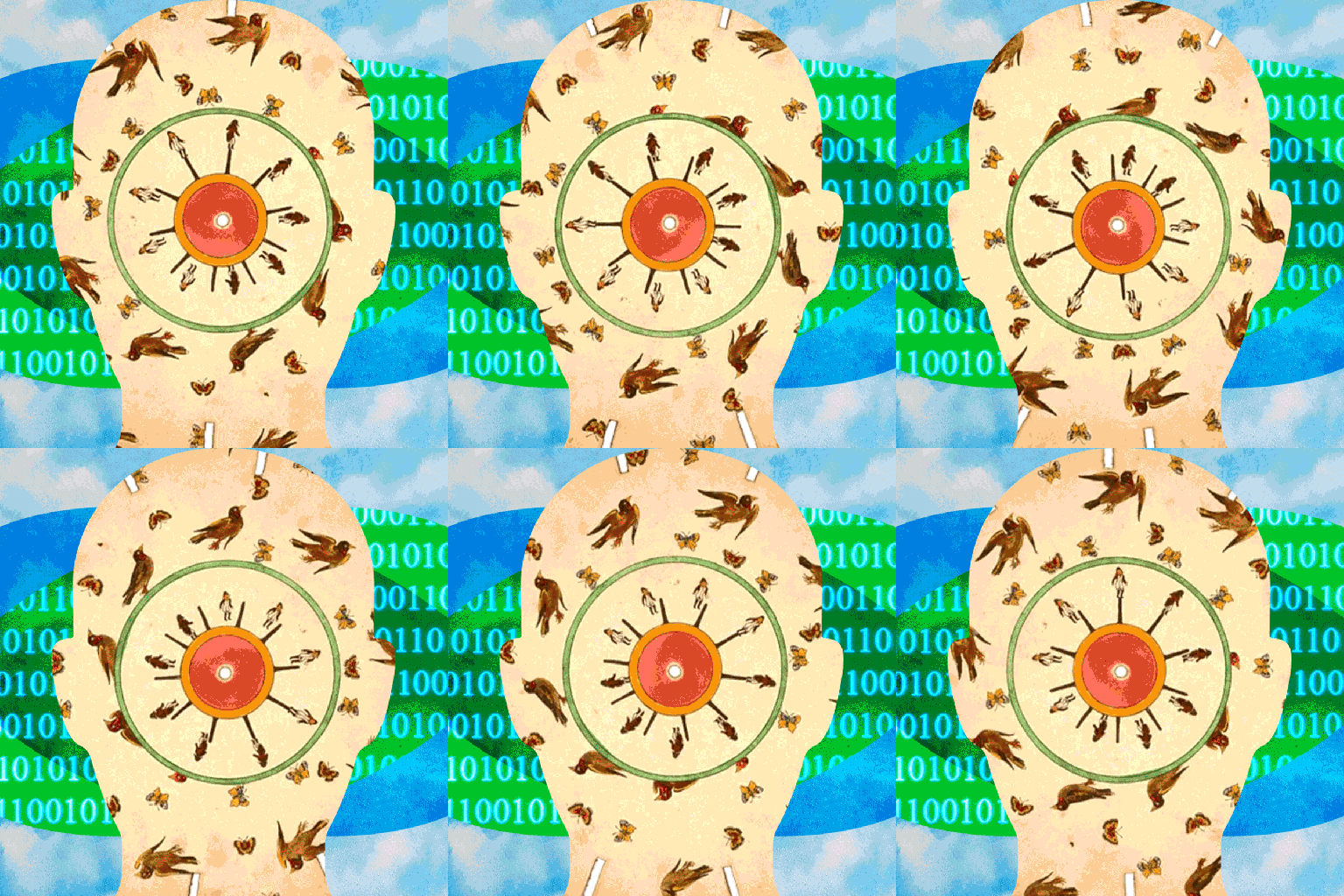
Duke sociologist Dr. Christopher Bail on the tech’s potential to foster empathy in an age of division.
John Templeton Foundation

The conversation you're having with an LLM about groundbreaking new ideas in theoretical physics is completely meritless. Here's why.

Somewhere, at some point in the history of our Universe, life arose. We're evidence of that here on Earth, but many big puzzles remain.

The Big Bang was hot, dense, uniform, and filled with matter and energy. Before that? There was nothing. Here's how that's possible.

Some books are remembered for their lyrical prose or engaging stories. Others are remembered for simply being weird.

Realizing that matter and energy are quantized is important, but quantum particles aren't the full story; quantum fields are needed, too.

With the right material at the right temperature and a magnetic track, physics really does allow perpetual motion without energy loss.

When the Hubble Space Telescope first launched in 1990, there was so much we didn't know. Here's how far we've come.

Once you cross a black hole's event horizon, there's no going back. But inside, could creating a singularity give birth to a new Universe?

Welcome to The Nightcrawler — a weekly newsletter from Eric Markowitz covering tech, innovation, and long-term thinking.

From high school through the professional ranks, physicists still take incredible lessons away from Newton's second law.

No matter what it is that we discover about reality, the fact that reality itself can be understood remains the most amazing fact of all.

In "Dinner with King Tut," Sam Kean examines how a burgeoning field is recreating ancient tasks to uncover historical truths.
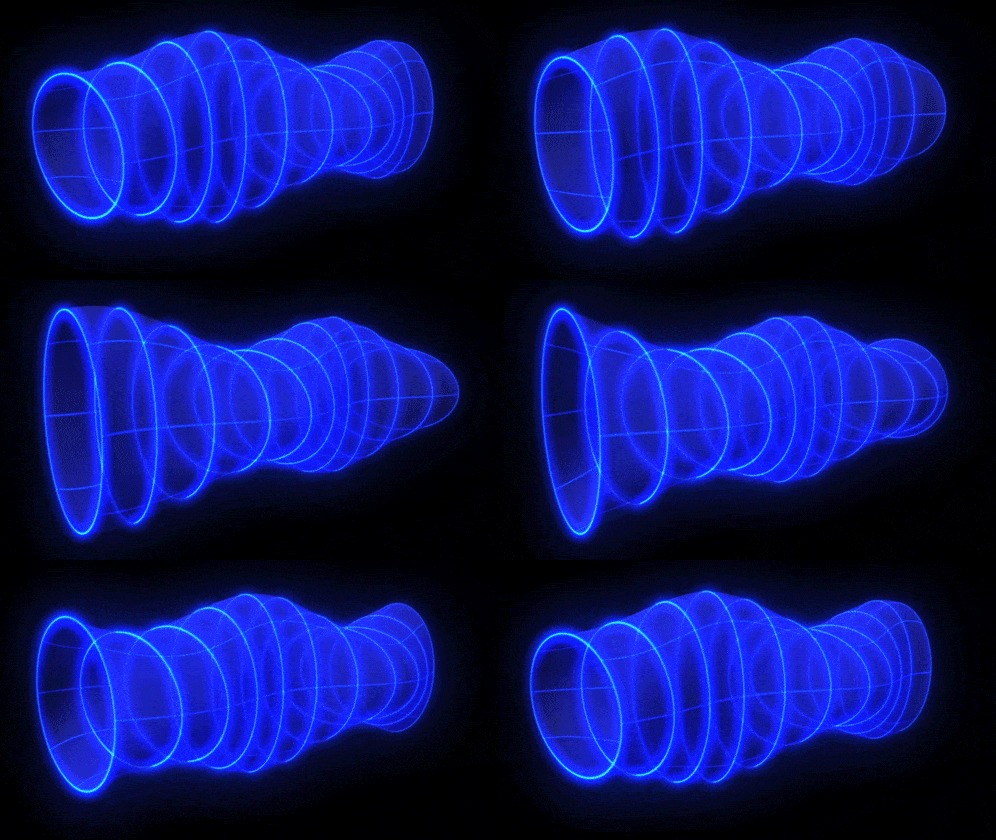
With over 300 high-significance gravitational wave detections, we now have a huge unsolved puzzle. Will we invest in finding the solution?

From Apple to Airbnb to OpenAI the generalist mindset has been an invaluable source of advantage — and we can all learn from these successes.

Will we build a successor collider to the LHC? Someday, we'll reach the true limit of what experiments can probe. But that won't be the end.

By inviting players to tackle real scientific problems, games can offer a hand in solving medicine’s toughest challenges.