This content is locked. Please login or become a member.
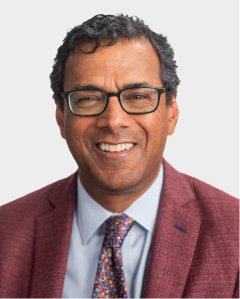


Atul Gawande has spent his career studying how professionals improve, and why most eventually hit a plateau. At this point, even the most skilled experts need a coach to reveal their blind spots, as true expertise hinges on having the humility to keep learning once success arrives.
Gawande explores the paradox of mastery: the point at which experience becomes limitation, and the only path forward is to let someone else see what you can’t.
ATUL GAWANDE: Hi. I'm Atul Gawande. I am a surgeon, a public health leader and researcher, and a writer. I'm the author of 4 New York Times bestsellers, "Complications," "Better," "The Checklist Manifesto," and "Being Mortal." One of the things that's interesting to me is how different professions approach people improving their skills over time. The common approach in a field like medicine is what I call the pedagogical approach. You are going to go to school forever. You're going to get your 10,000 hours of practice in internship and residency, in some apprenticeship or training, in one way or the other. And then you're going to be set loose on the world. And part of being a professional is the expectation that you will improve yourself, that you own responsibility now for the fact that the technology will change, the skills will change, and you will go about the task of getting to better performance yourself. And then there are fields that take an entirely different view of this.
I'm a tennis fan. Roger Federer was my hero. And Roger Federer — number one player in the world — had a coach. And sports is the classic example — but hardly the only one — where the very top people in the profession, at every step of the way, not only did they have someone they hired and paid for to give them advice, but they would observe them, pull apart where they've fallen short, and help them get to improvement on the assumption that you cannot improve yourself.
I was midway through my surgical career. I had been assiduously tracking my surgical complications and other measures of how I was doing as a surgeon. And I'd seen year on year steady improvements. And at about 10 to 12 years into practice, I found that I'd flattened out. I'd reached a mid-career point where I wasn't getting that much better. I wasn't really getting better at all. It struck me that I might consider getting a coach. It was because of my tennis. Here I was midlife in my tennis game as well, and I thought nothing of paying some college kid coming off of a tennis team 200 bucks an hour — alright, not that much, but still, it was expensive — to pick up my game. And they regularly found ways that I could do better. And I thought, "Why don't we do this in medicine?"
There are lots of other fields where it's the case. I happened to have a chance to interview Itzhak Perlman, the greatest violinist of his generation. And I asked him, "Why don't violinists have coaches?" And he said, "I don't know, but I always had one." I said, "What?" "Yes." He had married a professional violinist who'd graduated from Juilliard where they were in school together: his wife. And she gave up her career in being a violinist to sit in the audience and give him feedback after every performance. And that was, he said, critical to how he became the violinist that he is.
That ability to have someone providing an external set of data on your reality is such an important part of changing your mindset. So I brought a surgeon. I asked one of my former professors to come to the operating room and observe me. It was doing one of the operations that I had done a couple thousand of these thyroid cancer procedures in the past. It had gone extremely well. Took about just over an hour. I was kind of feeling pretty high on myself. He'd been sitting in the corner taking some notes when the patient had been woken up and left the room, and we had time in the lounge. He had 20 minutes of things to tell me about. "Did you notice that the light that was shining in the patient's wound had drifted off course, and you were only getting indirect light?" "Did you notice that the anesthesiologist was struggling with the blood pressure for about 10 minutes during the operation and wasn't telling you about that?" "I noticed your elbow goes up in the air. And if you move your feet a little to the left, that'll allow you to keep it down on your side so you're always in full control." It was amazing. And I was able to improve the outcome, based on ongoing feedback. I had him come in once a month, and we produced lower complication rates, better outcomes, and I was learning again, which I loved.
And then we could set new goals, like how could I be a better teacher and coach to my students. For example, the micromanager in me, if there was bleeding, and they did not control the bleeding immediately, I would reach in and do it for myself. And I needed to let them struggle a little bit. And so, he taught me to count to 30 in your head before you intervene. I don't think I ever quite got to 30, but getting to the point that I would let them struggle and learn along the way was part of also improving how I was as a professor of surgery.
The purpose of a coach is to not be the one to set the goals for a surgeon, but instead to say, "Here are the kinds of goals we can work our way through. We can improve technique. We can improve teamwork. We can improve leadership. We can improve teaching. Where would you like to start? What would you like to accomplish over the next 3 months?" That gives you a shared basis for saying, "We now agree on what I'm going to observe and help you with."
I have an executive coach as well. You know, he's asked me to record my meetings so that he can — and get permission for him to listen to a recording of the meetings — so that he could give me feedback. "Did you know you spent more than 70 percent of the time doing the talking in this meeting?" "No. There's no way." "Well, that is the reality. So what's your goal on how much talking you want to be doing next time? How can you get to that point? Can you start the meeting with questions instead of statements? Can you make sure you set clear action steps at the end of your meeting?" And that's the difference between a teacher and a coach. A teacher is going to make deposits of knowledge or skill, but not necessarily see your performance in an ongoing way over time. Circling back and helping you walk through the process of change and improvement is the role of the coach.