Mind and Behavior

Mind and Behavior

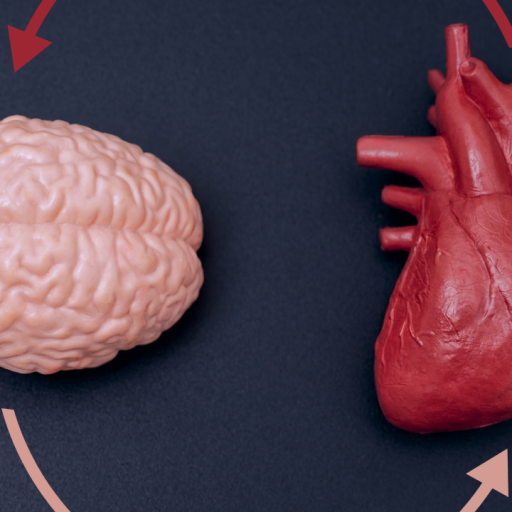
A model of a human brain and a heart are shown side by side, connected by circular arrows indicating a relationship or interaction between them.
6mins
You've heard of the mind-body connection. But have you ever actually tried to understand your own? Three scientists break down the feedback loop running your brain and body — and what becomes possible when you learn to use it.
Unlikely Collaborators
Illustration of a person lying inside a low battery icon, using a phone with a yellow screen, against a dark blue and black background with neon accents.
Your energy doesn’t work like a battery — and treating it that way may be why you still feel tired even after a break.
Book cover for "Anchored, Aligned, Accountable" by Aiko Bethea, featuring gold stacked stones on a blue background and a subtitle about transforming lives and work by overcoming the false urgency myth.
Our obsession with speed and productivity creates unnecessary pressure that quietly fuels burnout and anxiety.
Silhouette of a human head in white with a small red figure appearing to move or climb inside, set against a black background—illustrating how our brains shape our selves.
Your sense of self isn’t located in a single part of the brain — it emerges from a complex interplay of cognitive processes that change over time.
A man in casual business attire sits on a chair in front of a white backdrop, with a mountain landscape and a climber scaling a rocky cliff in the background.
52mins
Brad Stulberg breaks down the biology, philosophy, and psychology behind genuine excellence and how to reach it.
A person looks out an airplane window at a cloud shaped like a brain in the sky, with a contemplative expression.
TikTok gave an old practice a terrible name. Neuroscience explains why it actually works.
Book cover for "Thinking Sideways" by Jennifer Shahade, featuring chess pieces and orange-tan checkered pattern; subtitle: "How to Think Like a Chess Player and Win at Life.
In this excerpt from her new book, Jennifer Shahade argues that the smartest move in life, as in chess, is sometimes a sideways one.
A map of the United States showing the most popular paint color in each state, with names of various gray, blue, and neutral shades labeled over the corresponding states.
The ideology, economics, and psychology behind the modern world's draining of color from homes, cars, and everyday objects.
The word "intelligence" in gray lowercase letters on a black background, with a subtle spotlight effect highlighting the center of the text, inspired by Frames of Mind.
Howard Gardner joins us to reflect on the theory of multiple intelligences and why the question of who owns intelligence is more important than ever.
An older man with a beard sits on a chair in front of a white backdrop, with yellow neuron-like patterns on a black background surrounding the scene.
1hr 7mins
Members
Neuroscientist David Linden sheds light on the biology behind phenomena that medicine has long struggled to explain, from voodoo death and broken heart syndrome to the placebo effect, and why grief shows up in autopsy results
A group of people stands and plays cricket in an urban park at dusk, with city buildings, trees, and illuminated streetlights in the background.
The ozone hole was going to destroy life as we know it, but an unprecedented global effort fixed the problem.
A sliced onion bulb with roots and stem, illuminated from behind and set against a black background, resembles the delicate layers of daffodils in bloom.
What a fragile flower can teach us about resilience, death, and becoming someone new.
A shirtless man, resembling Tommy Caldwell, climbs a steep rock face high above the ground, reaching for a hold with one hand and gripping the rock with the other; trees and a valley stretch out below.
A day in the Sierra Nevada with Tommy Caldwell reveals how pain, trauma, and “elective hardship” became the foundation of his fortitude.
A young child sits on a sidewalk holding a scraped knee next to a fallen scooter, evoking reasonable childhood independence, with collage elements including a helicopter, art print, and abstract lines.
When can a kid play outside alone? Two parents, one stranger, and the state collide.
A pattern of multicolored triangles with various abstract textures and designs on a muted blue background evokes the resilience paradox, balancing vibrancy and calm in a harmonious display.
When applied blindly, resilience can do real harm to our health and our ability to change broken systems.
The book cover of "Love Thy Stranger" by Bart D. Ehrman features a painting of four biblical figures and the subtitle, inspired by the command to "love thy stranger," exploring how Jesus’ teachings transformed Western moral conscience.
Biblical scholar Bart Ehrman contends that our modern sense of altruism can be traced back to the radical shift in ethical thinking sparked by Jesus' teachings.
A man with short hair in a collared shirt gestures with his hands, pointing toward himself, against a blue background with translucent color overlays.
Members
Your inner voice significantly influences your quality of life, and while it can motivate you, psychologist Ethan Kross warns it can also lead to negative thought cycles, or "chatter," but his research offers tools to regain control and foster a positive mindset.
A round, abstract blue structure with numerous flowing, curly strands extends outward against a solid black background, evoking the dynamic intelligence of BrainMaxxing AI.
While LooksMaxxing often headlines the news, the idea of BrainMaxxing deserves real attention. Growing your mind never goes out of style.
Book cover of "Tell Me Where It Hurts" by Rachel Zoffness, PhD, featuring a pain scale from green to red under the title and subtitle about the science and 3 pillars of pain and healing.
By better understanding how the brain constructs pain, we may transform how we treat chronic suffering.
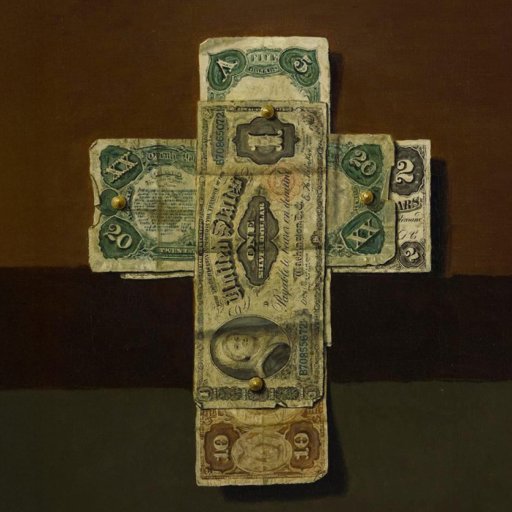
A cross made from various denominations of old U.S. paper currency is fastened together with brass tacks, set against a brown background.
4mins
Americans believe they can outthink suffering. Historian Kate Bowler explains how our obsession with self-help, optimization, and positivity became a kind of secular religion.
Three people sitting and smiling outdoors, with an artistic overlay of a green silhouette and flowers, and birds flying in the background.
Small signals of warmth can dramatically change how people respond to you.
An older man with gray hair, glasses, and a beard gestures towards himself, standing in front of a background featuring a black and white anatomical diagram.
Members
To foster inclusive and compassionate spaces for trauma survivors, we should understand the neurology of trauma and its profound effects, as emphasized by psychiatrist Bessel van der Kolk.
Book cover of "Emergence" by David Sussillo, featuring a blue background with fish and circuit patterns, and a subtitle about boyhood, computation, and the mysteries of mind.
In this preview, the Stanford professor muses on how emergence, arriving at complex patterns from simple parts, explains AI, brains, and life itself.
Bald man in a blue shirt gestures with both hands in front of him, palms facing each other, against a plain white background.
7mins
Jim Al-Khalili explains how the past and future are more fluid than we may think.
A modern office building with overlapping empty picture frames and a stylized computer monitor superimposed over the structure against a clear blue sky.
Many organizations are missing a key catalyst for excellence — and it’s not a new software program or workplace perk.
Book cover of "No Friend to This House" by Natalie Haynes, featuring an ornate dagger, decorative lines, and a quote noting her as the bestselling author of "Stone Blind." A striking design hints that danger is no friend of this house.
A preview of the latest novel by the New York Times bestselling author.
A blue hand holding a tool touches a red illustrated brain, with brain wave patterns shown in the background.
A new framework suggests that bursts of neural chaos could be the fingerprints of a conscious mind at work.
Text reads "follow the rules?" with "follow" underlined twice and a question mark after "rules" drawn in red. The simple beige background highlights the message—a subtle nod to good writing and when to challenge conventions.
Anne Lamott and Neal Allen join us to discuss why embracing constraints can be the best way to find freedom in the craft.