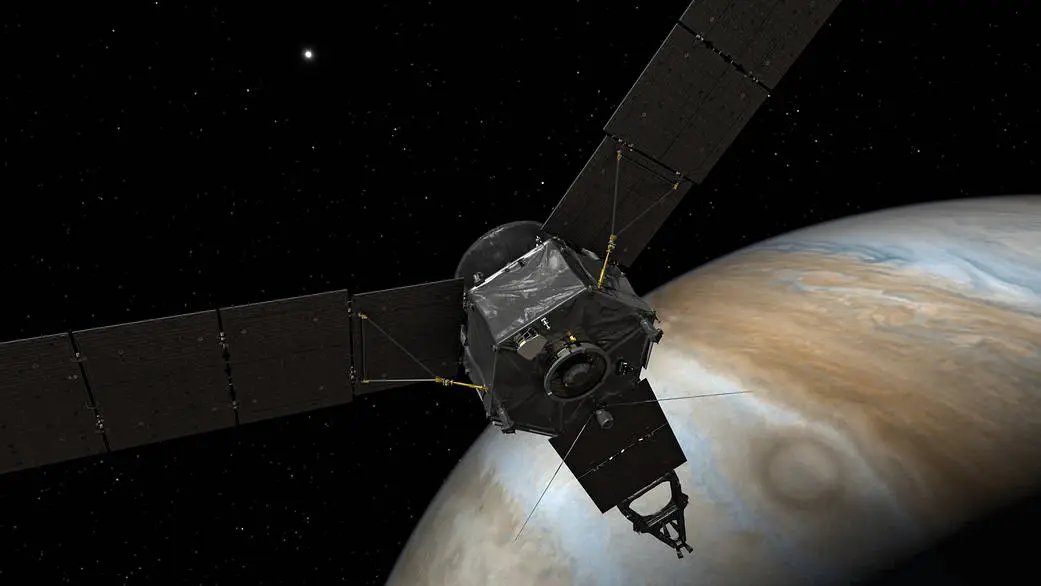
Back in 1997, a joint venture between NASA, ESA, and the Italian Space Agency (ASI) was launched with the explicit purpose of studying the most distant naked eye planet of the Solar System: Saturn. The Cassini-Huygens mission, unlike the predecessor missions that visited Saturn — Pioneer 11, Voyager 1, and Voyager 2 — wasn’t simply a fly-by mission, but rather flew to Saturn with the intention of remaining there. After a seven year journey to get there, Cassini arrived, where it had many close encounters with Saturn’s rings, a large number of Saturn’s moons, and of course, the planet itself.
It didn’t just fly around Saturn, but rather above and below it as well, capturing views from 2004-2017 that maximized what we could learn about this prominent planet. One of the most surprising finds came early on in the mission, when the Cassini orbiter flew over the south pole of Saturn, and found something that had only ever been seen on Earth before: a hurricane with a well-defined eye wall to it. That was back in 2006, when Saturn’s south pole was tipped toward the Sun. With an axial tilt of 26.7 degrees, that means that Saturn has equinoxes and solstices, but because Saturn takes nearly 30 years to complete one orbit around the Sun, seasons last more than 7 years on Saturn apiece.
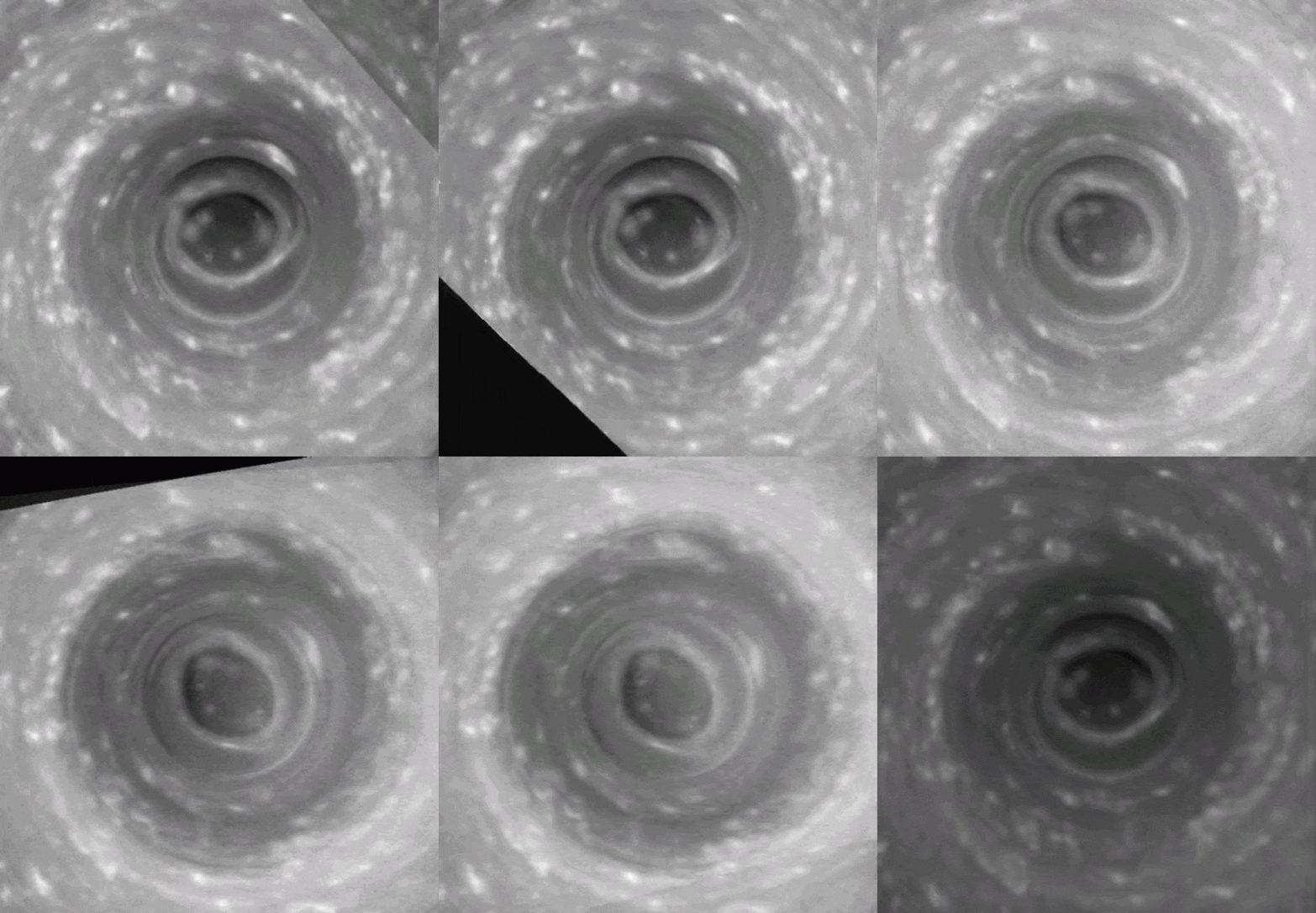
If you’re thinking, “hey wait a minute, I’ve seen pictures of Saturn’s poles before, and this doesn’t look anything like what I’ve seen,” you’re no doubt correct. Just as Earth has two very different poles — the Antarctic south pole, marked by a massive continent, and the icy north pole, whose ice floats atop the waters of the Arctic ocean — so too does Saturn. But on Saturn, we can only take images of whichever pole is tipped toward the Sun at that very moment. From the beginning of Cassini’s arrival at Saturn in 2004, it was the south pole that was tipped toward the Sun. Only in August of 2009 did Saturnian equinox occur, and over the next eight years, until May of 2017, the north pole of Saturn tipped more and more severely toward the Sun, until Saturnian solstice arrived.
For the first five years of the Cassini mission around Saturn, the north pole of the planet was not visible, as the northern hemisphere of Saturn was still experiencing winter on that planet. But with the passing of the equinox and the arrival of the northern hemisphere’s spring, the north pole gradually began to not only come into view, but to heat up and “thaw,” in a sense, as the Sun’s direct rays began falling on it. Although half of the pole was visible in 2009 imagery, it wasn’t really until 2012 that the region surrounding the pole would come into full view. And when it did, what Cassini scientists saw was both surprising and spectacular.
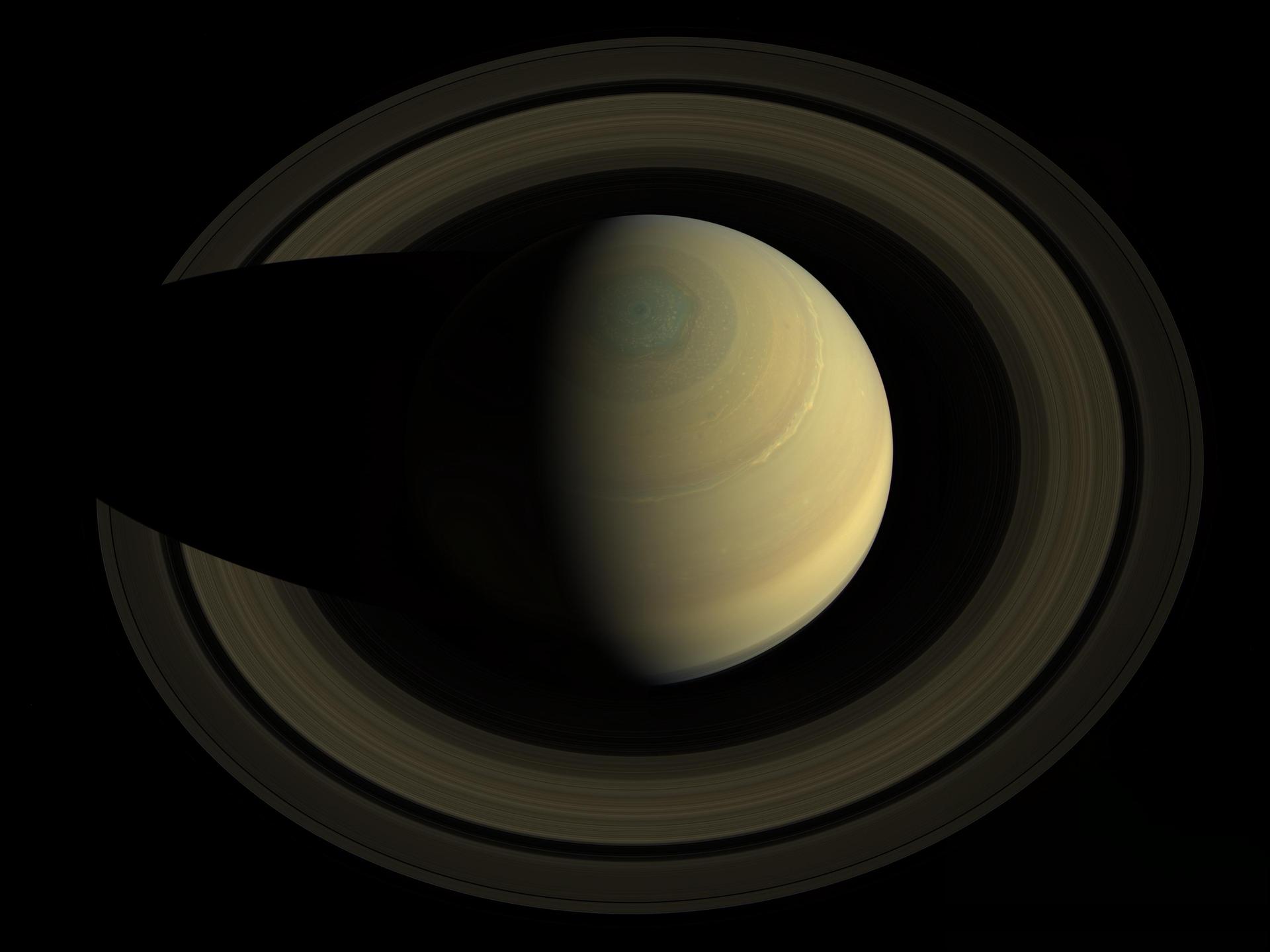
Sure, Saturn is famously golden-colored and exhibits a banded structure across it, like many gas giant worlds do. Rings of cloudy features appear at specific latitudes: also a common feature among gas giants. But very close to the north pole itself, a stack of features arose that were entirely unexpected.
- There’s a big color change as you move toward the north pole, as the planet transitions from golden colored to a dimmer brown color to a still darker brown, and finally turns blue.
- Additionally, while there are many circular features at more equatorial latitudes, the north pole itself exhibits a six-sided hexagonal feature, separating the browns from the blues of the pole.
- And at the very center of the pole itself, a similar hurricane to the feature spotted at Saturn’s south pole appears as well: with a deep blue color and a dark “eye” to the center.
What was going on with that hexagon? And was it always there?
After all, Cassini wasn’t the first mission to arrive at Saturn. While you might not be able to get a very good look at its north pole from a telescope here on Earth, scientists working on the Voyager 1 mission did in fact acquire a series of photographs of Saturn’s north pole, stitching them together to make a map. What they found, all the way back in 1980 (just as Saturnian spring was beginning), was that there was indeed a strange hexagonal shape near the pole. For 30 years, scientists — including some scientists who worked on both missions — awaited this data from Cassini to see just what was going on around Saturn’s north pole.
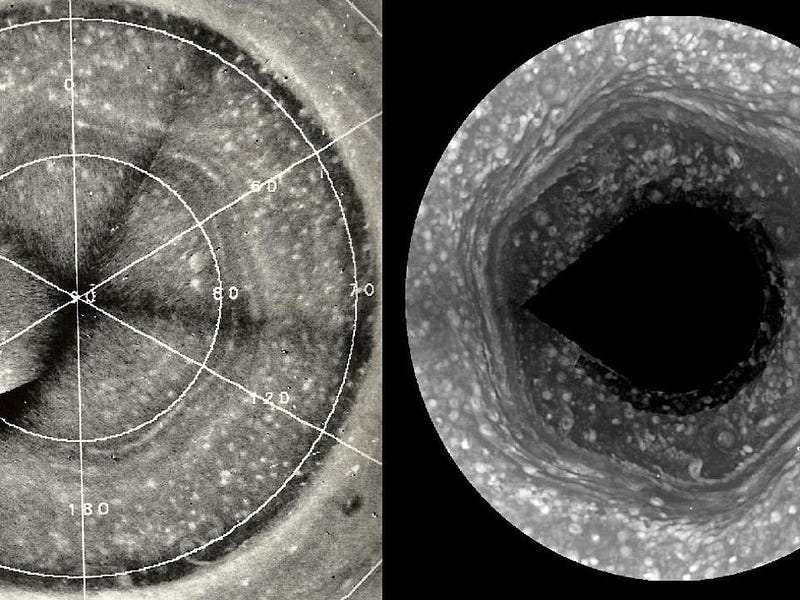
That hexagonal shaped storm was not only real, it was incredibly persistent as well. The storm was determined to begin at 78º north latitude on Saturn, and extends downward for approximately 100 kilometers (62 miles) in depth. From end-to-end, the storm itself is huge: over 32,000 kilometers (20,000 miles) wide, or approximately 2.5 times the diameter of Earth. While other atmospheric features can vary or fluctuate in latitude over time, this hexagonal feature is remarkably constant, changing by only negligible amounts in terms of its distance from the pole.

The hexagon posed a mystery to scientists, and it was only by performing fluid dynamics experiments here on Earth with a specific set of conditions that we were able to reproduce that unusual hexagonal feature. This led to our current model of how this hexagon was created and sustained itself. The polar storm around the north pole continuously rages: a hurricane in every sense of the word. However, if there’s an eastern-moving current around the hexagon’s outline, roughly moving at 360 km/hr (220 mph), then when that current interacts with airflow at more equatorial latitudes, a six-sided, hexagonal pattern does indeed emerge.
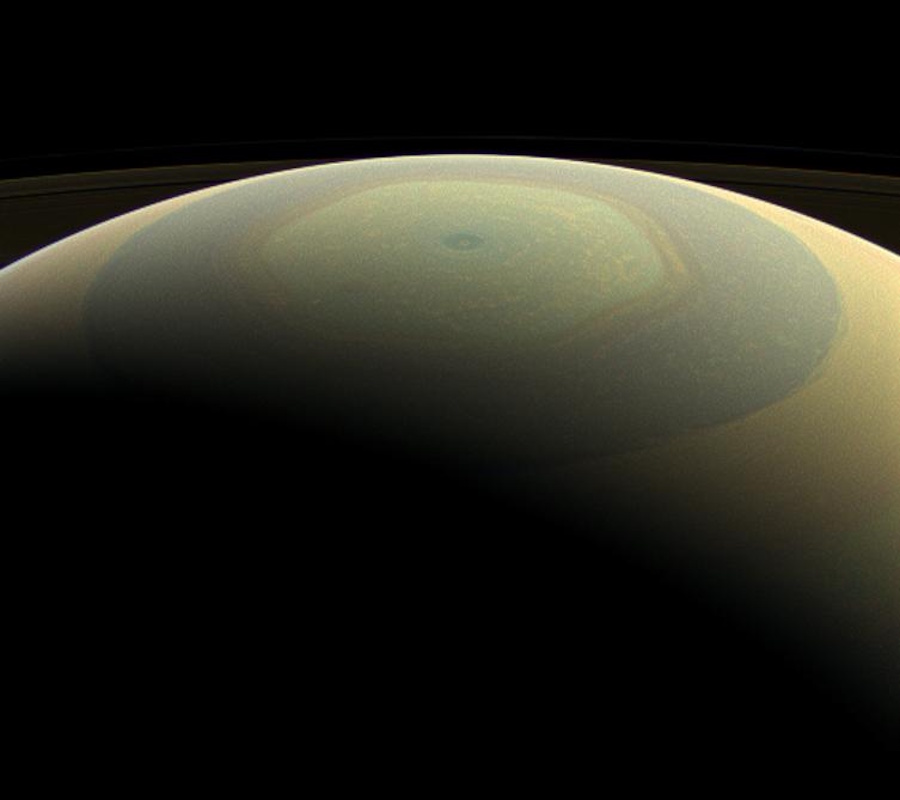
The above image, acquired in 2013, shows a few slight changes as more of Saturn’s north polar area becomes illuminated. Saturn’s two hemispheres are clearly asymmetrical: the hexagon in the north does not have a matching counterpart in the south, suggesting underlying differences between the two hemispheres that have not fully been revealed. After more time in the Sun, the blue color is a little less deep, and has begun to yellow. The leading thought behind why is that methane forms a blue color, so as the north pole emerges from winter, much of that methane is still present, giving the polar area its blue color initially.
As direct sunlight shines on methane molecules — even at Saturn’s impressively large distance from the Sun — those molecules can then get broken apart. When they do, there’s always a chance that they’ll simply find their “missing pieces” and revert back to being methane. But they also have a chance of encountering other broken-apart methane molecules, in which case they can link up to form longer-chain hydrocarbons: the same types of hydrocarbons found ubiquitously across the rest of Saturn. That’s the leading thought: that the initially blue hexagon turns yellow as it spends time in the Sun, as methane gets slowly converted into heavier, longer-chain hydrocarbons.
An incredible decision was made for December of 2012: that Cassini would swing over Saturn’s poles, allowing mission scientists to construct a movie condensing 10 hours of time down to seconds.
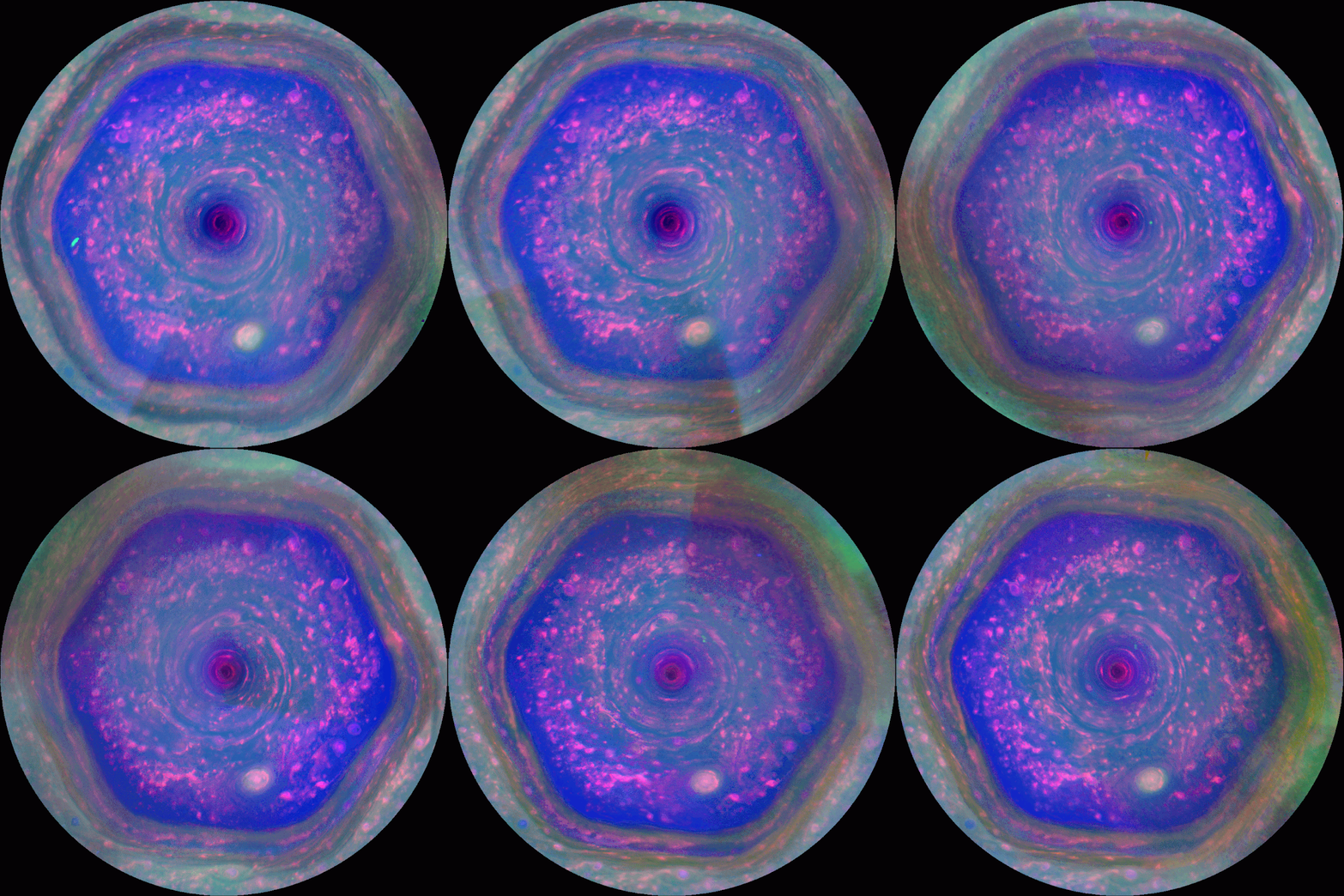
These false-color filters reveal a wide variety of features. Sure, there’s the polar vortex at the center, as well as the large hexagonal ring outlining and bordering it. But there are also a wide variety of (reflective) cloud features present, which show up as pink spots near the pole itself. Smaller vortices, appearing as reddish-white ovals, including a large one near the bottom of the image: an estimated 3500 kilometers (2200 miles) wide. According to Andrew Ingersoll of the Cassini imaging team,
“The hexagon is just a current of air, and weather features out there that share similarities to this are notoriously turbulent and unstable. A hurricane on Earth typically lasts a week, but this has been here for decades – and, who knows – maybe centuries.”
Earth can’t form features like this hexagon, as our jet stream slithers and meanders around in complex shapes, owing to how air flows given the distribution of the continents and oceans, along with heat transfer and weather patterns. On Earth, sunlight and the planet’s rotation are the dominant factor that determines how air flows, but on Saturn, the thick atmosphere, with no known solid surface, combined with the extreme distance from the Sun and its uniform composition, enables patterns like this hexagonal shape to emerge.

As the summer solstice neared, and as Cassini neared the ultimate end of its mission, the north polar region continued to change in appearance. The region bounded by the hexagon began to turn a brownish-yellow, losing all trace of its initially blue appearance. In fact, the last vestiges of blue only remained inside the interior of the storm directly above the north pole itself: suggesting that only within this region, where sunlight could not strike the methane inside very well, does photodissociation (and re-binding into longer chain molecules) not occur. As solstice approaches, the entirety of the polar region changes color.
Periodically, the scientists making decisions about Cassini’s navigation plan decided to put it into polar orbits: where it would fly directly over the poles of Saturn, enabling a “bird’s-eye view” of either the north or south pole. (The illuminated pole is always the more interesting one from an observational perspective.) As a result, shortly before its demise in 2017, one of the last things Cassini did was acquire a movie of the north pole one last time, enabling an “apples-to-apples” comparison of the polar change from June 2013 to April 2017, as shown in the animation below.
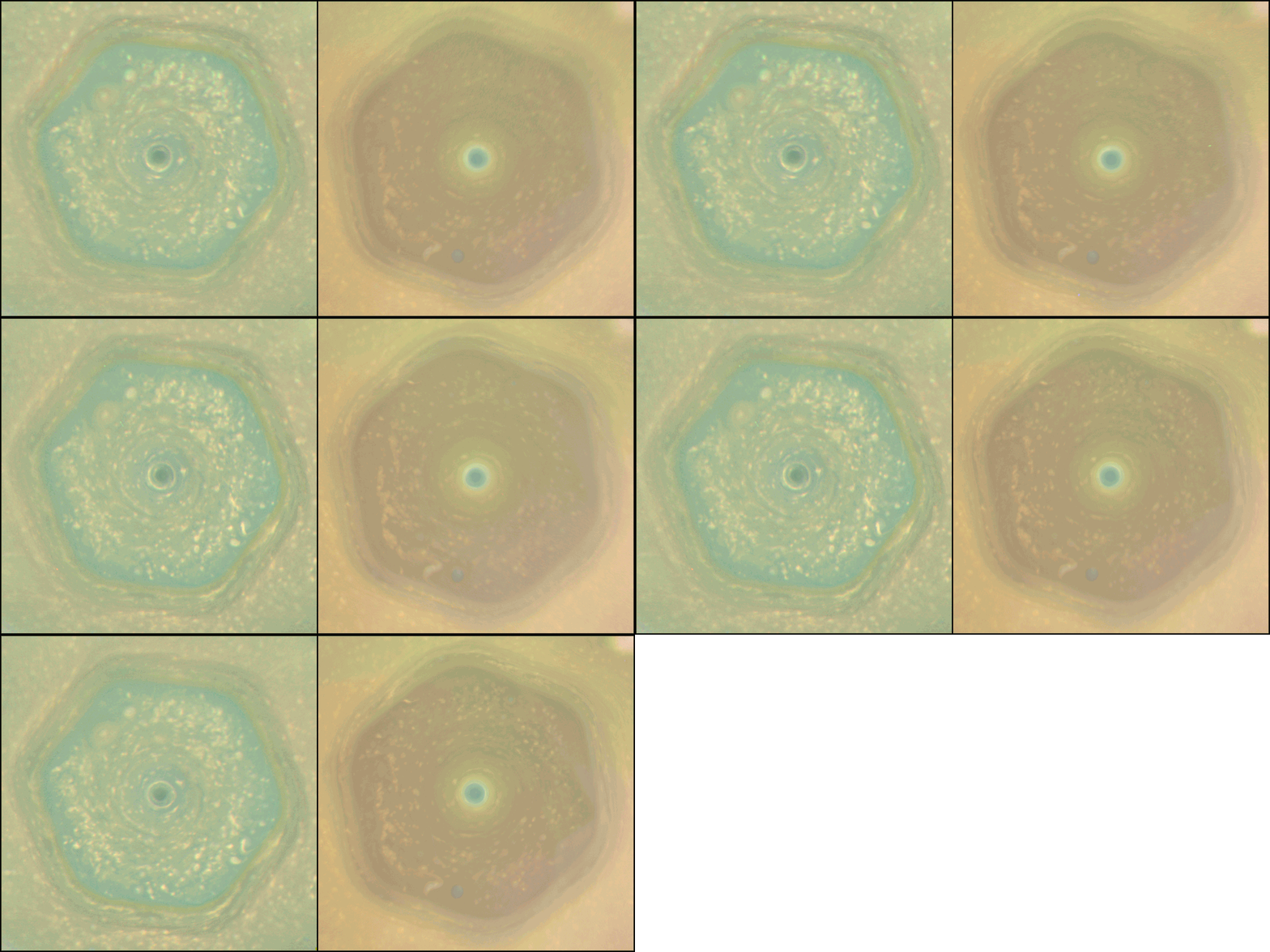
Even though features vary tremendously over time, including color, cloud cover, and particular instabilities both inside and outside Saturn’s polar hexagon, many key features remain constant.
- There’s always a rapid hurricane, shifting only slightly in position, directly above Saturn’s north pole.
- There are always thick, cloudy eye walls around that hurricane, and winds that rotate more quickly, in terms of angular velocity, than the winds at lower, surrounding latitudes.
- And there’s always a hexagonal feature at about 78 degrees north latitude, not seen to vary in any appreciable way, surrounding the system.
That’s what Saturn looks like as seen from the only orbiting spacecraft we’ve ever sent up to see it. Since 2017, when Cassini met its demise, we’ve had only these archival photos to look at, plus whatever images we’ve been able to take from afar with telescopes such as Hubble, JWST, and the vast array of cutting-edge observatories on the ground. While they have indeed shown us remarkable views of Saturn in many ways, including at wavelengths that have only been rarely probed before, we haven’t been able to acquire any bird’s-eye views of Saturn’s poles since.
Which is part of what makes AI slop like the image shown below so upsetting: it’s not only factually incorrect, but it detracts from all the good, solid work that the entire Cassini team actually conducted for so long.
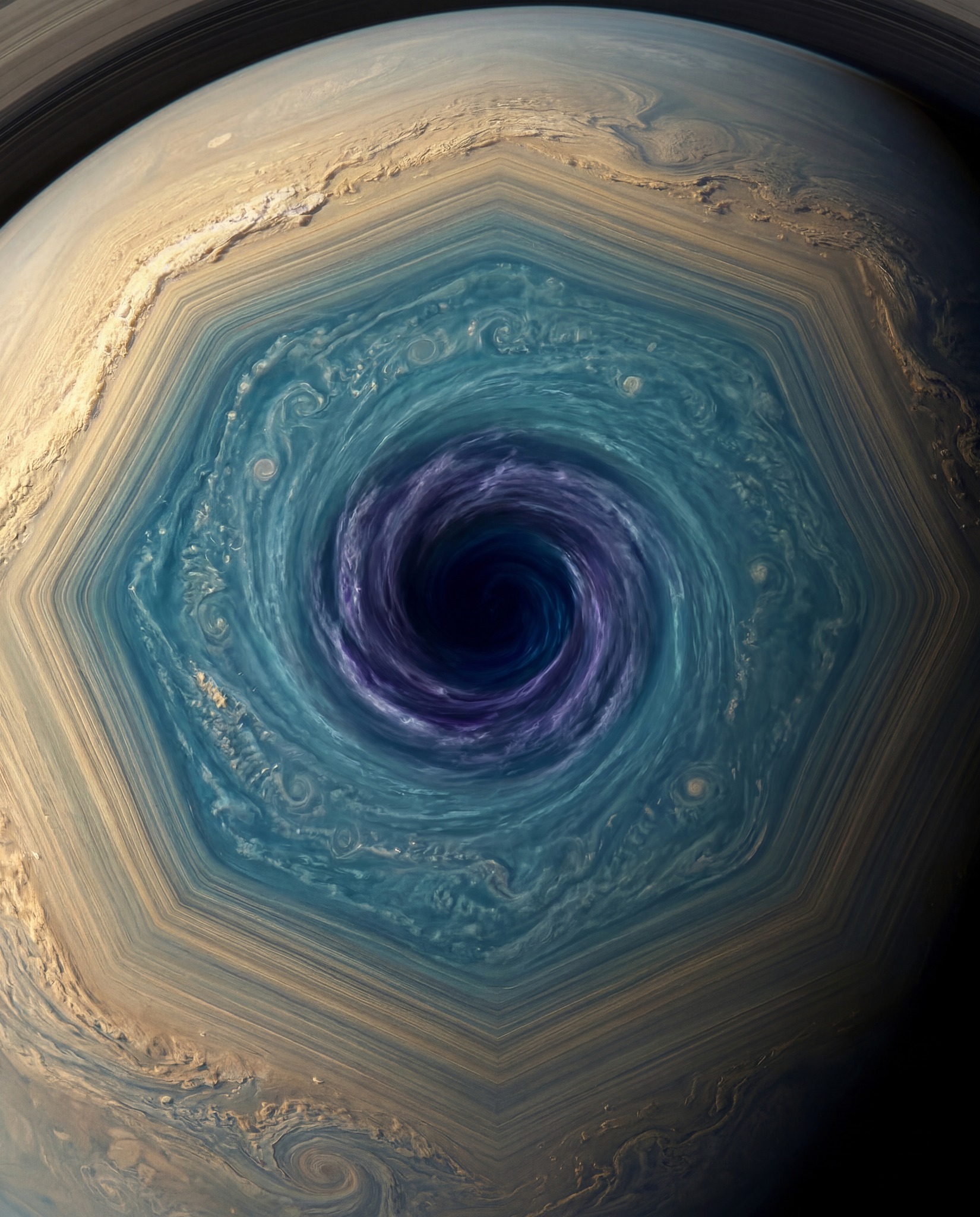
Looking at this image after seeing the real thing, it’s incredible how many details are incorrect. Let’s go through a few of them.
- The center of the vortex is dark; it shouldn’t be.
- There is a deep purple swirl at the center, whereas the actual images show only blues, whites, yellows, and browns, with a bit of green where the blue and yellow mix together.
- The cloud patterns are far too regular; realistic imagery shows a much more mottled vortex.
- The sharpness of the cloud patterns is too exaggerated given the imaging capabilities of Cassini and the tremendous distance over the poles that were always maintained.
- The blue color extends outside of the hexagon to a series of swirls: something not observed by Cassini.
- The actual hexagon on Saturn has rounded edges, whereas the view shown here has many sharp angles all throughout the polygon, showing several “points” at each vertex.
- And perhaps most maddeningly, eight does not equal six, and this AI slop displays an octagon, not a hexagon!
There are plenty of other things you can complain about, like the wrongness of the scale for showing the upper perhaps ~20 degrees of the planet and then having it surrounded by rings, but the whole point is that we are currently living through a period where AI slop — of things that aren’t real and should never be confused with the real thing — are being shared at a record rate, and most people can’t tell what’s real from what’s simply being hallucinated by an often-incorrect feature-guessing machine.
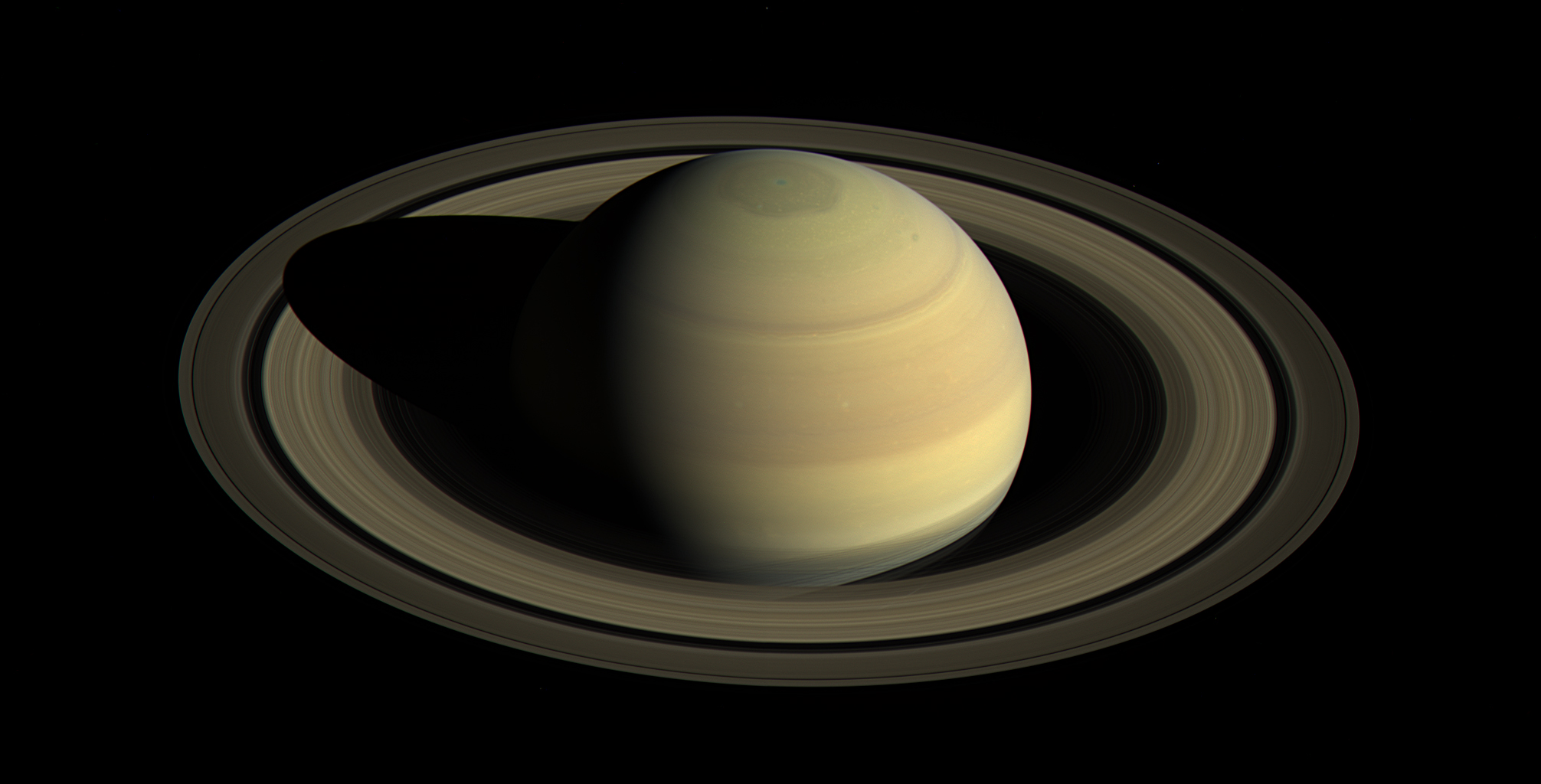
Because of a combination of measurements made with several instruments, including with gravitation-sensitive instruments, scientists were able to determine that the high winds at the uppermost reaches of Saturn’s cloud-tops, which reach up to 1440 km/hr (895 mph), actually extend downward for up to 8000 km (5000 miles) toward the planet’s interior. Even though Cassini met its demise back in 2017, an incredible wealth of data has led to continued research on Saturn, with scientists recently suggesting that a supersonic jet stream, extending far below the limits of where Cassini’s instrument suite could reach, could be being pinched by smaller cyclones in Saturn’s interior, giving rise to the hexagonal shape around one pole only.
As with any successful mission, Cassini’s wealth of riches should be spurring us on to future investigations. We should be planning orbiter missions to Uranus and Neptune; neither of which has ever received one. We should be planning a follow-up mission to Saturn, as we still aren’t sure about the size, properties, or even the presence of a rocky core at the center of Saturn. We have theories about how and when the main rings formed, and a new in situ mission could test many of them. But if we replace our dreams of conducting bona fide science and getting actual answers to today’s big questions with unrealistic pictures hallucinated by a machine, that’s a generational loss for humanity.
We must not allow ourselves to succumb to the false allure of a pretty picture. In the scientific endeavor, reality is the only picture that matters.

The Energy Transition