




















Search
Animal Intelligence

Welcome to The Nightcrawler — a weekly newsletter from Eric Markowitz covering tech, innovation, and long-term thinking.

As we crank up our search for more powerful AI, maybe we should slow down and reimagine the shape and language of intelligence itself.
12mins
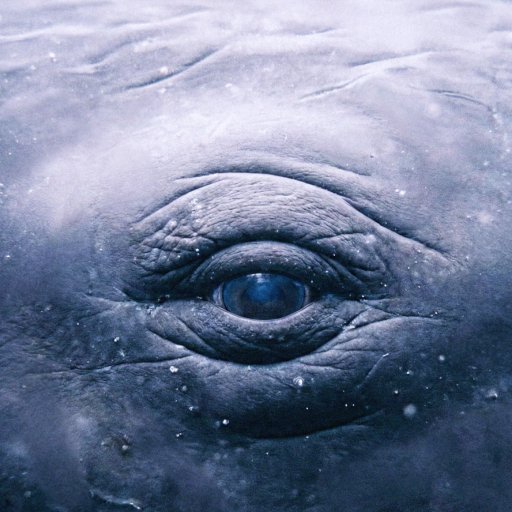
Ninety million years after our lineages split, humans are beginning to listen to whales in a new way. Marine biologist David Gruber shares the work that has become his life’s pursuit: learning how to hear the planet’s largest mammals.

A fresh view of intelligence — spanning living systems from bacteria to human civilization — challenges the idea that it’s merely problem-solving.

In 8,000-mile journey, a male humpback ditches Colombia for Tanzania — however, scientists don’t know why he made the trip.

Off-the-shelf consumer technology is helping people pursue their interests — and advancing science at the same time.

Can laboratories become more humane, or is it time to end animal research altogether?

Philosopher Peter Singer argues it's time to examine a morally dubious practice.

Here's the dark side of first contact.

New evidence suggests the corvid family has surprising mental abilities.

It's high time owners learned to speak their dog's language.

Cats twist and snakes slide, exploiting and negotiating physical laws. Scientists are figuring out how.

An excerpt from renowned neuropsychologist Nicholas Humphrey’s book “Sentience: The Invention of Consciousness.”

Learning to decode complex communication on Earth may give us a leg up if intelligent life from space makes contact.

Aliens are often portrayed in popular culture as humanoid. But in reality, intelligent extraterrestrials might take far stranger forms.

Although mammals may be the dominant form of life today, we're relative newcomers on planet Earth. Here's our place in natural history.

His career helped define humanity’s place in the world by bringing us “a little closer” to our ape relatives.

8mins
What do aliens, apes, and orchestras all have in common? Professor Michael Spitzer explains how they each help us understand the origins of music.

Lab experiments showed Caribbean box jellyfish are quick studies of their environment.

4mins
Can AI and animals coexist? Philosopher Peter Singer gives us a nuanced take on the issue.

They're not just watching you; they're also calculating.

The space‑specific neurons in the owl’s specialized auditory brain can do advanced math.

Within a month of that initial conversation, Peter Singer became a vegetarian.

Billy was a local celebrity in the early 1900s. And he might have been a murderer.


Bees learn and culturally transmit their communication skills.


5mins
We are ~99% genetically identical to chimpanzees. But there are three key traits that separate us.

Humans are good visual thinkers, too, but we tend to privilege verbal thinking.