




















Search
Archaeology

The revival of Pasto Varnish shows how living heritage can survive if knowledge is passed on in time.

Ernst Stromer discovered Spinosaurus in Egypt. His fossils were destroyed in WWII, yet still shape how we imagine this mysterious dinosaur today.

Scientists found a massive underwater wall off the coast of France that might help explain the origin of the legend of Ys.

In this excerpt from The Breath of the Gods, Simon Winchester explores how the Sumerians first named the wind and shaped our early understanding of the natural world.

In this excerpt from "Seven Rivers," historian Vanessa Taylor explores how Ancient Egyptian pharaohs harnessed the Nile River to build empires and secure their power.

In “The Secret History of Denisovans,” Silvana Condemi and François Savatier trace the story of our mysterious hominin ancestor.

In "The Headache," Tom Zeller Jr. explores one of the human brain's most enduring, and painful, enigmas.

In "Dinner with King Tut," Sam Kean examines how a burgeoning field is recreating ancient tasks to uncover historical truths.

In "The Shortest History of the Dinosaurs," Riley Black reveals the bold mammals that thrived in the Age of Reptiles.

The Gospels aren’t historical biographies but genre-defining works that blend myth, theology, and a promise of hope.

The Roman Empire at one point emitted roughly 3,600 tons of lead dust per year, causing “widespread cognitive decline.”

Dubbed "Valeriana" by researchers, the city of 50,000 peaked around 800 AD before being swallowed by the jungle.

Even with just a momentary view of our galaxy right now, the data we collect enables us to reconstruct so much of our past history.

Magnificent time-tested buildings are filled with lessons in resilience and stability — and the benefits for investment strategy can be huge.

From tribal hunts to Stonehenge and into the modern day, the peer instinct helps humans coordinate their efforts and learning.

Early modern humans interbred with Neanderthals — and scientists recently pinpointed a key site of contact.

Some biologists believe natural selection produces animals that are just good enough. Dawkins disagrees.


In popular culture, the eruption is usually depicted as an apocalyptic event.

An analysis of Indonesian cave paintings is reframing the history of human art, though whether the paintings really were created by human hands remains an open question.

19 rooms. 1,636 square feet. 1,800 years of history.

A new method of mapping migration factors in erratic movements and changing climate.

How (not) to end up in the ash heap of history.

The burial spot was found in one of the Herculaneum scrolls charred by Mt. Vesuvius.

A poignant, 2,000-year-old burial in northern Italy could be the latest evidence of an ancient friendship.

Although human beings arrived on Earth just ~300,000 years ago, we've transformed the entire planet completely. Here's how we did it.

Plagues, war, and genocide were literally frozen in time.

A small Ohio town tried to escape America’s addiction to rectangular grids. It didn’t last long.

New radiocarbon dating reveals astonishing insights.
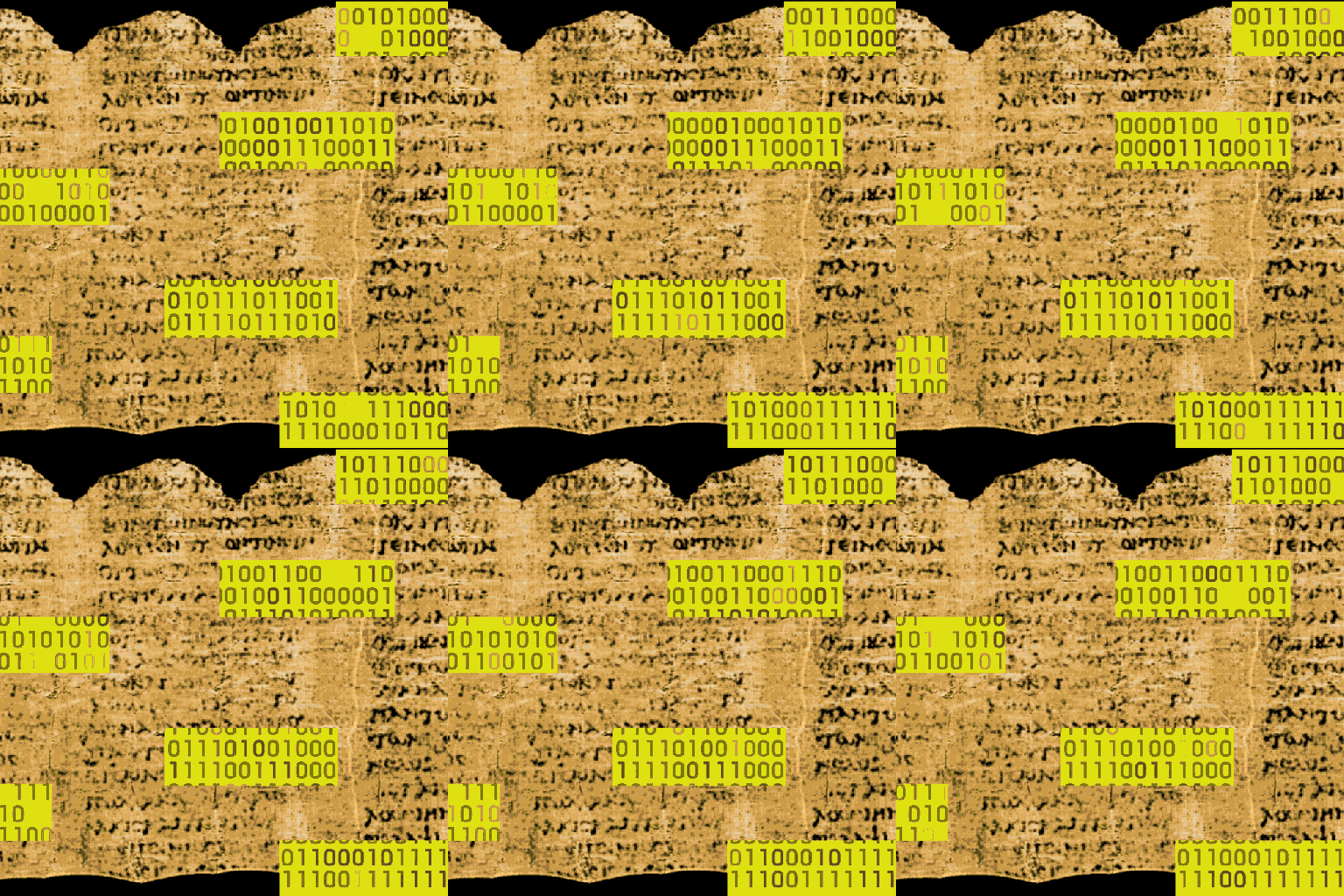
These scrolls are the only remaining intact library of ancient Rome — and they will crumble at a touch.