




















Search
Art History

First rising in the 15th century, these forts sought to counter a deadly innovation in military technology.

In "Human History on Drugs," Sam Kelly explores what the research can tell us about one of history’s most brilliant — and troubled — artists.

Barthes is dead — long live the artist.

Will "Sausage Party" survive the test of time?

Burns’ latest documentary dives into the long-romanticized life and work of the Italian polymath.


An analysis of Indonesian cave paintings is reframing the history of human art, though whether the paintings really were created by human hands remains an open question.

Napoleon Bonaparte was a man of many faces. European historian Michael Broers explains which are featured on the silver screen and why.
6mins
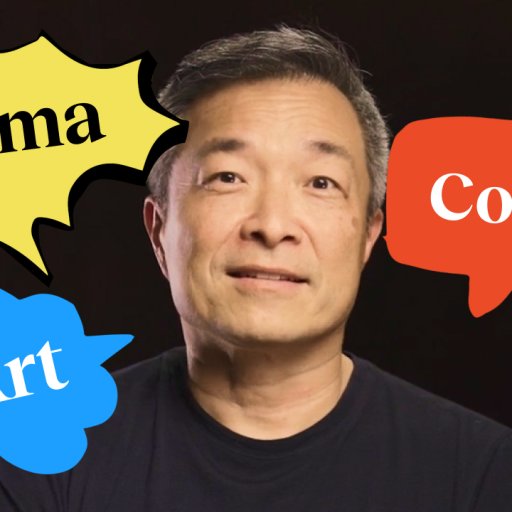
Jim Lee, President, Publisher, and Chief Creative Officer of DC Comics, tells us how his childhood obsession with Superman changed his life.
Unlikely Collaborators

The Parthenon embodies the ideals of perfection Classical Greeks sought from architecture. The neighboring Erechtheion offers something else.

You've certainly seen the paintings — but they don't depict what you think they do. Benjamin Moser discusses with Big Think.

'Six Persimmons,' an ink painting by the Chinese monk Mu Qi, has long been hailed as the poster child of Zen Buddhism. But is its reputation deserved?

The history of hell doesn't begin with the Old Testament. Instead, hell took shape in the 2nd century from Mediterranean cultural exchange.

Using peach and eggplant emojis as shorthand for sex may seem like a new thing, but Renaissance artists were experts at using produce to imply intercourse.

Once at the pinnacle of Amsterdam’s art scene, Rembrandt van Rijn eventually found himself outcompeted by his own students.

Rejecting romanticism, these famous paintings depict war as it really is: sadistic and senseless.

The answer may lie in the power to see far, far beyond yourself.

In war zones, aggressors steal art to eradicate the cultural heritage of others. Victims, meanwhile, sell stolen art in order to survive.

Pure cinema is about removing redundancy so that even the smallest detail serves a purpose in relation to the bigger picture.

The polymath used science to elevate his art.

An X-ray offers a glimpse into the painter’s early years.

Those white, marble statues you see in museums all over the world were originally painted with bright colors.

A classical equivalent to Chanel No. 5.

Due to export controls from China, the Europeans had to invent their own forms of porcelain. One type involves dead cows.


A new book by historian and author Paul Strathern argues that the Northern European Renaissance has long been overlooked.


500 sheep were slaughtered to produce the 2,060 pages of the "Codex Amiatinus," a Latin translation of the Bible.

These composers channeled the horror of the Holocaust and Hiroshima while honoring those who lived through it.

As the stream of AI-generated art turns into a deluge, NFTs could become a cornerstone of the Virtual Renaissance.