




















Search
Astronomy

Almost all of the stars, planets, and interesting physics happens in the inner portions of galaxies. Is that conventional wisdom all wrong?

A recent experiment challenges the leading dark matter theory and hints at new directions for uncovering one of the Universe's biggest mysteries.
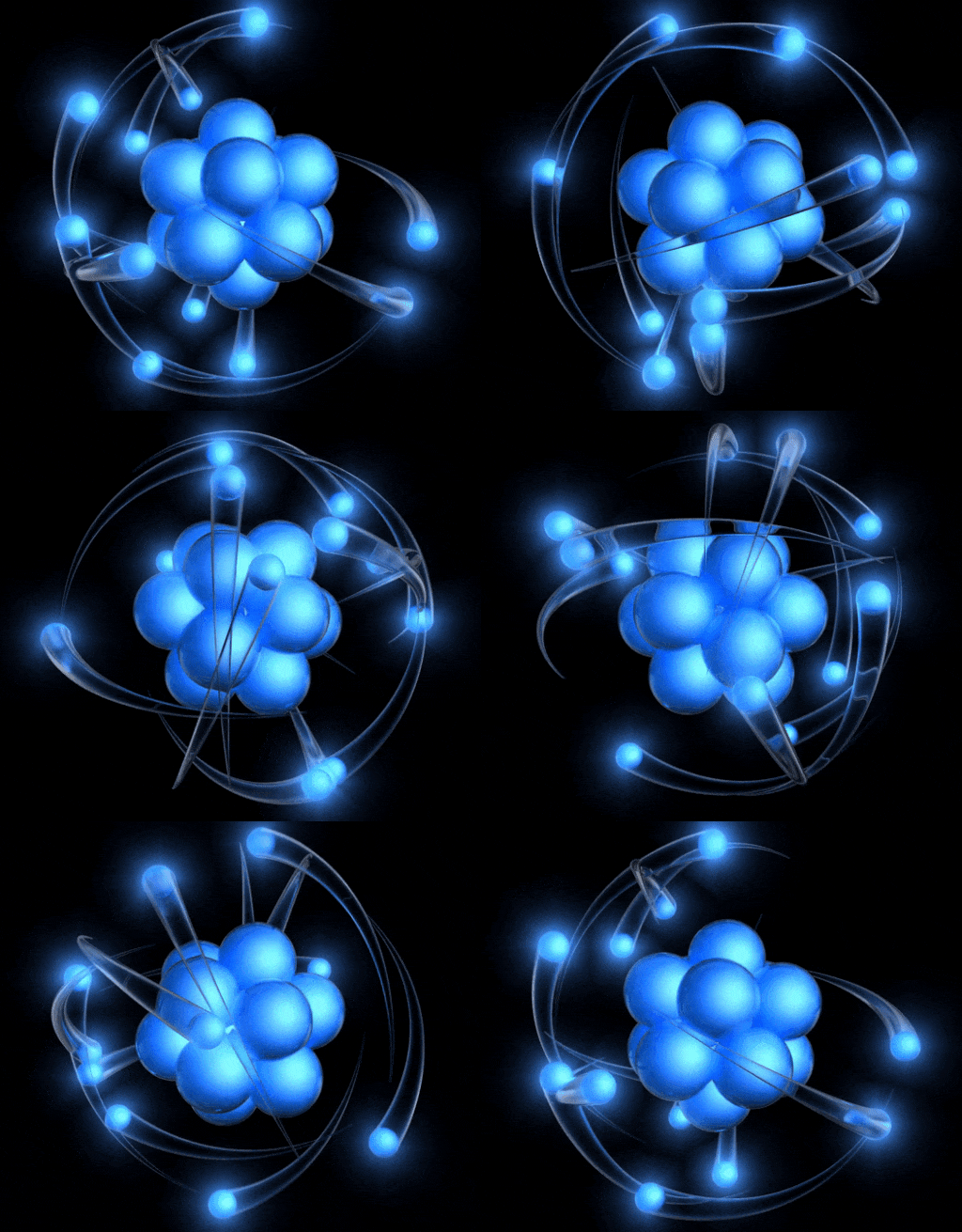
Most fundamental constants could be a little larger or smaller, and our Universe would still be similar. But not the mass of the electron.

The existence of another watery world in the outer solar system may offer clues to how such seas form — and hope for another spot to search for life.

In the expanding Universe, different ways of measuring its rate give incompatible answers. Nobel Laureate Adam Riess explains what it means.

The Lyman-α emission line has never been seen earlier than 550 million years after the Big Bang. So why does JADES-GS-z13-1-LA have one?

Galactic activity doesn't just arrive when supermassive black holes feast on matter. Before, during, and after all create fascinating signs.
Although a great many unidentified sights have been seen in the skies, none have conclusively demonstrated the presence of aliens. So far.
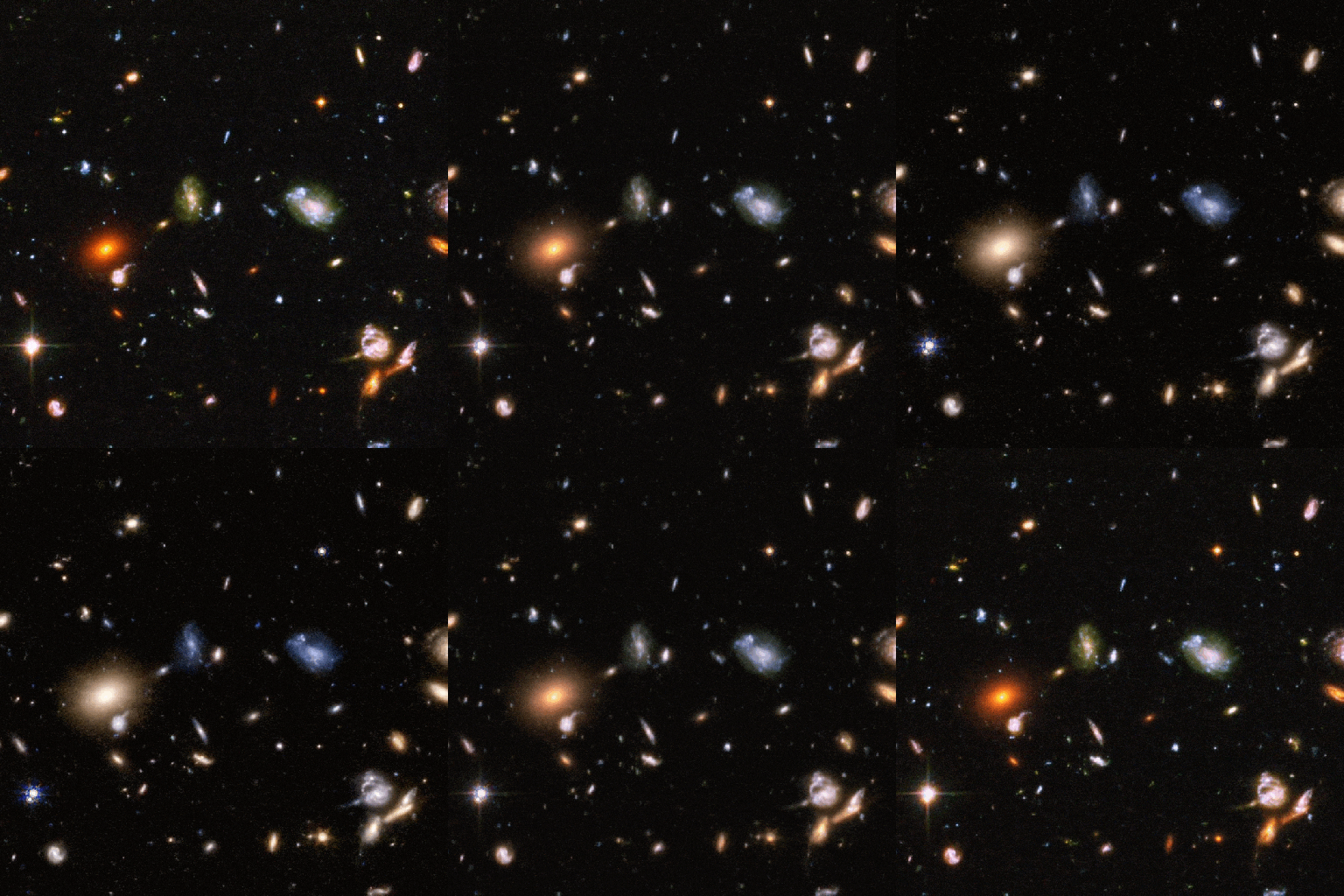
The "little red dots" were touted as being too massive, too early, for cosmology to explain. With new knowledge, everything adds up.

Here on Earth, we commonly use terms like weight (in pounds) and mass (in kilograms) as though they're interchangeable. They're not.

So far, Earth is the only planet that we're certain possesses active life processes. Here's what we shouldn't assume about life elsewhere.

Life arose on Earth early on, eventually giving rise to us: intelligent and technologically advanced. "First contact" still remains elusive.

The Universe is 13.8 billion years old, going back to the hot Big Bang. But was that truly the beginning, and is that truly its age?

Many contrarians dispute that cosmic inflation occurred. The evidence says otherwise.

The big question isn't whether the Universe is expanding at 67 or 73 km/s/Mpc. It's why different methods yield such different answers.

The original principle of relativity, proposed by Galileo way back in the early 1600s, remains true in its unchanged form even today.

Most stars in the Universe are located in big, massive, Milky Way-like galaxies. But most galaxies aren't like ours at all.

These missions will put us one step closer to the ultimate goal: crewed trips to Mars.

From size to mass to density and more, each world in our Solar System is unique. When we compare them, the results are truly shocking.

Dark matter's hallmark is that it gravitates, but shows no sign of interacting under any other force. Does that mean we'll never detect it?

Peaking on the night of August 11/12, up to 100 bright meteors per hour will be visible. Here's how to make the most of it.

Earth, the only rocky planet with a large, massive satellite, is greatly affected by the Moon. Destroying it would cause 7 major changes.

How do normal matter and dark matter separate by so much when galaxy clusters collide? Astronomers find the surprising, unexpected answer.

Such discoveries help researchers better understand the development of molecular complexity in space during star formation.
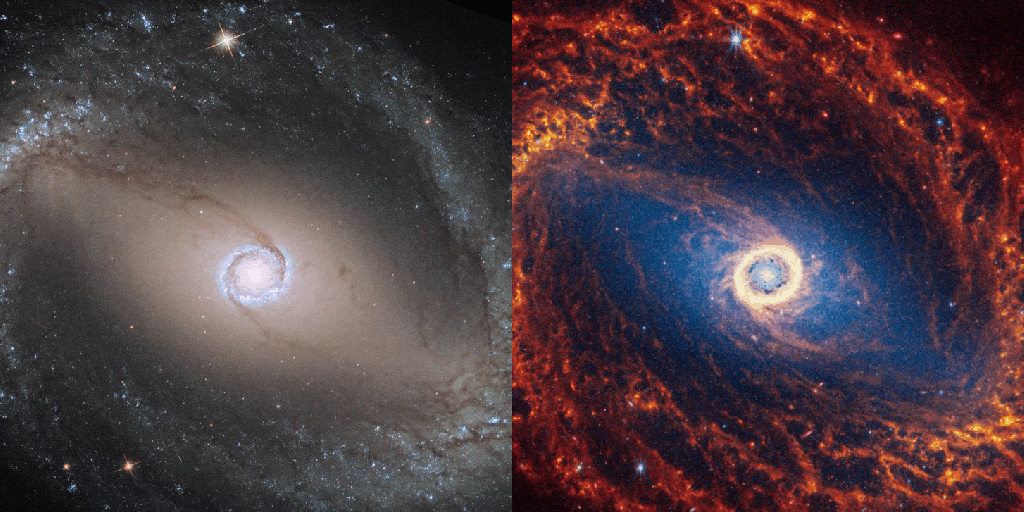
In July of 2022, the first science images from JWST were unveiled. Two years later, it's changed our view of the Universe.
From inside our Solar System, zodiacal light prevents us from seeing true darkness. From billions of miles away, New Horizons finally can.

The Extremely Large Telescope (ELT) will have a light-collecting power 10 times greater than today's best telescope.

Adams was infamously scooped when Neptune was discovered in 1846. His failure wasn't the end, but a prelude to a world-changing discovery.

For its 2-year science anniversary, JWST has revealed unprecedented details in "the Penguin and the Egg." Here are the surprises inside.

Just 13.8 billion years after the hot Big Bang, we can see objects up to 46.1 billion light-years away. No, this doesn't violate relativity.