




















Search
Brain Disorders

Your sense of self isn’t located in a single part of the brain — it emerges from a complex interplay of cognitive processes that change over time.

Locked inside their minds, thousands await a cure. Neuroscientist Daniel Toker is racing to find it.

There are hints that it could lead to new treatments for Parkinson’s, Alzheimer’s, and other brain disorders.

Interventions can make the most difference when Alzheimer’s is detected early.

A brief look at the six-decade challenge to psychiatry.

"Domesticated viral genes" may not be domesticated as scientists thought.

Walter Pitts rose from the streets to MIT, but couldn’t escape himself.

The hallucinations that characterize schizophrenia may be due to a "reality threshold" that is lower than it should be.

The study was small and didn't include a placebo group, but there is reason to believe that the drugs really do work.

New research shows psychedelics activate receptors inside brain cells that other compounds, like serotonin, cannot.

The pathogen typically kills more than 90% of people it infects.

Solving difficult visual puzzles seems to help the brain "rewire" itself by forming new neural pathways.

A recent study reveals how nerve insulation becomes impaired in the brains of Alzheimer's patients.

When other treatments fail, this radical surgery could help.
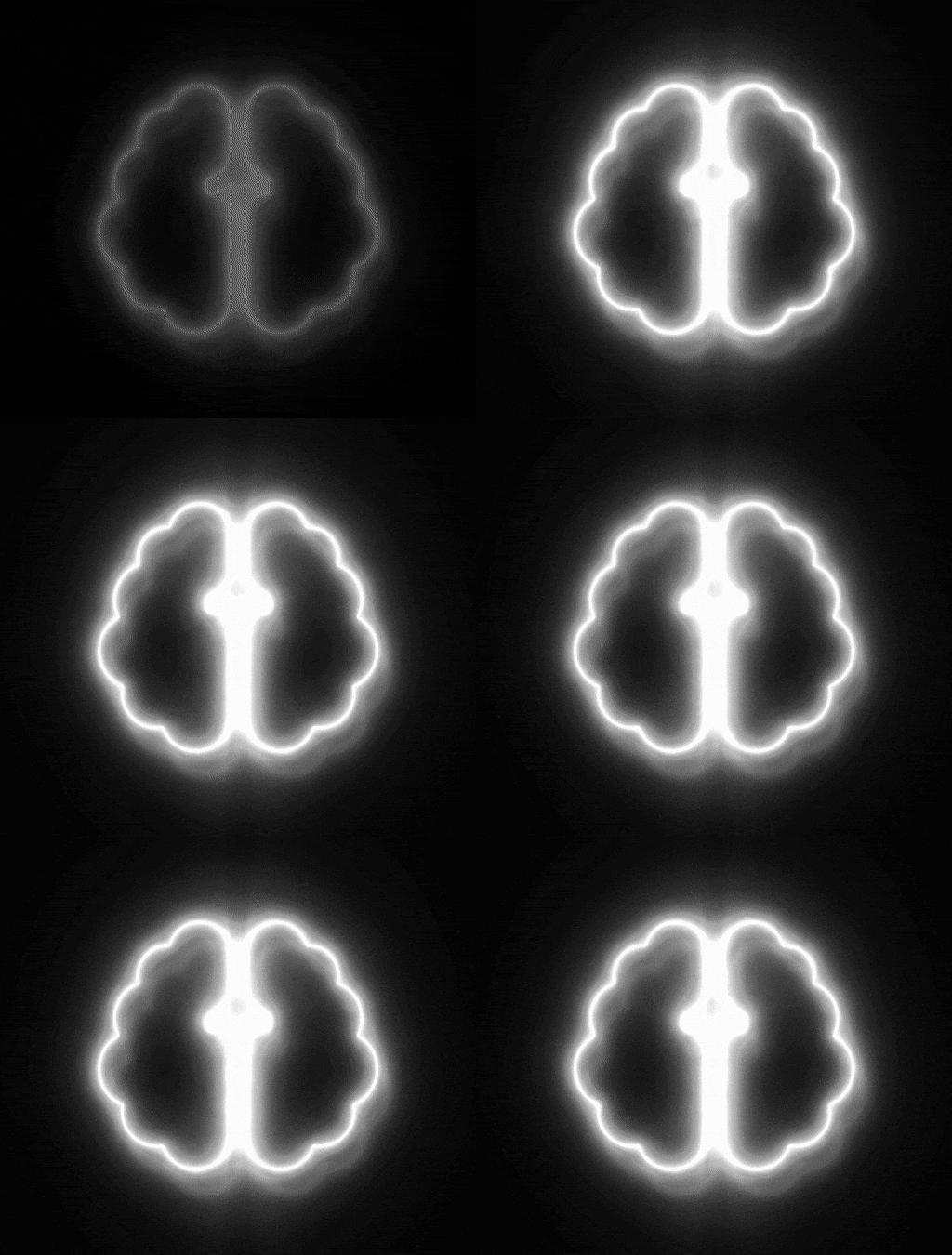
But don't buy your own brain zapping machine, yet.

Long thought incapable of regenerating, we now know that brain cells can grow and reorganize. That, it turns out, is a mixed blessing.

For over three decades, toxic proteins were believed to cause Alzheimer’s disease. However, recent studies suggest it might be metabolic reprogramming.

Protein fibrils accumulate in the brain during neurodegeneration. Cryo-electron microscopy has now uncovered fibrils of an unexpected protein.

Bruce Willis has announced he is stepping away from acting.

Researchers look to an FDA-approved drug ingredient that can "scoop-up" and store cholesterol and possibly stave off post-stroke dementia.