




















Search
Cognitive Bias

10mins
“When you start to accept that you have profound influence on the world, but very limited control, you start to see the world differently.”

Members
Behavioral economists Daniel Kahneman and Amos Tversky won the Nobel Prize for mapping the human mind's irrational decision-making biases, and now, with insights from Julia Galef of the Center for Applied Rationality, we can learn to avoid these pitfalls.

Members
In a world overwhelmed by confident yet often misleading claims, research professor Alex Edmans emphasizes the importance of critical thinking and informed decision-making to combat misinformation and enhance our freedom.

Members
Professor Valerie Purdie Greenaway highlights that while overt discrimination receives attention, subtle, unintentional biases can be equally or more harmful, yet everyone has the ability to recognize and address these biases.

23mins
“We can have that fight for a 1,000 years, but we could have a shot at figuring out what we both need and noticing when there's opportunities to make that happen.”

The Japanese practice of "tsundoku" bestows joy and lasting benefits to those who make books an important part of their lives.

"For every PhD there is an equal and opposite PhD."

By weaponizing the global economy, the U.S. initiated a new era of economic warfare and transformed how major powers compete.

Magicians use “change blindness” to delight audiences — and you can use it to become an excellent colleague.

Timothy Caulfield, a leading science communicator, discusses the challenges of combatting misinformation in an age of information overload.

Can we learn to always look on the bright side of life?

When appraising human behavior, people tend to forgo the lessons of psychology in favor of assumption and anecdote.

How black and white is your thinking?

Alex Edmans, professor of finance at the London Business School, warns us to be mindful of the incentives surrounding misinformation — including our desire to believe it.
6mins
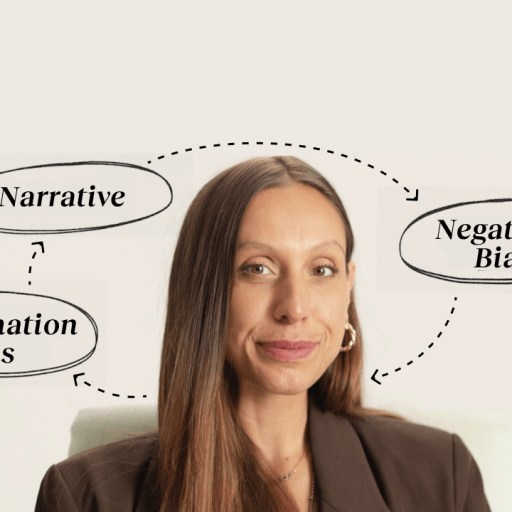
We’re all assigned a label at some point in our lives. You might be the smart one, the creative one or the lazy one. But is that designation really an […]
Unlikely Collaborators

6mins
“People will claim that something is rigorous because it's by an authority figure or it's written in a book. But anyone can write a book.”

Hindsight can cloud our predictive abilities but big data can de-mist forecasting — now AI is sharpening that focus.

From flow to emotional intelligence, these insightful books feature actionable advice you can try out today.

Beer before wine and you'll feel fine? Well, it depends.

Ethan Mollick, associate professor at the Wharton School, explains why we have to crack the machine-buddy problem.

We are wired to value things more when we work hard at attaining them — even if, objectively, they aren't worth that much.

Survivorship bias occurs when we fail to consider how data was collected. To combat this, search for the "silent evidence."

6mins
We’re often ashamed to say, “I don’t know” — but this professional poker player thinks it’s one of our greatest strengths.

We can no longer approach the news as passive consumers.

AI was the most divisive topic in a recent predictions tournament.

In the land of the double-blind, impartiality is king.

From smartphone envy to life dissatisfaction, the root cause of much unhappiness is that we are wired to imagine how things could be better.

More than a century ago, Halifax suffered an accidental blast one-fifth the size of the atomic bomb dropped on Hiroshima.

Reject your Mental Map Oversimplifications.

"In order to seek truth," Rene Descartes once wrote, "it is necessary once in the course of our life to doubt, as far as possible, all things."