




















Search
Cognitive Neuroscience

A key question is how to keep that relief going without relying solely on repeated ketamine infusions.

The Metaverse could be the most dangerous tool of persuasion humanity has ever created.

An average undergraduate student in physics is better than the AI.

4mins
What the ‘decade of the brain’ taught us about drug addiction. (Hint, we had it all wrong before.)

One tiny change might have made a huge difference.

The concept is so complex that scientists still argue whether it exists or if it is an illusion.
John Templeton Foundation

Catfish taste with their whole bodies - and that’s just one way animals sense the world totally differently than us.

What creates our private, inner universes is still a mystery.
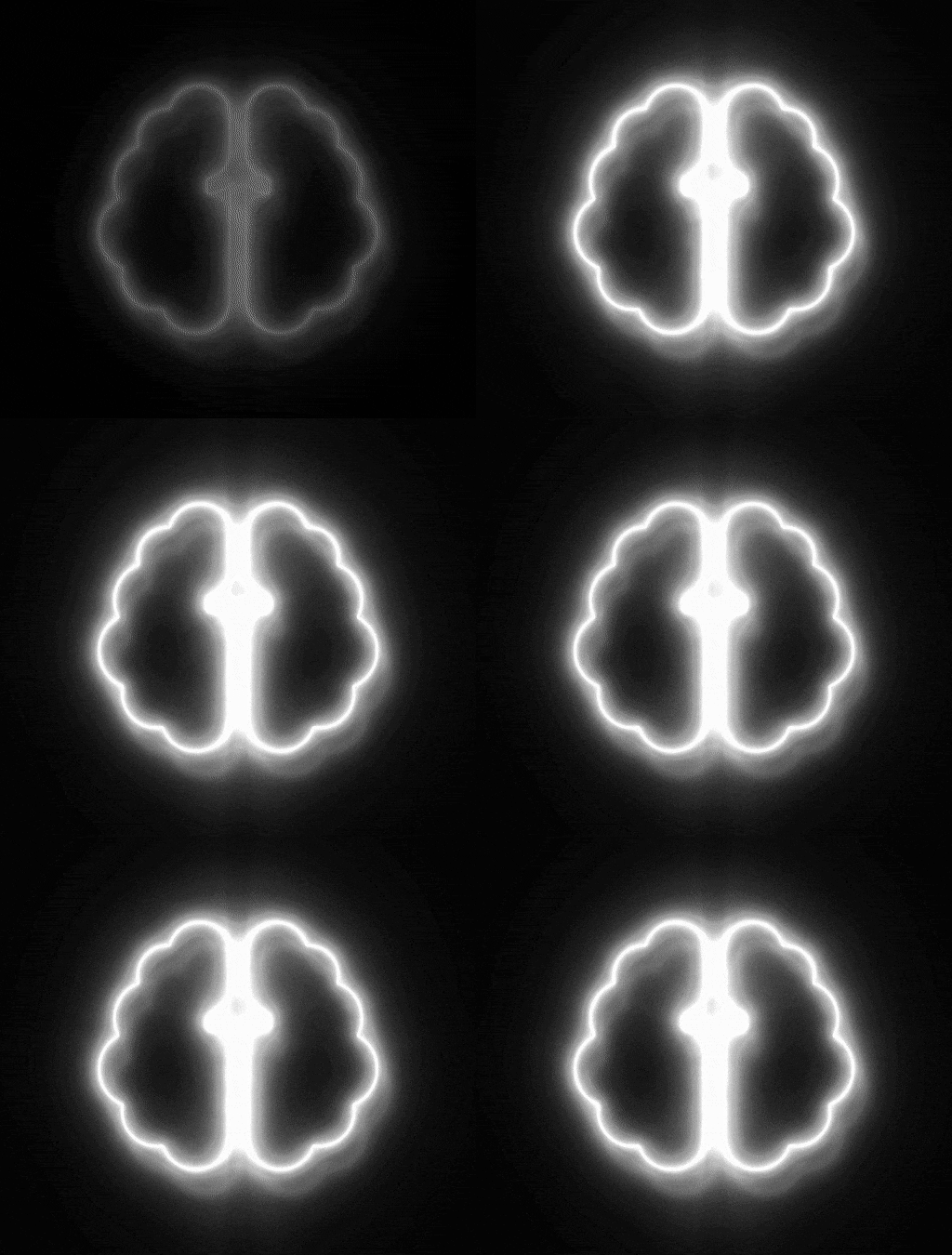
But don't buy your own brain zapping machine, yet.

Alzheimer’s disease is frightening, but the right combination of lifestyle choices can reduce your risk.

Cognitive fatigue results from thinking too hard and long. Neuroscientists now believe they know why this occurs.

The phenomenon of “digital dementia” might not be real after all.

While one may be helpful, the other may be harmful.


For over three decades, toxic proteins were believed to cause Alzheimer’s disease. However, recent studies suggest it might be metabolic reprogramming.

It might be good for your memory.

Music and sounds only seem to reduce pain in mice when played at a specific volume.

2mins
How to see through the lies that surround us.

5mins
Where do you place precious brain resources?

Noradrenaline-targeting drugs, including blood pressure, depression, and ADHD meds, improve Alzheimer's disease symptoms.

A new finding that unconsciously processed images are distributed to higher-order brain networks requires the revision of a popular theory of consciousness.

What’s one of the most reliable indicators that a first date is going well? The answer might lie in how closely the couple is matching each other’s behavior and physiology. […]

8mins
Having trouble learning? A PhD engineering professor gives you one key tip.
John Templeton Foundation

The common drug is called gabapentin, which is currently used to control seizures and manage nerve pain.

What if intelligence can thrive without consciousness?

A deep learning AI running on a supercomputer was able to link patterns of brain connectivity to political ideology.

One theory for catatonia is that it is similar to an animal's “death feint.”

Screens were around in previous generations, but now they truly define childhood.

Signals from the environment, such as those detected by your sense organs, have no inherent psychological meaning. Your brain creates the meaning.
John Templeton Foundation

Understanding these links could bring us closer to a cure.