




















Search
Cognitive Psychology

A new framework describes how thought arises from the coordination of neural activity driven by oscillating electric fields — a.k.a. brain “waves” or “rhythms.”

We will believe in AGI when it calls on Facetime.

Big Think recently spoke with behavioral scientist and author Katy Milkman about what really motivates us and steers our behavior.

The burial spot was found in one of the Herculaneum scrolls charred by Mt. Vesuvius.

Research suggests that experience may matter more than innate ability when it comes to a sense of direction.

Admitting that we know little about our future selves can radically improve our decision-making.

Beer before wine and you'll feel fine? Well, it depends.
6mins
With great genius comes great rigidity. Professor Barabara Oakley on how to stay mentally agile — and get smarter as a result:

Making up false information is one of the biggest problems with AI, but there are no silver-bullet solutions.

An excerpt from “Memory,” a primer on human memory, its workings, feats, and flaws, by two leading psychological researchers.

The Reitoff principle gives us permission to "write off" a day and intentionally step away from achieving anything.


Memories aren’t mental recordings, but pliable information we can use to better manage the present and conjure future possibilities.

People who have a regional accent might prefer robots who speak like them over generic voices.


To make a ton of information stick in your mind, you have to make it chunky.

Big Think spoke to the author of "The 5 Love Languages" about the popular relationship theory — and its lack of scientific support.

3mins
What is perception, really? Philosopher Alva Noë on why perception is a puzzling phenomenon:

Cognitive psychologist and poet Keith Holyoak explores whether artificial intelligence could ever achieve poetic authenticity.

Big Think recently spoke with sleep psychologist Dr. Jade Wu about the surprising consequences of forgoing sleep.

Many still consider hypnosis more of a cheap magician’s trick than legitimate clinical medicine.

People who score high in "obsessive passion" can become rigidly consumed by ideological causes — sometimes dangerously so.

I also can’t conjure sounds, smells, or any other kind of sensory stimulation inside my head. This is called “aphantasia.”

In pre-War Cambridge, students had to ace an interview with Ludwig Wittgenstein to attend his lectures — Alan Turing passed that test, and went on to create one of his own.

A controversial new philosophy paper tries to bring our moral prejudices to heel. Should it?

The aging brain is networked differently.
6mins
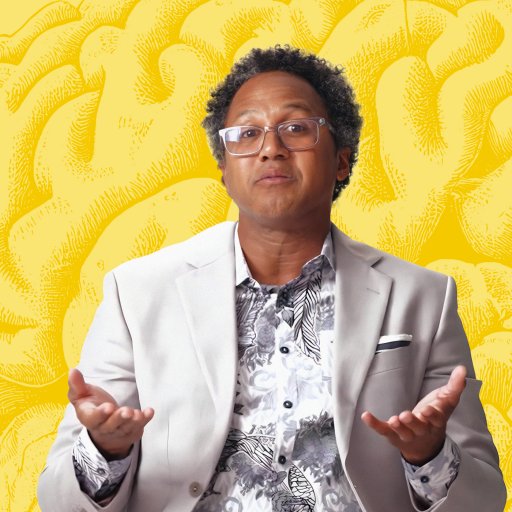
There are three kinds of memory that all work together to shape your reality. Neuroscientist André Fenton explains.
Unlikely Collaborators

Arieh Smith, a New York City-based polyglot who runs the YouTube channel Xiaomanyc, talks language-learning with Big Think.
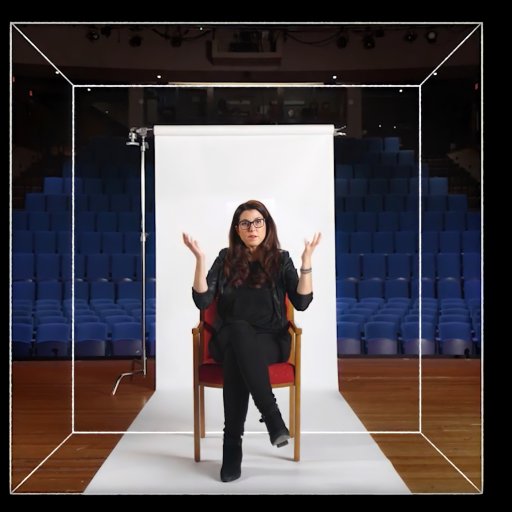
Combining years of neurological research and mindfulness techniques, Dr. Heather Berlin helps us better understand how the body’s most complex organ can easily be misled into negative thinking - and how we can stop that from happening.
Unlikely Collaborators

According to neuropsychologist Julia DiGangi, no one can live a life free of emotional pain. We can only choose how those emotions empower us.