




















Search
Cognitive Psychology

7mins
You’ve heard about your "lizard brain." But what about the other two?
John Templeton Foundation

9mins
No, emotions don’t happen TO you. Here’s what happens instead.

Would you confess your crimes to a skeleton with "an unnatural ghastly glow"? One inventor thought you would.

A recently identified stage of sleep common to narcoleptics is a fertile source of creativity.

Thomas Edison was on to something...

George Orwell got it right: "Never use a long word where a short one will do."

Neuroscience is beginning to provide clues about the emergence of human consciousness.
John Templeton Foundation

If you think everyone around you is terrible, the joke may be on you.

The hallucinations that characterize schizophrenia may be due to a "reality threshold" that is lower than it should be.

Forgetting and misremembering are the building blocks of creativity and imagination.

Our bodies crave more food if we haven’t had enough protein, and this can lead to a vicious cycle.

More than a third of Americans don’t get enough sleep. Diet is an important, under-recognized culprit.

How humans came to feel comfortable among strangers, like those in a café, is an under-explored mystery.
John Templeton Foundation

5mins
How World War II codebreaker Alan Turing invented modern AI.

The content of our long-term memories is constantly "reconstructed" by our brains. The same is true of memories formed mere seconds ago.

More than 90 percent of people make a mistake on this test.

This was largely a philosophical question until 2005, when a surgical team in France performed the first partial face transplant.

The study was small and didn't include a placebo group, but there is reason to believe that the drugs really do work.

“It doesn’t erase what happened to you. It just changes the impact it has on your life.”
8mins
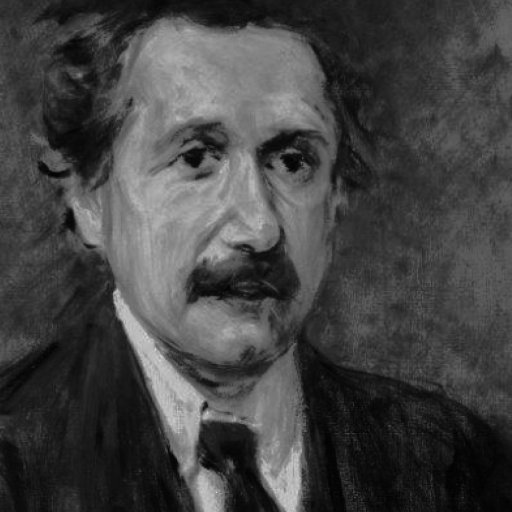
What makes some scientists culturally significant, while others remain in obscurity? Well, there’s a science to it.

1hr 19mins
Steven Pinker explains how to cultivate greater rationality in today's complex world.

4mins
Everyone commits this rationality error.

5mins
The formula for rational thinking explained by Steven Pinker.

The secret may lie in an old idiom: "Sleep on it."

This is your brain on work.


It may be an advantage in some contexts.

Intellectual humility demands that we examine our motivations for holding certain beliefs.
John Templeton Foundation

ChatGPT doesn’t understand physics, but it memorizes very well and puts in extra effort.

"I am an anthropologist, and for years, I have spoken to people who have had these experiences."
John Templeton Foundation