




















Search
Emotional Regulation

A day in the Sierra Nevada with Tommy Caldwell reveals how pain, trauma, and “elective hardship” became the foundation of his fortitude.

Members
Your inner voice significantly influences your quality of life, and while it can motivate you, psychologist Ethan Kross warns it can also lead to negative thought cycles, or "chatter," but his research offers tools to regain control and foster a positive mindset.

Books don’t just stimulate the mind — they trigger physiological changes throughout the body.

The benefits of mathematical literacy reach far beyond the realm of numbers and equations.

The Stoic philosopher argued that most of life is outside our control — but the little we do control defines who we are.

1hr 51mins
Stoicism has been flattened into slogans about toughness, detachment, and emotional silence, a version that’s easy to sell, but mostly wrong. Massimo Pigliucci returns Stoicism to its original purpose: a […]

22mins
"It's much better to try to understand how the world works and then act accordingly. Rather than trying to impose on the world the way we want to think or the way we preferred things to be."

25mins
"The big question then is why are most people resilient and why are some people not resilient?"

Welcome to The Nightcrawler — a weekly newsletter from Eric Markowitz covering tech, innovation, and long-term thinking.

1hr 24mins
“There are at least three very much interrelated misconceptions about trauma right now.”

Former tech founder Scott Britton wants to shatter the binary myth that separates driving ambition from inner development.
3mins
From neuroscience to philosophy, experts reveal why compassion may be the most important human skill we have.
Unlikely Collaborators

1hr
“Let me walk you through the biggest traps that you should be aware of that are a danger to your financial wellbeing.”

It's not just about the home; it's about everything.

In “Warhead,” neuroscientist and national security adviser Nicholas Wright explains how the brain navigates warfare and why it is our ultimate weapon (and instrument for peace).

10mins
“The way my mind works is just out of anxiety and catastrophization.”

Members
Deepak Chopra and Harvard neurobiologist Rudolph Tanzi advocate for "radical well-being," emphasizing that optimal health relies on proactive measures—such as sleep, nutrition, exercise, and emotional regulation—rather than reactive responses to health issues.

Members
Positive psychologist Tal Ben-Shahar argues that while resilience is valuable, developing antifragility through the SPIRE model—focusing on Spiritual, Physical, Intellectual, Relational, and Emotional well-being—is even more beneficial for achieving happiness.

Members
This class equips participants with strategies from experts like David Goggins, Amy Cuddy, and Dr. Rudolph Tanzi to enhance mental strength and emotional well-being through mindfulness, body-mind techniques, and compassionate emotional processing, ultimately fostering resilience and personal growth.

2mins
Modern culture has made us feel like there’s no time to be patient. Sarah Schnitker’s lab at Baylor University is researching how this often-forgotten virtue could improve our overall well-being.

9mins
“You can be aware of sadness from a point of view that is not merely sad, and you can be aware of fear from a point of view that's not merely afraid.”
7mins
Three doctors break down brain function, somatic awareness, and how to recover from bad experiences.
Unlikely Collaborators

3mins
What if emotional regulation isn’t just a trait, but a skill parents and teachers can help develop? Ethan Kross reveals what science says about shaping young minds.

18mins
“By not focusing on the outcome and instead designing a tiny experiment, what you can do is letting go of any definition of success, letting go of that binary results that you're looking for, and instead focusing something that makes you feel curious and that you want to explore.”

21mins
"You can't possibly exaggerate how much better it is to live in a peaceful, orderly society, and to be wealthy, and healthy, and surrounded by people who you love."
6mins
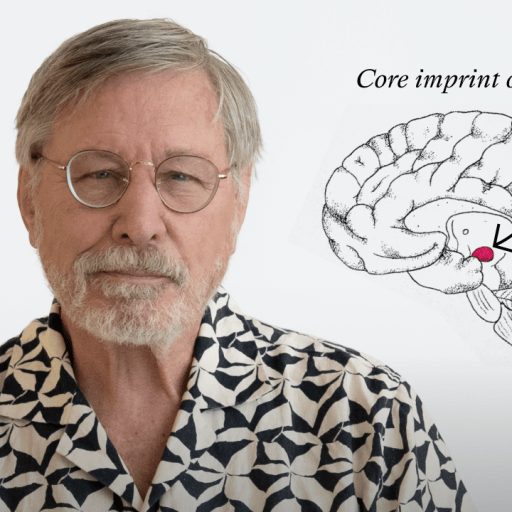
Psychiatrist Dr. Bessel van der Kolk discusses key methods for rewiring the brain, kickstarting the healing process, and opening your mind to new perspectives.
Unlikely Collaborators

Harmony and moderation make for a happier life.

Buddhism has rules for slaying your enemies. But the real surprise is finding out who your enemies actually are.

Magicians use “change blindness” to delight audiences — and you can use it to become an excellent colleague.

7mins
From anger to awe: How one woman overcame “debilitating trauma” to conquer a near-impossible 53-hour swim at 64.