




















Search
History and Society

From size to mass to density and more, each world in our Solar System is unique. When we compare them, the results are truly shocking.
What are we supposed to do when experts look at the same data yet reach starkly different conclusions?

A recent paper in the journal Physical Review Letters claims to prove that a "kugelblitz" is not possible.

Peaking on the night of August 11/12, up to 100 bright meteors per hour will be visible. Here's how to make the most of it.

The idea of awarding legal personhood to nature has received renewed attention in the contemporary environmental justice movement, but much contention remains.

Quibi was so focused on foresight they forgot the basics of hindsight.

The rise and fall of Josh Harris — the genius who anticipated the digital revolution just a little too soon.

David Novak — the cofounder, and former CEO and chairman, of Yum! Brands — celebrates the benefits of active, lifelong learning.

Big Think asks startup legend and VC heavyweight Ben Horowitz to reflect on his bestseller "The Hard Thing About Hard Things."

Earth, the only rocky planet with a large, massive satellite, is greatly affected by the Moon. Destroying it would cause 7 major changes.

Everyone has to learn about sex somehow. Today, billions of people are learning about it from porn.

In the 1970s, James Lovelock proposed that the biosphere was not just green scruff quivering on Earth's surface. Instead, it managed to take over the geospheres.

And, more importantly, what’s being done to get them online?

What you can learn about media by parodying it from the print era into the digital age.

Even in the very early Universe, there were heavy, supermassive black holes at the centers of galaxies. How did they get so big so fast?

Have you ever noticed how many things you interact with but can’t name? So did we.

Researchers are working nest by nest to limit the threat while developing better eradication methods.

From surviving on wild plants and game to controlling our world with technology, humanity's journey of progress is a story of expanding human agency.

Cats twist and snakes slide, exploiting and negotiating physical laws. Scientists are figuring out how.

Alan Turing and Christopher Strachey created a ground-breaking computer program that allowed them to express affection vicariously when so doing publicly, as gay men, was criminal.

In "Not Born Yesterday," author and cognitive scientist Hugo Mercier makes the case that misinformation is overrated — and other human foibles are underrated.

19 rooms. 1,636 square feet. 1,800 years of history.

"The movement is much bigger than Sam Bankman-Fried, or any one person, no matter how wealthy," philosopher Peter Singer told Big Think.
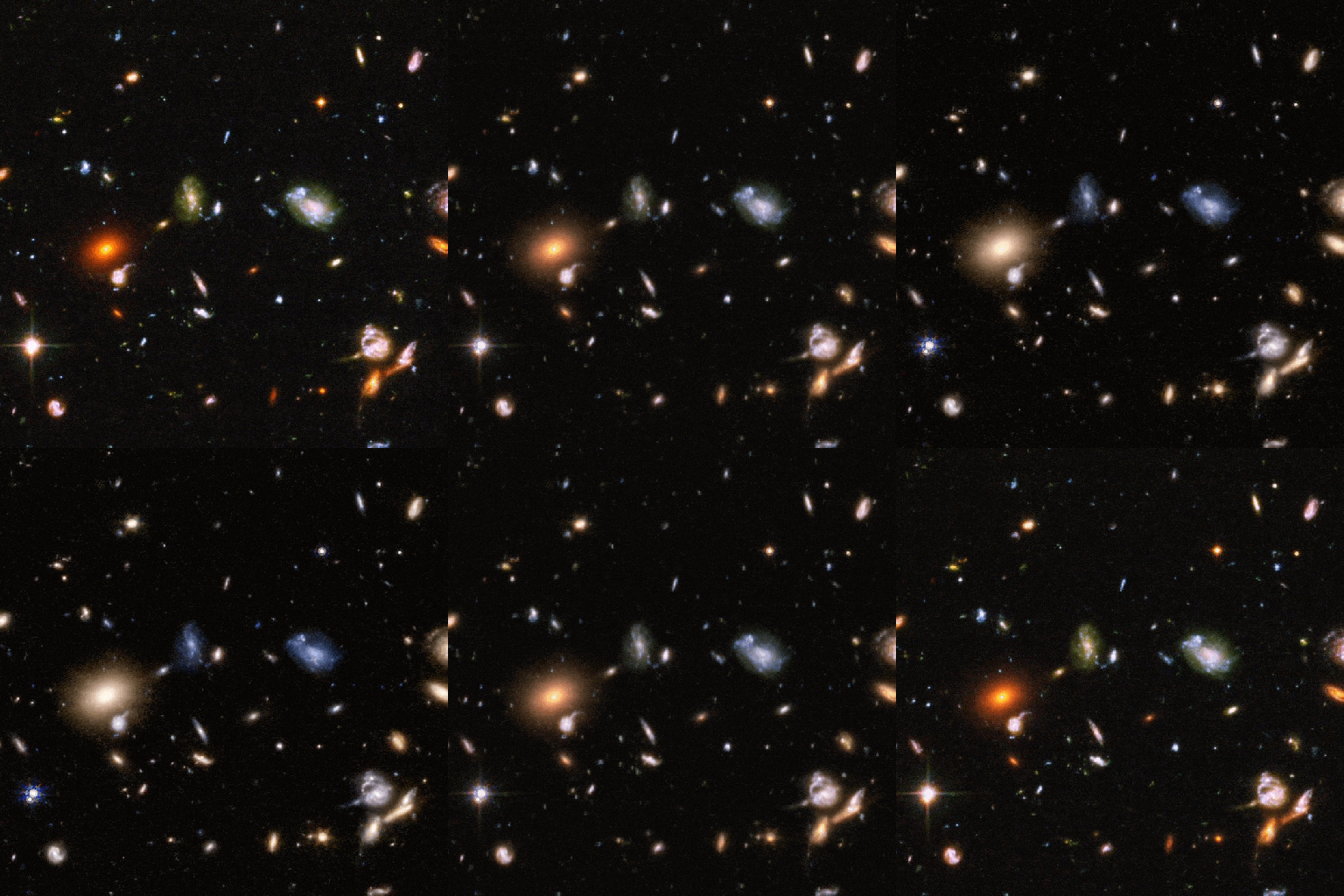
From inside our Solar System, zodiacal light prevents us from seeing true darkness. From billions of miles away, New Horizons finally can.

9 minutes of cruel history may cure the anti-progress delusion.

Executive coach Jodi Wellman explains how to “make it to the end with no regrets.”

The true story of the shot that "reverberated through England" when science collided head-on with religion.

It's knowledgeable, confident, and behaves human-like in many ways. But it's not magic that powers AI though; it's just math and data.

Ryan Condal, who worked in pharmaceutical advertising before Hollywood, talks with Big Think about imposter syndrome, "precrastination," and Westeros lore.

While the concept stretches back centuries, it has garnered significant attention in recent decades.