




















Search
Innovation

His grandfather, a member of Oppenheimer’s atomic bomb team, foresaw the potential of nuclear energy to power cities — not destroy them.

Alchemy had its golden age in the 17th century, when it counted Isaac Newton and Robert Boyle among its adherents.
John Templeton Foundation

We're separating the facts about EVs from the fiction.

Your whole body is part of the instrument.

With U.S. infrastructure crumbling, an honor oath and iron ring remind engineers of their profession's ethical weight.
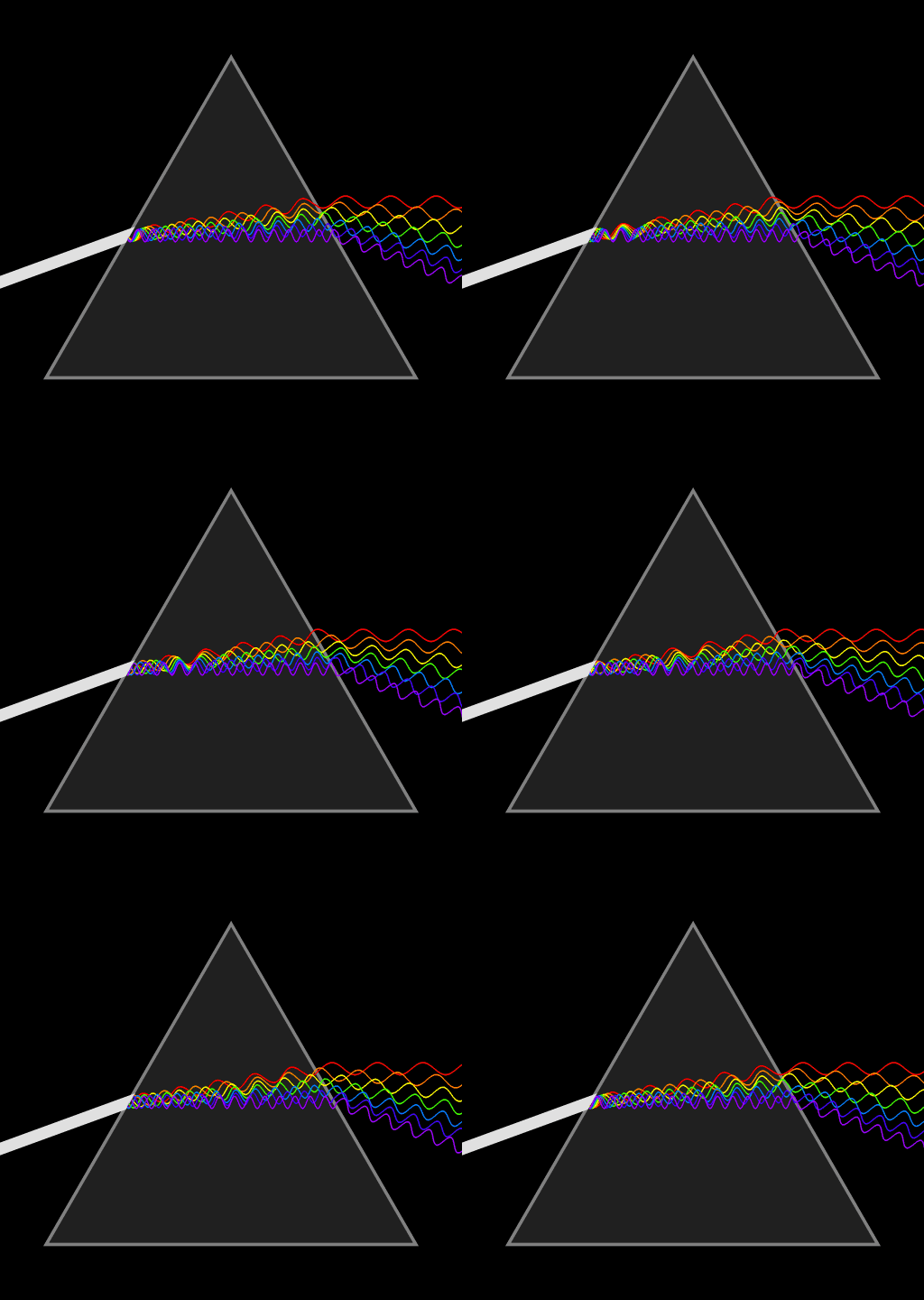
Invisible cloaks. Ghost imaging. Scientists are manipulating light in ways that were once only science fiction.

Science fiction met nuclear fission when Hungarian physicist Leó Szilárd pondered the explosive potential of nuclear energy.

The $300,000 Model A is a true flying car — it can be driven on roads as well as flown in the air. And it's one step closer to your garage.

The divers spend their waking hours either under hundreds of feet of water on the ocean floor or squeezed into an area the size of a restaurant booth.

Learn to spot the scientists who are searching for the truth rather than money, ego, or fame.

All biological systems are wildly disordered. Yet somehow, that disorder enables plant photosynthesis to be nearly 100% efficient.

The material is both stronger and lighter than those used to make conventional power plant turbines.


But it's still challenging to build a 22,000-mile elevator.

Science news presents a flood of breakthroughs and discoveries that promise to change our lives. They rarely do.

It's like combining Google Translate with a time machine.
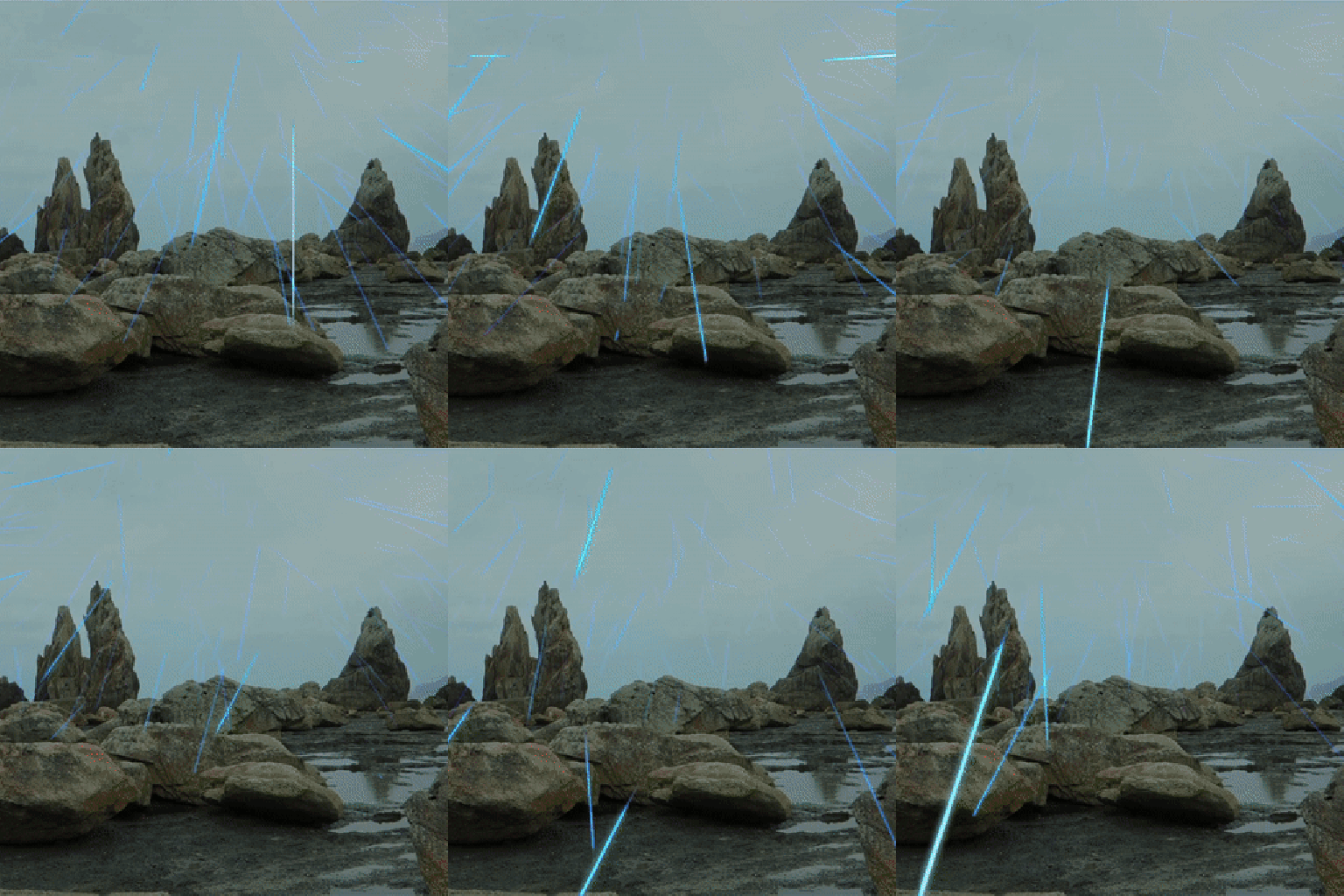
Lost in a building or underwater? A new muon-based navigation system could be your guide.

Particles behave differently when freed from the force of gravity. A new space factory aims to use this to synthesize pharmaceuticals.


The key to its success lies not in its understanding of technology, but in its understanding of human nature.

Pessimism reigned supreme.

Centuries ago, the typical British coffeehouse was more like a "school without a master" than a place to grab a quick boost of caffeine.

Who’s afraid of utopia? AI doubters have cold feet. History can warm them.

Tardigrades can completely dehydrate and later rehydrate themselves, a survival trick that scientists are harnessing to preserve medicines in hot temperatures.

To gain its full value, L&D leaders must be open to challenging assumptions about how they approach on-the-job training.

One of Apple's key innovations serves as a psychological breakthrough, as its technology eliminates the isolating feel of headset use.

The intensely white coloration of the shrimp is a remarkable feat of bioengineering.

Named "Phoenix," this AI-powered humanoid could be your next coworker.

Science fiction movies capture a classic human flaw: getting the future mostly wrong.

The Shirky Principle states that "institutions will try to preserve the problem to which they are the solution."