
















Moral Philosophy

Moral Philosophy

The book cover of "Love Thy Stranger" by Bart D. Ehrman features a painting of four biblical figures and the subtitle, inspired by the command to "love thy stranger," exploring how Jesus’ teachings transformed Western moral conscience.
Biblical scholar Bart Ehrman contends that our modern sense of altruism can be traced back to the radical shift in ethical thinking sparked by Jesus' teachings.
Three men in dark clothing sit and talk on a small boat in a harbor with ships and calm water in the background, under a hazy sky.
"Broadly speaking, it's at least plausible, this might be right."
A close-up drawing of a woman's face with her eyes closed, head tilted back in pleasure, and dramatic shadows cast across her cheeks and lips.
Pleasure is never bad — but its source can be.
Book cover for "The Hypocrisy Trap" by Michael Hallsworth, featuring a blue pattern of interlocking hands forming fists, with a subtitle about improving lives by changing criticism and understanding the influence of hypocrites.
In this excerpt from "The Hypocrisy Trap," Michael Hallsworth explains why accusations of hypocrisy don’t always damage credibility.
A man sits on a chair in front of a white backdrop in a library with brick walls, wooden floor, shelves of books, and large windows.
1hr 26mins
Instead of treating belief as a private preference, philosopher Alex O’Connor examines how our moral positions shape institutions, obligations, and the ways we justify our choices. 
A graphic contrasts pragmatists and purists in moral philosophy, with photos of activists and protest scenes connected by arrows labeled "progress.
History shows that progress often depends on activists at both ends of the spectrum.
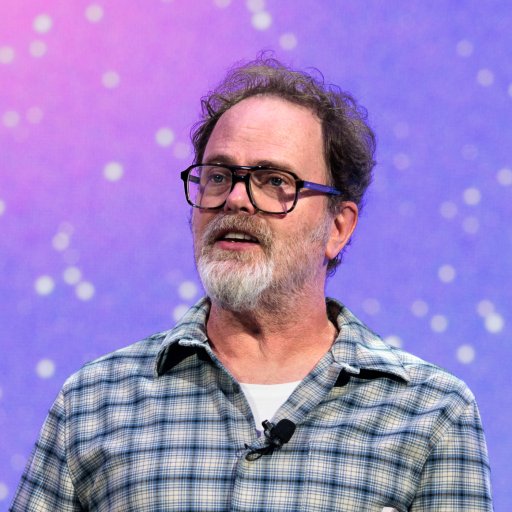
A bearded man wearing glasses and a plaid shirt speaks with a microphone clipped to his collar in front of a purple background with white dots.
12mins
The hospital where Rainn Wilson’s wife and son nearly died became his own personal holy site. There, he discovered that the sacred can exist in places we least expect it. During his talk at A Night of Awe and Wonder, he explained how the awe we feel in moments of courage and love is moral beauty — and following it might be the start of our spiritual revolution.
Black and white illustration of a ship at shore, with people unloading goods and interacting on land; orange arc marks part of the scene.
In the Embers series, historian M.G. Sheftall shares the stories of Hiroshima and Nagasaki’s last survivors and reveals why their testimony must endure.
A grayscale photo of the sculpture "The Thinker" with a digitally added yellow halo above its head, set against a black background.
3mins
Philosopher Meghan Sullivan challenges the idea that religious texts can’t be taken seriously in modern philosophy. She explains how parables, scripture, and debate have always been connected to asking life’s biggest questions:
A historical illustration shows one man performing a medical procedure on another man’s chest using a metal instrument, both with serious expressions.
3mins
According to philosopher Meghan Sullivan, effective altruism may overlook the moral importance of seeing others as individuals. She explains how love should guide how we care for both present and future humans.
A heart shape is cut out of paper, revealing a circuit board with computer chips and code underneath.
4mins
"If we did create beings that were more like non-human animals, we ought to treat them much better than we now treat non-human animals."
A large yellow hot air balloon with a smiley face is shown on the left; on the right, a bunch of parfit smiley face balloons float against a cloudy sky.
If happiness is an absolute good, would 1 billion slightly happy people be better than 1 million incredibly happy people?
Two people are holding hands; one person wears a dark sleeve, the other wears a blue sleeve with a green garment. The setting appears to be indoors with a red chair in the background.
6mins
Aristotle thought that a friend you love is considered your ‘second-self’, someone whose pain feels like your own. Philosopher Meghan Sullivan asks, what happens when you extend that kind of love to strangers?
A person lifts a barbell next to a box labeled "DONATE," filled with folded clothes and shoes, highlighting fitness and charity against a light green background.
Rutger Bregman's "Moral Ambition" wants us to aim our careers not at money but solving the world's biggest problems.
A digital illustration of a brain, composed of circuit-like lines, appears against a black background filled with white dots resembling stars.
"Nobody expects a computer simulation of a hurricane to generate real wind and real rain," writes neuroscientist Anil Seth.
A hint of pessimism drips from the upside-down mint ice cream cone melting on the asphalt, a sweet reminder that some delights are meant to slip away.
Pessimissts are never disappointed, but are they also kinder?
Illustrated bell curve depicting IQ distribution with meme characters at various IQ levels: 70, 100, and 130, representing different intellectual stereotypes.
A study on the “moral circles” of liberals and conservatives gets drafted into the culture wars — with mixed results.
A silhouette of a person stands in front of three closed doors in a dimly lit room. White swirling lines surround the figure, adding a sense of motion and mystery to the scene.
In the 18th century, David Hume argued that we are only motivated to do good when our passions direct us to do so. Was he right?
Three historical figures in a collage: on the left and right, black and white sketches of two different men; in the center, a blue-toned image of a statue of a seated, thinking person—a perfect visual encapsulation of philosophy for leaders.
Three of the greatest moral philosophers — Bentham, Kant and Aristotle — offer invaluable and practical lessons for leaders today.
A collaged image featuring a partial American flag, a tip jar with coins, a percentage-tipping selection panel, a man's face making an awkward expression, and a close-up of striped fabric.
Why do we tip waitstaff and cabdrivers but not flight attendants and retail clerks?
Book cover of "Inheritance" by Harvey Whitehouse. The white cover features a vertical tear revealing a stack of people on one side and a green landscape on the other. Subtext reads "The Evolutionary Origins of the Modern World.
Religion is a product of, and not a source of, our evolutionary moral dispositions.
An individual in a suit and orange tie gestures toward a firefighter in full uniform and helmet labeled "BUFFALO" with the number "27", as if acknowledging everyday miracles.
Is it ever possible for God to violate the laws of nature?
Two ancient statues, framed by red lines, appear to be conversing through modern emoji speech bubbles. One statue displays several emojis, while the other shows a typing indicator.
"I know what you're thinking" can sound kind or creepy — depending on who's saying it.
A black-and-white illustration depicts five individuals wearing robes and garlands, reclining and sitting around a table with food and drink, reminiscent of a classical or ancient feast, evoking scenes one might imagine from the time of Confucius.
When stuffed and staring down the last bite, you might hear your mother's voice in your mind.