




















Search
Neuroscience

Fluphenazine, once used to treat schizophrenia, is capable of blocking a compound connected to chronic pain.

We all want to have a good, stable relationship with somebody, says Dr. Helen Fisher. So it's important to understand how intense romantic love affects our long-term goals.
John Templeton Foundation

The separation of conjoined twins is fraught with stomach-churning biomedical and ethical challenges.

These salamanders are helping unlock the mysteries of brain evolution and regeneration.

Creativity and achievement require balancing hard work with the restful power of calm.

4mins
What the ‘decade of the brain’ taught us about drug addiction. (Hint, we had it all wrong before.)

One tiny change might have made a huge difference.

At a fundamental level, only a few particles and forces govern all of reality. How do their combinations create human consciousness?

Despite the fact that both species shared a similarly large neocortex, scientists still have many questions about how closely the function of their brains resembled our own.

We also don't know how Tylenol works. But it does work.

The concept is so complex that scientists still argue whether it exists or if it is an illusion.
John Templeton Foundation

For many people, a challenge to their worldview feels like an attack on their personal identity.

When we feel sick, it's not just the pathogen to blame. Our brain cranks up the temperature, and the neurons responsible finally have been found.

What creates our private, inner universes is still a mystery.

The brain is highly plastic — the more we do a particular action, the more we change its makeup. Money is a great motivator for habit-forming actions.
Million Stories
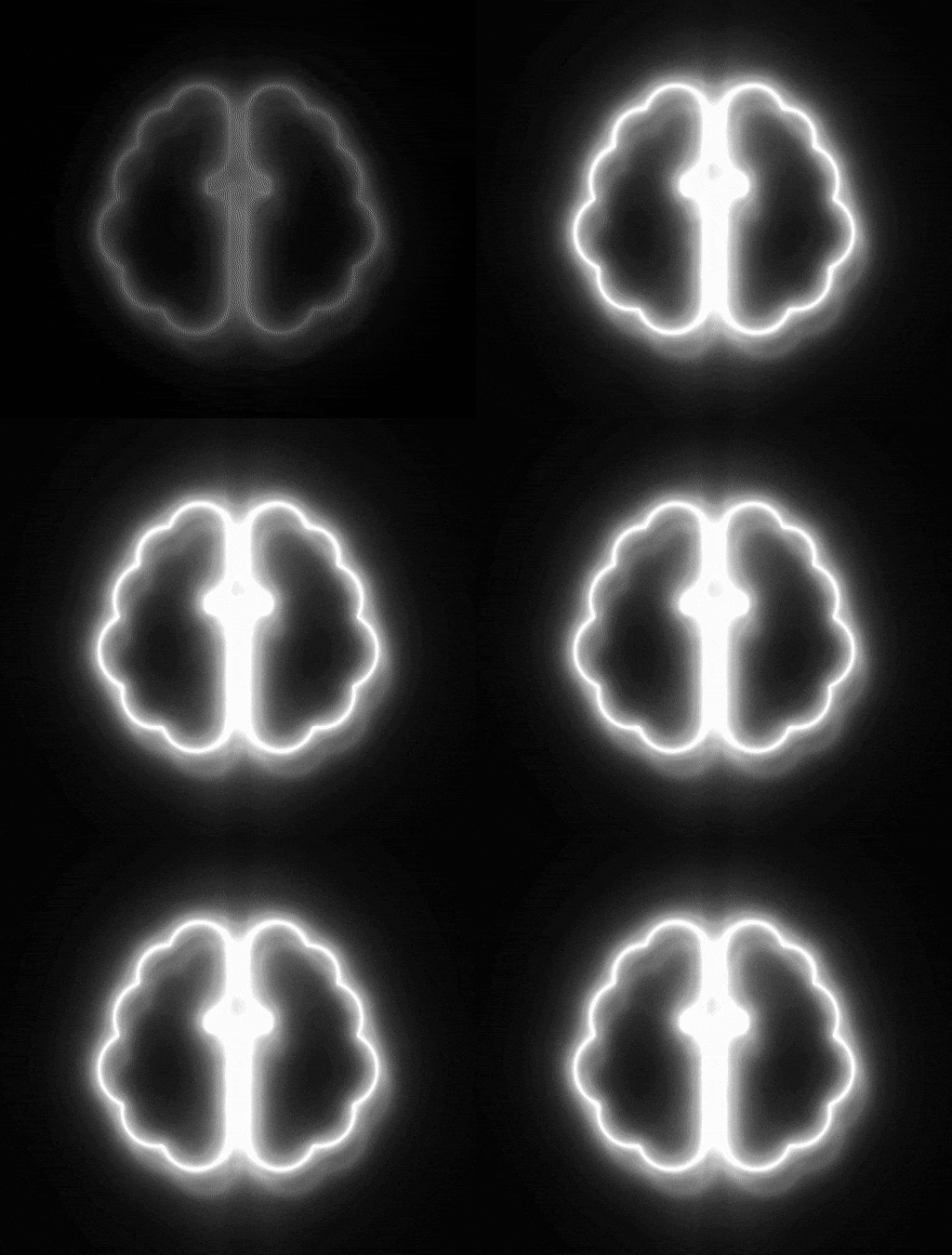
But don't buy your own brain zapping machine, yet.

What are they and, more importantly, how do you get rid of them?

If you want a medication to kick in faster, lean right.

Alzheimer’s disease is frightening, but the right combination of lifestyle choices can reduce your risk.

A clever neuroscience experiment shows that the "other-race effect" is likely due to a lack of experience and perceptual expertise rather than racism.

Here's what it means for the field.

The phenomenon of “digital dementia” might not be real after all.

Research shows how temperature can be used to manipulate circadian rhythms.

While one may be helpful, the other may be harmful.

Reframing life in terms of death reveals some of the biggest philosophical problems with how we think about living systems.

You open an app and start scrolling, then suddenly it's an hour later. Sound familiar?


The "Mind After Midnight" hypothesis aims to explain why night owls tend to suffer more negative health outcomes.

Uploading your mind is not a pathway to immortality. Instead, it will create a possibly hostile digital doppelgänger.

Let's hope that squid don't evolve lungs and legs, or humanity might be in real trouble.