
















Neuroscience

Neuroscience

10mins
Are humans naturally selfless? Psychologist Abigail Marsh is using studies on psychopathy and altruism to find out.
A person in a white shirt looks out a large window at a cityscape with skyscrapers and distant water under a cloudy sky.
Neuroscientist Christof Koch on human minds, AI, and bacteria.
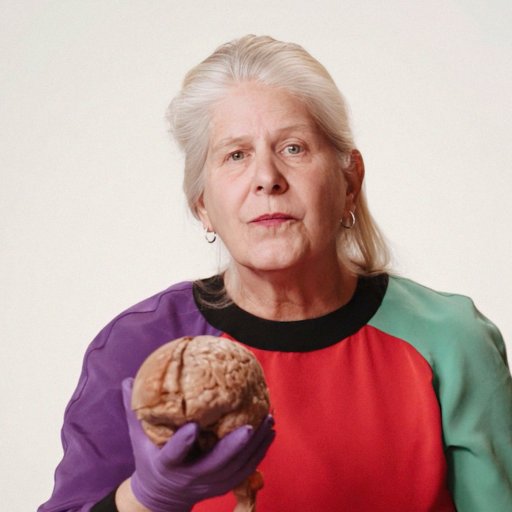
A woman with grey hair, wearing a colorful sweater and purple gloves, holds a human brain.
9mins
At age 37, neuroanatomist Dr. Jill Bolte Taylor suffered a stroke that would take her eight years to fully recover from. This is how it changed her understanding of the brain.
Unlikely Collaborators
A digital representation of a 3D mesh structure with wavy, interconnected lines on a gradient purple background.
Sound may be an overlooked tool for boosting well-being.
A small, warm-blooded brown bird with outstretched wings captured in mid-flight against a blue sky.
An excerpt from renowned neuropsychologist Nicholas Humphrey’s book “Sentience: The Invention of Consciousness.”
Close-up of a hand touching a neck, set against a background with textured patterns and a large shadow of a hand overlapping the central image.
Depression can cause you to think too much — and physically sense too little.
X-ray images of a shoulder and a wrist with highlighted areas in red indicating injuries or inflammation, set against a colorful, abstract background.
Fixing chronic pain in the body may sometimes require a treatment focused on the brain.
Glowing blue digital rendering of a human brain against a black background.
Recent research sheds light on how the brain overgeneralizes fear, causing people to be afraid of harmless situations.
A display of various marble busts and sculptures arranged on two wooden shelves against a dark green wall.
An argument for emphasis on subjective experience.
Black and white wireframe rendering of a human brain, with the left hemisphere shown in sparse lines and the right hemisphere rendered more densely detailed, highlighting areas associated with cognition.
A new framework describes how thought arises from the coordination of neural activity driven by oscillating electric fields — a.k.a. brain “waves” or “rhythms.”
An image shows three panels of brainwave patterns on the left, with colorful lines of computer code on the right.
33 years ago, the theoretical biologist Robert Rosen offered an answer to the question "Is life computable?"
A black and white photo of a young child holding a vintage telephone receiver to their ear, with an excited expression. The background features graphic designs of sound waveforms and orange flames, evoking the intense energy of death metal.
If music is a window onto truth, what does screaming reveal?
A sculpture depicts a human head with the top open like a birdcage. A lone white feather, symbolizing lost motivation, lies on the ground outside the cage on a blue background.
Big Think recently spoke with behavioral scientist and author Katy Milkman about what really motivates us and steers our behavior.
Abstract orange and pink collage with intricate line drawings of human figures and anatomical details, connected by white lines.
“If we could target those circuits very precisely, then there’s great potential to block the inflammation response for many diseases."
Visitors exploring why people get lost in a large, complex wooden maze installation in an indoor gallery setting.
Research suggests that experience may matter more than innate ability when it comes to a sense of direction.
Split image. On the left, a woman using a spyglass, and on the right, fury depicted by an aggressive dog barking.
When high-anxiety situations arise in the workplace, we tend to react by fighting, fleeing, freezing, or fawning — but there’s a hidden fifth option.
X-ray style image of a human head with brain highlighted by luminous, branching electric currents made of particles against a dark background.
At a fundamental level, only a few particles and forces govern all of reality. How do their combinations create human consciousness?
Two images of shark embryos against a black background, showing developmental stages with visible internal structures.
A study of spinal development took a strange turn and made a surprise discovery.
Two women in vintage clothing, wearing bows in their hair, engaging in a tend-and-befriend moment on a grassy field, lying facing each other, smiling and talking.
You really can get by with a little help from your friends — if you also look beyond your personal to-do list.
An image of a glass jar containing a brain on a textured background.
Even with the best technology imaginable, you'd probably never be able to exist as a consciously aware brain in a vat.
Illustration of a young woman with closed eyes, smiling, next to a large, detailed eye and surrounded by vibrant, abstract elements and smiley faces.
A recent study suggests that exposure to visual stimuli can diminish the effects of psychedelic drugs.
Microscopic image of a small electronic component with clear details of its structure and connections against a gray background.
What would it take to create a truly intelligent microbot, one that can operate independently?
24mins
Mating, monogamy, and maximizing your sexual potential explained by 3 sex experts.
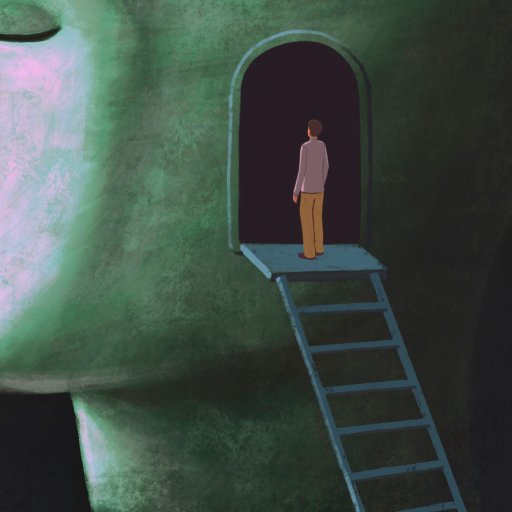
A person stands at the entrance of a door located on the side of a large human head, with a ladder leading up to the doorway.
6mins
Psychologist Daniel Goleman on how to train your brain with just ten minutes a day.
Collage of a young person's face with abstract red scribbles and geometric shapes symbolizing ADHD.
Attention deficit hyperactivity disorder has been a controversial diagnosis since it was first described, back in the 1940s.
Illustration of a conceptual model showing factors like novelty, surprise, importance, emotion, flashbulb memories, and overt rehearsal linked to memory retention, symbolized by a brain icon.
An excerpt from “Memory,” a primer on human memory, its workings, feats, and flaws, by two leading psychological researchers.
Digital composite image contrasting social interaction with neuralink technology and data analysis.
If you guessed “staying up all night to play video games,” you’d be right.
Illustration of a woman with cybernetic enhancements playing video games with her mind, surrounded by various futuristic interface elements.
Perrikaryal uses an EEG to translate her brain activity into beating bosses in "Elden Ring" and beyond.
An illustrated human brain with musical notes to suggest the concept of music and cognition against a vintage anatomical background.
8mins
What do aliens, apes, and orchestras all have in common? Professor Michael Spitzer explains how they each help us understand the origins of music.
Two elderly women walking alongside and interacting with a statue of a man holding a briefcase.
A growing body of research suggests that optimism plays a significant role in promoting both physical and mental well-being.