




















Search
Science and Tech

With a waning Moon and a denser-than-ever debris trail, 2025's Geminids might be the year's best meteor shower, and 2026's could be amazing.
12mins
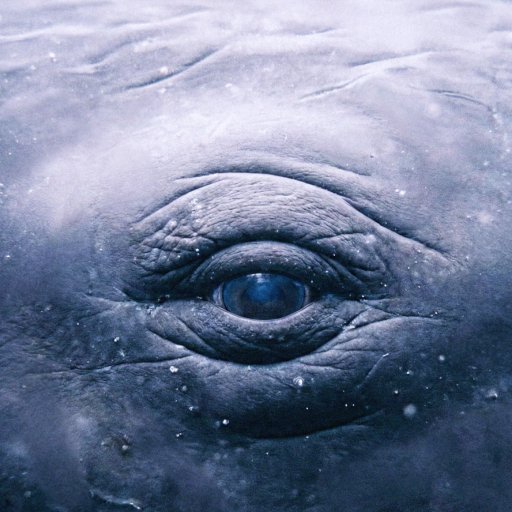
Ninety million years after our lineages split, humans are beginning to listen to whales in a new way. Marine biologist David Gruber shares the work that has become his life’s pursuit: learning how to hear the planet’s largest mammals.

Media trailblazer Tim O’Reilly tells Big Think why AI requires "get yourself dirty" work — and warns us not to buy the hype.

We have a picture of how and when it will all come to an end. These three big ideas could still profoundly change how our cosmos evolves.

Science has assembled an incredible story outlining our Universe's whole history. Despite its unrivaled success, 9 profound gaps remain.

There are so many problems, all across planet Earth, that harm and threaten humanity. Why invest in researching the Universe?

Welcome to The Nightcrawler — a weekly newsletter from Eric Markowitz covering tech, innovation, and long-term thinking.

Although American Thanksgiving only comes once a year, the scientific rules that make our Universe possible are always worth appreciating.

15mins
“Until very recently, I thought I would die with the same genome that I was born with.”

55mins
“Old systems of the past are collapsing, and new systems of the future are still to be born. I call this moment the great progression.”

From bombed reactors to inflation and blackouts, a cascade of crises is testing the Islamic Republic’s resilience like never before.

In this excerpt from "The Great Math War," Jason Socrates Bardi explores how Georg Cantor revolutionized mathematics and reshaped how our finite minds conceived of the infinite.

13mins
Everything ever seen — every star, mountain, and face — makes up less than 5 percent of the universe. Astrophysicist Janna Levin reminds us that the rest — dark matter and dark energy — is invisible, mysterious, and everywhere. We are the luminous exception in a universe of darkness.

Such massive, early supermassive black holes have puzzled astronomers for decades. At last, we've finally figured out how they form.

Every observation out into deep space is also a look back in time.

One side of the Moon always faces us: the near side. The "dark side" of the Moon began as a mere metaphor, but today, science can weigh in.

Welcome to The Nightcrawler — a weekly newsletter from Eric Markowitz covering tech, innovation, and long-term thinking.

Spirals, ellipticals, and irregulars are all more common than ring galaxies. At last, we know how these ultra-rare objects are made.

An introduction to "The Engine of Progress" from Jason Crawford, founder of the Roots of Progress Institute.

Real progress demands rules built for uncertainty — not for the few innovations dominating today’s tech landscape.

Before we can build the future, we have to imagine it.

These expert-recommended books reveal how big ideas can shape — and sometimes redefine — human progress.

To turn technical breakthroughs into real-world change, AI must overcome the friction of politics, policy, and human institutions.

From treating specific diseases to targeting aging itself, Progress Conference 2025 explored the many routes to extending life.

At the foundation of America’s progress movement are immigrants who still believe this country can build.

Barriers to energy abundance — and how to overcome them — were front and center at Progress Conference 2025.

With new labs, funding models, and institutions, metascience is reinventing the machinery of discovery.

Government-spec’d glory projects produce tech demos. Enduring progress demands a better way forward.

The case that a bipartisan movement structured around progress and reform may be reaching critical mass.

Wavelengths stretch, distances grow, and temperatures cool as the Universe expands with time. How are the various cosmic parameters related?