




















Search
Science

The tiniest galaxies of all are the most severely dominated by dark matter. Could black holes be the cause of the extra gravity instead?

In "The Shortest History of the Dinosaurs," Riley Black reveals the bold mammals that thrived in the Age of Reptiles.
6mins
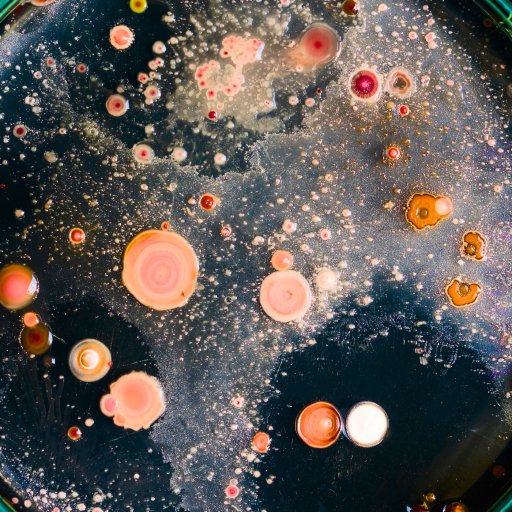
These microbes endured the unlivable. The NASA astrobiologist who studies them reveals what that means for us today

Dreams of resurrecting lost species didn’t start in Hollywood or Silicon Valley.

1hr 19mins
“We don't have enough knowledge to precisely calculate what is going to happen, and so we assign probabilities to it, which reflects our ignorance of the situation.”

11mins
"We are all in orbit around the center of the Milky Way galaxy. How big is this collection of stars? Somewhere between 200 and 400 billion suns in the Milky Way galaxy, about 100,000 light years across."

Long before the search for biosignatures, scientists imagined a cosmos teeming with intelligent life.

As democracy recedes and fascism rises in the USA and around the world in 2025, history provides a lesson in how science can fight fascism.

What happens when scientists "write what they know"? Some amazing science fiction stories.

A Cambridge-based team claims to find molecules on an exoplanet that are only produced by life on Earth. Don't fall for the unfounded hype.

“It’s much more interesting to live not knowing than to have answers that might be wrong.”

11mins
"Everything that we care about, everything we experience, everything we know, we know it through our conscious awareness of it."

These books helped build the empirical case that life's origins differ from those described in myths and legends.

Some nebulae emit their own light, some reflect the light from stars around them, and some only absorb light. But that's just the beginning.

The tiniest galaxies of all are the most susceptible to violence by their larger, bullying siblings. That's why we need them in isolation.

With a flurry of threats to scientists, science funding, and health policy, the USA now faces a crisis reminiscent of Soviet-era Lysenkoism.

From LIGO, there weren't enough neutron star-neutron star mergers to account for our heavy elements. With a JWST surprise, maybe they can.

Physicist Don Lincoln explains why mathematics is a powerful tool for scientific modeling, but is not a science itself.

Most stars shine with properties, like brightness, that barely change at all with time. The ones that do vary help us unlock the Universe.

The electromagnetic force can be attractive, repulsive, or "bendy," but is always mediated by the photon. How does one particle do it all?

There's no upper limit to how massive galaxies or black holes can be, but the most massive known star is only ~260 solar masses. Here's why.

A recent measurement has simultaneously settled an ongoing scientific debate while puzzling scientists.

On larger and larger scales, many of the same structures we see at small ones repeat themselves. Do we live in a fractal Universe?

One alchemist's search for a whiz-bang method to produce gold unlocked the central science instead.

Confronting your "absolute stupidity" is a sign you're on course to learning something new and wonderful.

"We do not experience primarily because we have brains; we experience because we are alive."

Even with just a momentary view of our galaxy right now, the data we collect enables us to reconstruct so much of our past history.

“We can build AI scientists that are better than we are… these systems can be superhuman,” says the FutureHouse co-founder.

In November 1974, astronomers used the radio telescope at Puerto Rico’s Arecibo Observatory to send a hello to the universe.

"I was stunned. Here in front of me was the original apparatus through which a new vision of the world was slowly and painfully brought to light."