




















Search
Space Exploration

It would get rid of our hazardous, radioactive, and pollutive waste for good, but physics tells us it's a losing strategy for elimination.

These startups, space agencies, and aerospace giants are building humanity's next off-world homes.

The existence of another watery world in the outer solar system may offer clues to how such seas form — and hope for another spot to search for life.

Galactic activity doesn't just arrive when supermassive black holes feast on matter. Before, during, and after all create fascinating signs.
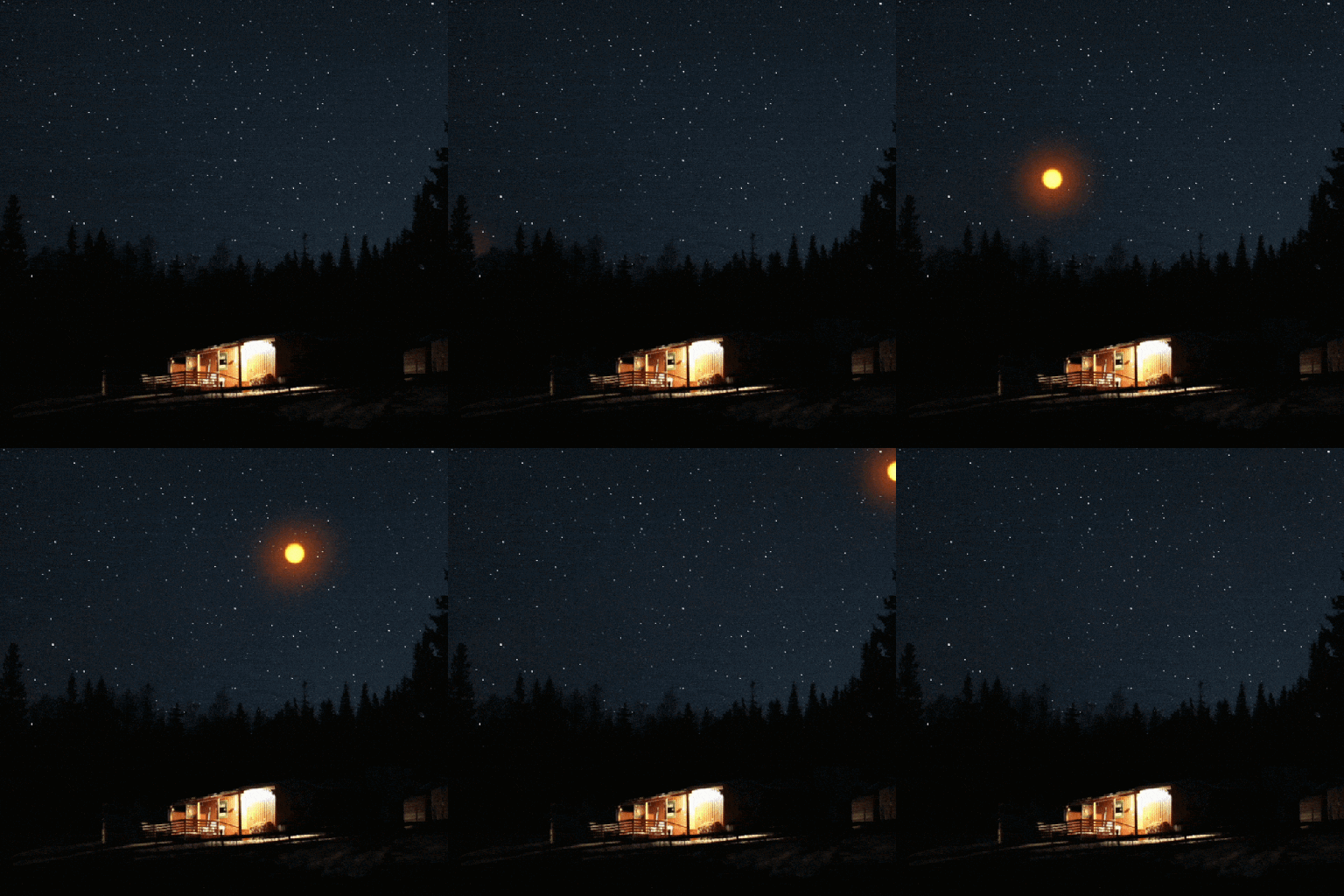
Although a great many unidentified sights have been seen in the skies, none have conclusively demonstrated the presence of aliens. So far.

Finding life beyond our Solar System requires understanding its host planet.

"When you feel the isolation setting in at times, you have to reframe your mindset."
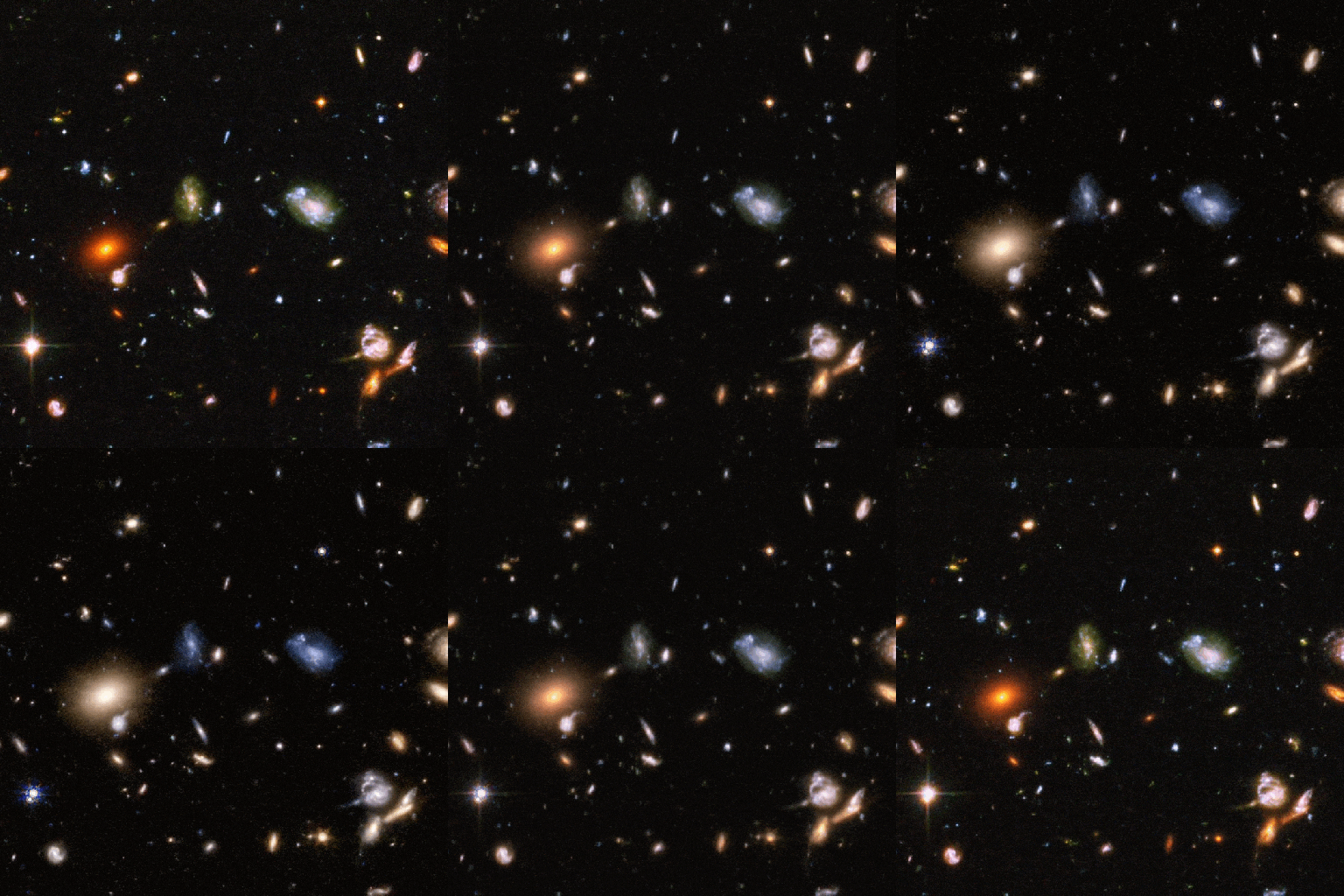
The "little red dots" were touted as being too massive, too early, for cosmology to explain. With new knowledge, everything adds up.

Here on Earth, we commonly use terms like weight (in pounds) and mass (in kilograms) as though they're interchangeable. They're not.

In "Life As No One Knows It," Sara Imari Walker explains why the key distinction between life and other kinds of "things" is how life uses information.


No matter how good our measurement devices get, certain quantum properties always possess an inherent uncertainty. Can we figure out why?

Life arose on Earth early on, eventually giving rise to us: intelligent and technologically advanced. "First contact" still remains elusive.

We need more data centers for AI. Developers are getting creative about where to build them.

The recent discovery of a large cave on the Moon highlights the importance of caves not just for future space explorers but astrobiology as well.

Most stars in the Universe are located in big, massive, Milky Way-like galaxies. But most galaxies aren't like ours at all.

The largest particle accelerator and collider ever built is the Large Hadron Collider at CERN. Why not go much, much bigger?

For centuries, Newton's inverse square law of gravity worked beautifully, but no one knew why. Here's how Einstein finally explained it.

From size to mass to density and more, each world in our Solar System is unique. When we compare them, the results are truly shocking.

Peaking on the night of August 11/12, up to 100 bright meteors per hour will be visible. Here's how to make the most of it.

Earth, the only rocky planet with a large, massive satellite, is greatly affected by the Moon. Destroying it would cause 7 major changes.

Straddling the bounds of science and religion, Newton wondered who set the planets in motion. Astrophysics reveals the answer.

How do normal matter and dark matter separate by so much when galaxy clusters collide? Astronomers find the surprising, unexpected answer.
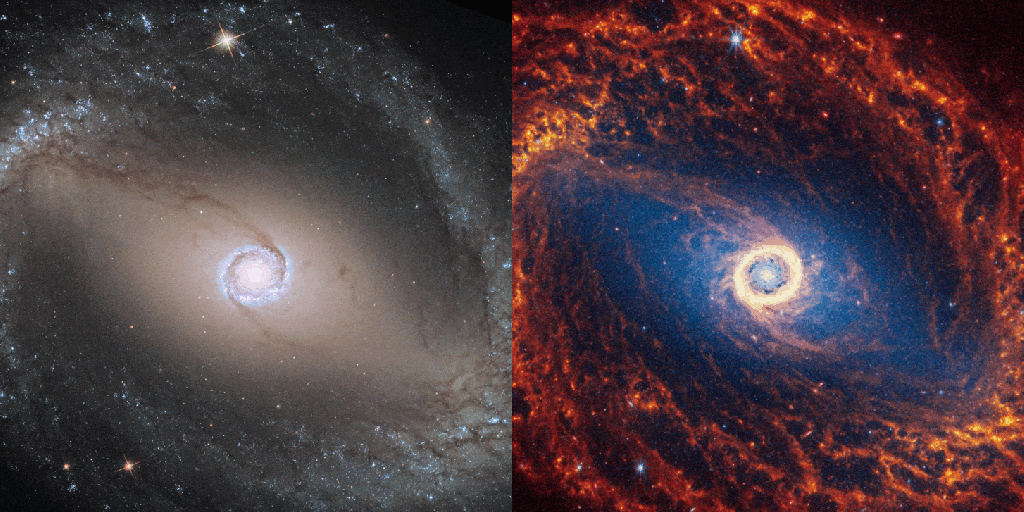
In July of 2022, the first science images from JWST were unveiled. Two years later, it's changed our view of the Universe.
From inside our Solar System, zodiacal light prevents us from seeing true darkness. From billions of miles away, New Horizons finally can.

The Extremely Large Telescope (ELT) will have a light-collecting power 10 times greater than today's best telescope.

For its 2-year science anniversary, JWST has revealed unprecedented details in "the Penguin and the Egg." Here are the surprises inside.

As the Sun ages, it loses mass, causing Earth to spiral outward in its orbit. Will that cool the Earth down, or will other effects win out?

Comparing Elon Musk's Mars rocket to NASA's new ride.

The structure of our Solar System has been known for centuries. When we finally started finding exoplanets, they surprised everyone.