




















Search
Space Telescopes

We knew we'd find galaxies unlike any seen before in its first deep-field image. But the other images hold secrets even more profound.

Take a peek at the pre-release images used to calibrate and commission JWST's coldest instrument, now ready for full science operations.

Like humans, stars die. The James Webb Space Telescope's early images already give us a lot of information about how this happens.

Even with only 12.5 hours of exposure time, James Webb's first deep-field image taught us lessons we've never realized before.

Astronomy's roots rest in the very origins of humanity. We have always looked to the skies for answers. We are starting to get them.

Now that it's fully commissioned, the James Webb Space Telescope begins its exploration of the Universe. Here are its first science images!

With its very first deep-field view of the Universe now released, the James Webb Space Telescope has shown us our cosmos as never before.
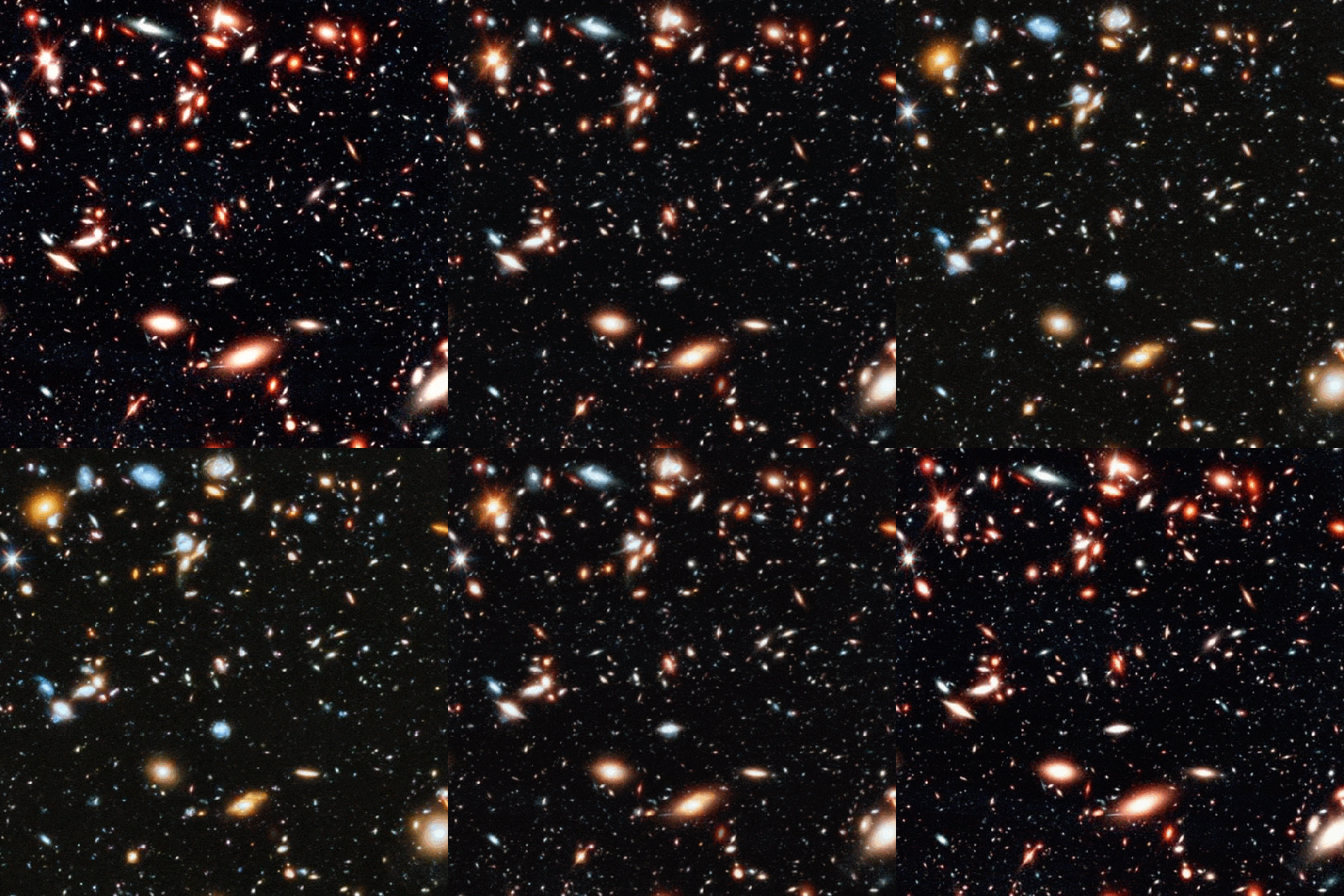
The James Webb Space Telescope has chosen 5 targets for its first science release. Here's what we know on the eve of JWST's big reveal!
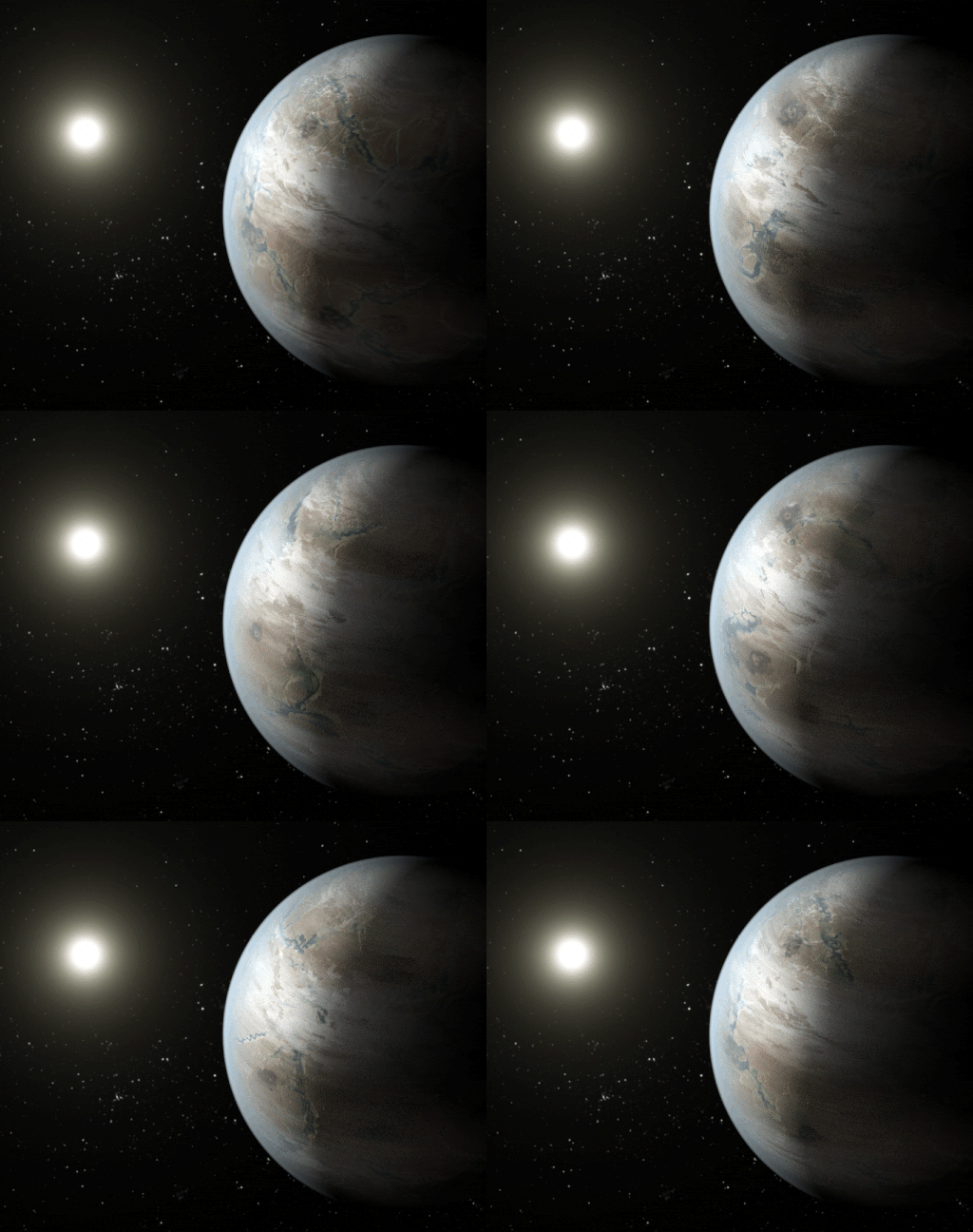
There are billions of potentially inhabited planets in the Milky Way alone. Here's how NASA will at last discover and measure them.

The James Webb Space Telescope (JWST) will study many dangerous cosmic phenomena, knowledge of which may help save humanity.

On July 12, 2022, NASA will release the first science images taken with the James Webb Space Telescope. Here's what to hope for.

The James Webb Space Telescope is about to begin science operations. Here's what astronomers are excited about.

On July 12, 2022, JWST will release its first science images. Here are 5 ways the telescope's findings could change science forever.

At four million solar masses, the Milky Way's supermassive black hole is quite small for a galaxy its size. Did we lose the original?

It was supposed to have a 5.5-10 year lifetime, and take 6 months to calibrate. It's performing better than anyone anticipated.
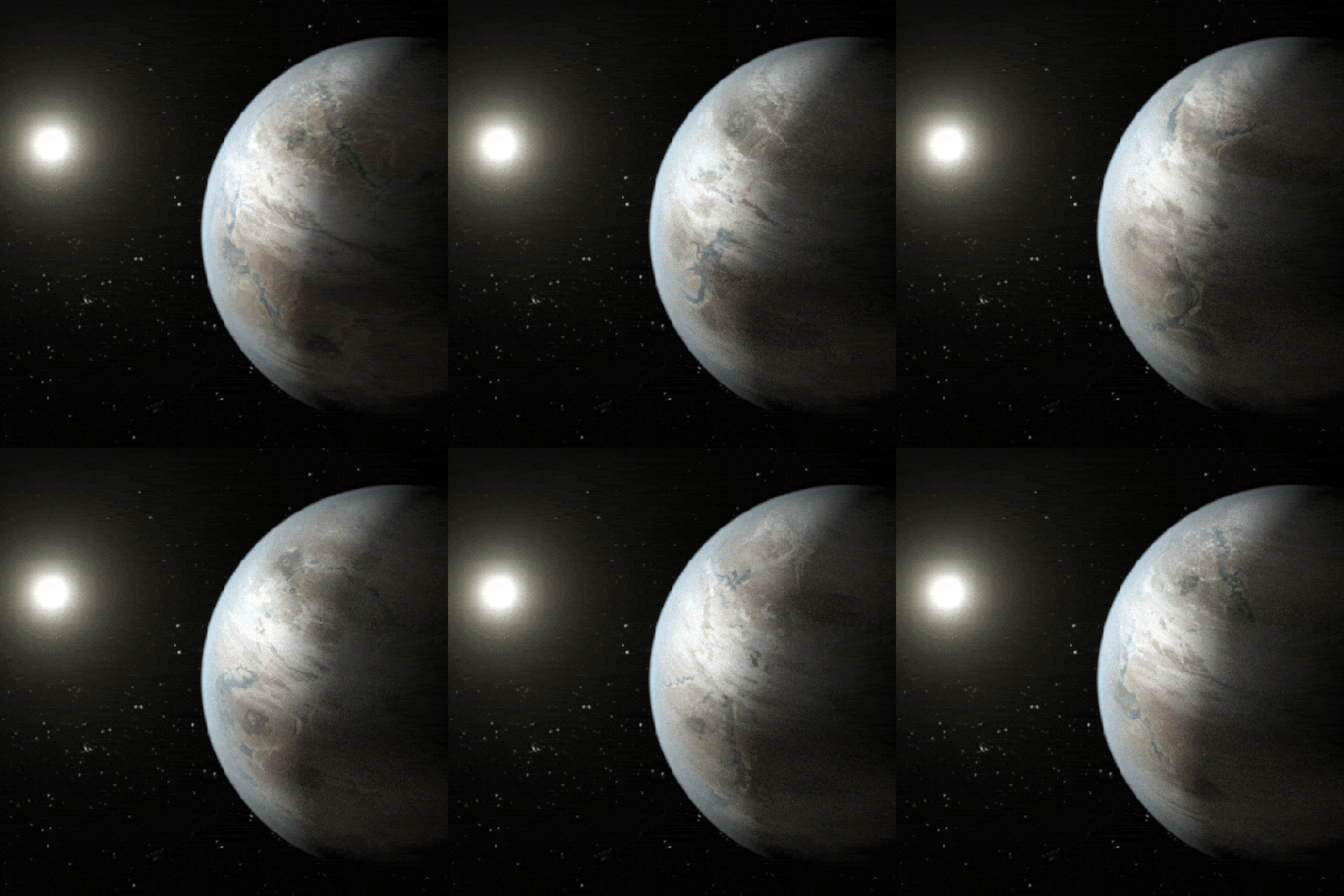
If there are human-sized creatures walking around on other planets, would we be able to view them directly?

Pluto failed to meet the definition of a planet, but some astronomers think there might be a legitimate Planet 9 out there.

The European Space Agency’s Solar Orbiter recently captured images that could help scientists better under the mysterious physics of our Sun.

In the latest edition of the Starts With A Bang podcast, we talk with soon-to-be Dr. Arianna Long about galaxies, from birth to today.

The Hubble Space Telescope, 32 years after its launch, broke the all-time record for most distant star. It won't do better.
The light from Earendel took 12.9 billion years to reach Hubble. The star is millions of times brighter than our Sun and 50 times as massive.

The James Webb Space Telescope could help scientists learn about the cosmic dark ages and how they ended.

The far infrared reveals both the coldest and hottest gas in the Universe, and can teach us what no other wavelength range can.

Professional astronomy images are the gold standard. But this Large Magellanic Cloud composite is the amateur community's best image ever.

Once science operations begin for James Webb, we'll never look at the Universe the same way again. Here's what everyone should know.

As viewed by the MeerKAT telescope, this radio view of the Milky Way blows away every other way we've ever seen our home galaxy.

There really might be extraterrestrials out there, attempting to make contact. Here's how science, not fiction, is attempting to find them.

With launch costs dropping and enormous numbers of new satellites filling the sky, can't we just do it all from space?

Hubble's deepest views of space revealed fewer than 10% of the Universe's galaxies. James Webb will change that forever.

Shooting star or piece of space dust?