




















Search


The revival of Pasto Varnish shows how living heritage can survive if knowledge is passed on in time.

Kaizen taught me that tiny, consistent changes can be more powerful than dramatic overhauls.

Many top performers start behind — and overtake the early leaders later.

One of the toughest vocational exams in the world requires candidates to memorize 25,000 streets in an area five times the size of Manhattan.
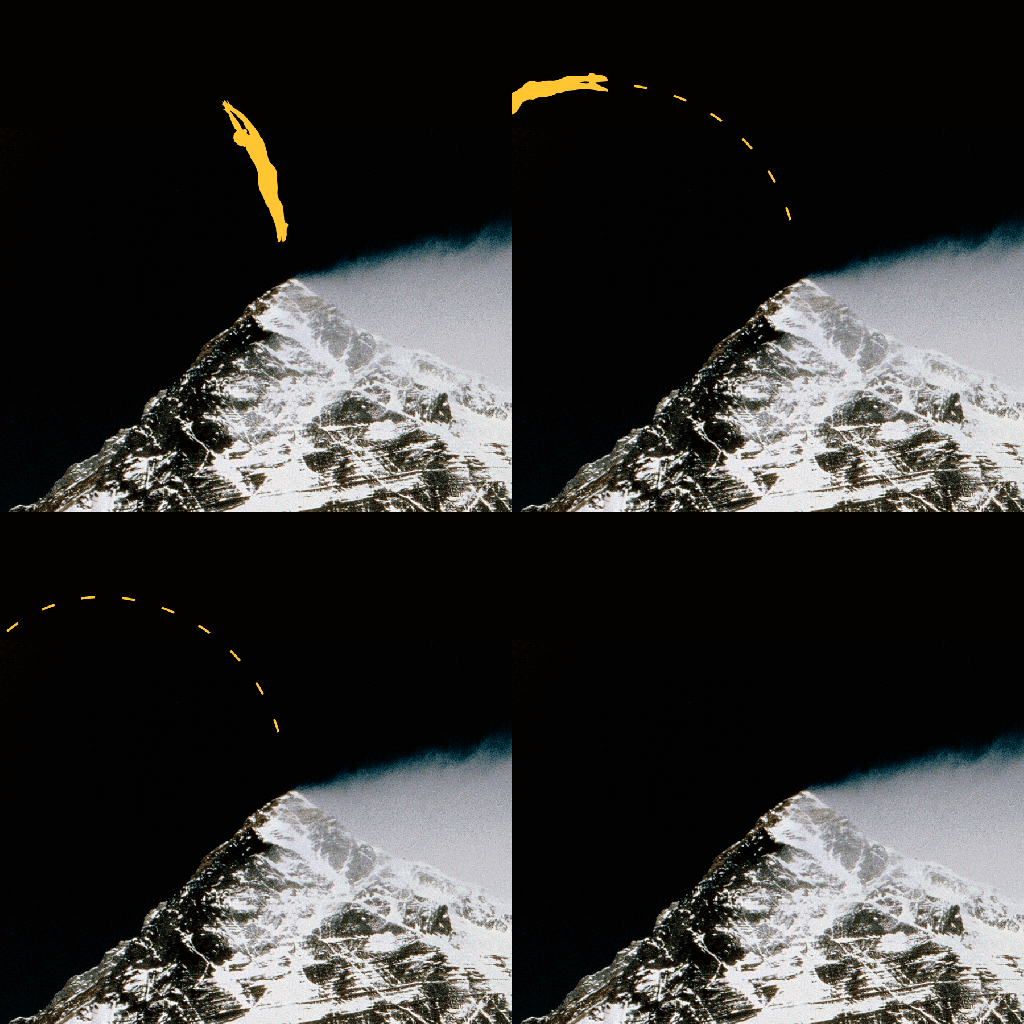
For elite climbers, divers, and explorers, mastery can fuel an escalation loop in which identity and danger rise together.

Elite athletes train their “quiet eye.” What happens if the rest of us do the same?

The actor learned control, endurance, and focus on-set. Those lessons became the foundation of his real-world fight with addiction and self-hatred.

Timeless guidance on communication, time management, creativity, and more from some of today’s most influential thinkers.

The Stoic philosopher argued that most of life is outside our control — but the little we do control defines who we are.

Our great hope is that today's indirect, astrophysical evidence will someday lead to successful direct detection. What if that's impossible?

Not all knowledge carries over.

Practical guidance for navigating AI’s role in modern learning organizations.

Just like animals, galaxies often have bizarre, unusual, or even unique properties. But finding many, all at once, really does raise alarms.

Ernst Stromer discovered Spinosaurus in Egypt. His fossils were destroyed in WWII, yet still shape how we imagine this mysterious dinosaur today.

Too many rich and prominent people turn out to be egotistical jerks: Brad Stulberg argues for a more grounded path towards excellence.

Our view of the world, the Universe, and ourselves can change with just one glimpse of what's out there. It's happened many times before.

Disconnection is not a personal failure, but a systems challenge — and an opportunity for employers to strengthen our social fabric.

Outer space begins just over 100 kilometers up, but what we can see extends for billions of light-years. Here's what all of it looks like.

Reading isn’t just writing prep; together, reading and writing help writers think and generate original ideas through extended cognition.

Even in an expanding Universe, we expect both redshifted and blueshifted galaxies. But nearly every one we see is redshifted. Here's why.