This content is locked. Please login or become a member.





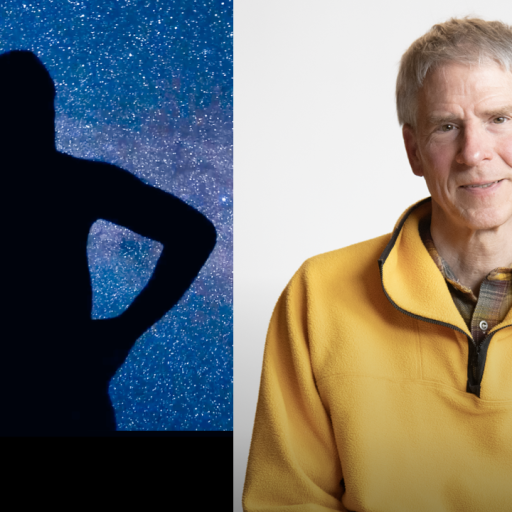


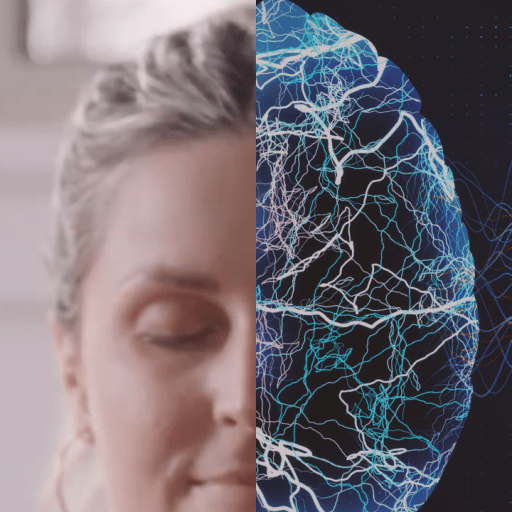

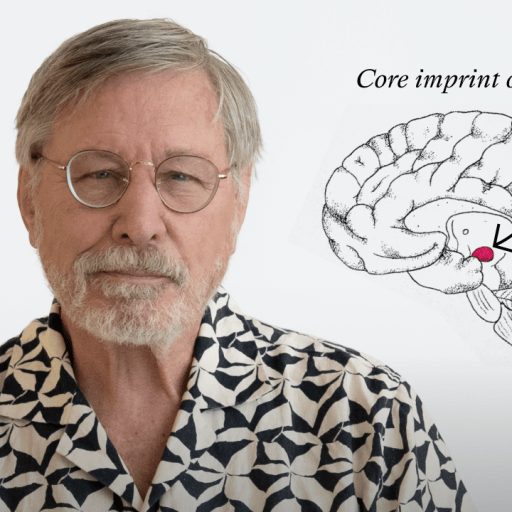
David Eagleman, PhD, Brian Greene, PhD, and Dean Buonomano, PhD, explore one of science’s strangest questions: what is time?
From Einstein’s spacetime theory to the brain’s internal clock, they examine whether time is an external property of the universe or a mental construct. By connecting physics and neuroscience, they unpack the idea that how we experience time may differ entirely from how it actually works.
We created this video for Brain Briefs, a Big Think interview series created in partnership with Unlikely Collaborators. As a creative non-profit organization, they’re on a mission to help people challenge their perceptions and expand their thinking. Often, that growth can start with just a single unlikely question that makes you rethink your convictions and adjust your vantage point. Visit Perception Box to see more in this series.
BRIAN GREENE: We know that time in some sense is that which allows change to take place.
DEAN BUONOMANO: Time is complicated, I think, more so than space. We take left turns, we right. We have a map of space. Time is this one way street.
DAVID EAGLEMAN: Time is rubbery and can speed up or slow down. Time is one of the unsolved mysteries in neuroscience.
BRIAN GREENE: Matter is made of molecules and atoms. Could it be that time is also made of some kind of ingredient?
DEAN BUONOMANO: Time is something that we never evolved to manipulate. So the brain is indeed an illusion factory. A common example is color. Color doesn't exist in the physical world, what exists in the physical world is wavelengths of the electromagnetic spectrum. Our perception of color evolved to provide information about the external world.
The color of a snake might tell us if it's poisonous or not. Presumably, our sense of the flow of time should be adaptive. Virtually every human on the planet has this unmistakable feeling of time flowing. We have to decide if that feeling is something that evolved because it offered a selective advantage and correlates with a property of the universe that really exists. Or if, in contrast, it's an illusion that doesn't correspond to any property.
DAVID EAGLEMAN: The experiment had never been done about why time seems to move in slow motion when you're in a life threatening situation. I found a way to study it by dropping people from a 150ft tall tower and measuring their time perception on the way down. That led me to understand when you're in a life threatening situation, your brain writes down memory much more densely. People don't actually see time in slow motion during an event. Instead, it's a completely retrospective assessment. How long something took has a lot to do with how much energy your brain has to burn during the event and how much footage you have of the event.
BRIAN GREENE: Is time some fundamental quality of reality, or is it something that our brains impose on our perceptions to organize our experience?
Go out into space near the speed of light. Your time is elapsing much slower than time back on Earth. If you go and hang out near the edge of a black hole, time again will elapse more slowly for you, depending on how close you got to the edge of the black hole and how long you hung out there.
There might be ingredients of time that bear no resemblance to time as we experience it. That might be the more fundamental way that time is injected into the makeup of reality.