




















Search
Science & Tech
Explore the discoveries that reveal how the world works, alongside the technologies that extend, reshape, and sometimes challenge what’s possible.

Known as the "past hypothesis" problem, the Universe's initially low entropy has long puzzled scientists. Now, cosmic inflation solves it.

As the world teeters on the brink of nuclear war, distant, advanced civilizations would never know it. Earth appears peaceful from far away.

As AI overwhelms the web, we will need a way to distinguish people from machines.

The 1st generation of stars formed, lived, and died very early on. But 2nd generation stars could still persist today. Did we just find one?

As humanity journeys to the Moon for the first time since 1972, can we rediscover our shared responsibilities: to the world and each other?
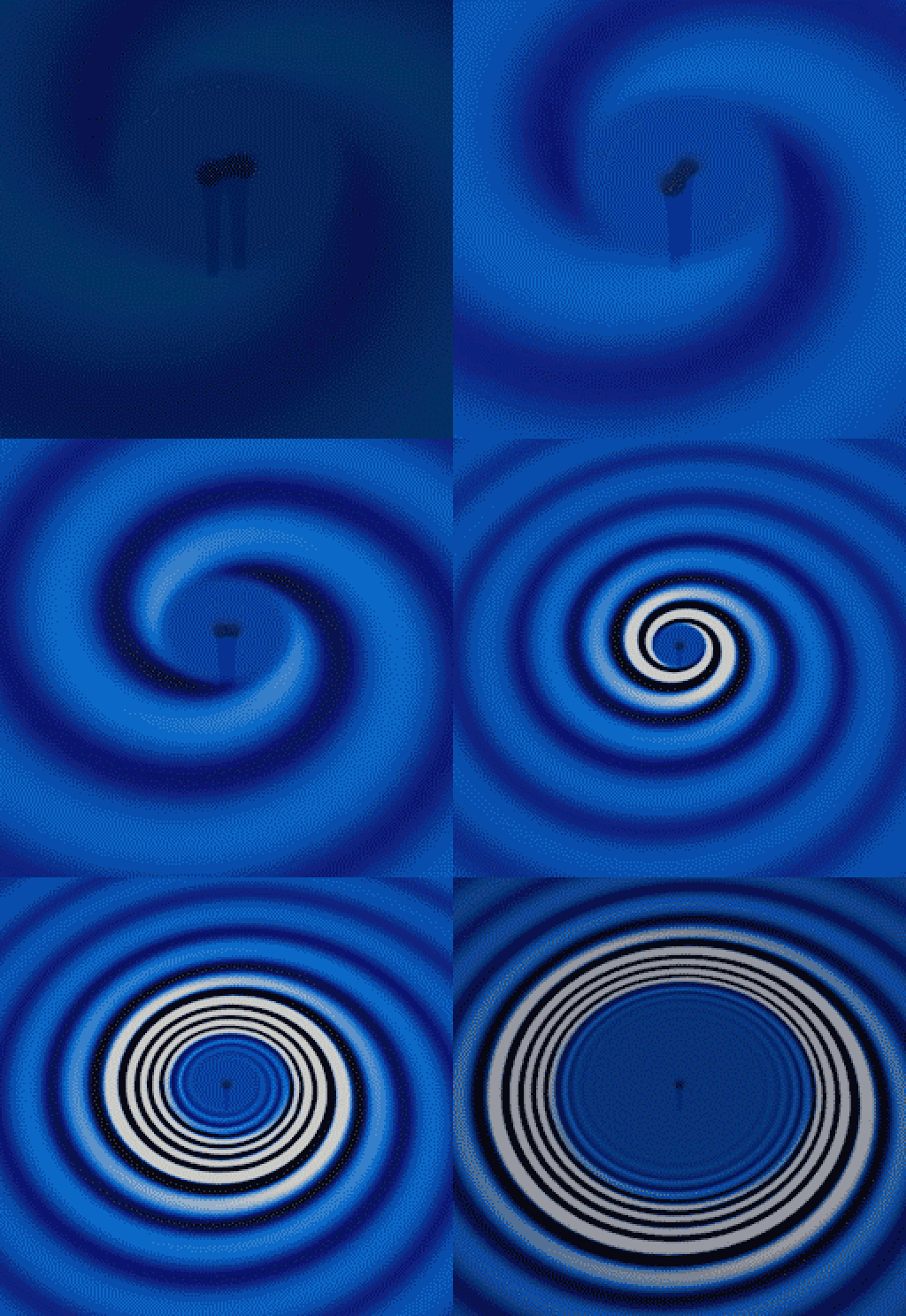
As light travels across the Universe, it's subject to cosmic expansion, changing fields, and relative motion. How about gravitational waves?

1hr 7mins
Members
Neuroscientist David Linden sheds light on the biology behind phenomena that medicine has long struggled to explain, from voodoo death and broken heart syndrome to the placebo effect, and why grief shows up in autopsy results

This 1524 map of the Aztec capital was a window into an exotic otherworld — and largely a fiction.

The ozone hole was going to destroy life as we know it, but an unprecedented global effort fixed the problem.

Cognitive flexibility, opportunistic survival, and social cooperation have allowed rats to thrive in conditions that wipe out other species.

Instead of hauling heavy building materials across space, future astronauts may grow fungal shelters from spores, waste, and local regolith.

A broken laptop hinge revealed a broader shift in how modern products are designed, sold, and owned

AI is unlocking unprecedented capabilities — and exposing new vulnerabilities just as quickly.

We’ve populated low-Earth orbit with satellites in record time — now we have to figure out how to keep it safe.

When America lost access to German dyes, the crisis revealed a startling truth: color was chemical, tactical, and essential to warfare.

In a 13.8 billion year old Universe, a few seconds hardly seems like it matters. But these minuscule changes sure do add up over time.

Most massive galaxies are spiral or elliptical shaped. But peculiar galaxies showcase the beautiful violence that helps explain our cosmos.

Once land plants, seagrasses staged one of evolution’s boldest reversals — returning to the ocean and reinventing their biology to thrive beneath the waves.

Early on, the Universe needed near-perfect flatness, or atoms, stars, and galaxies couldn't form. What happens once dark energy takes over?
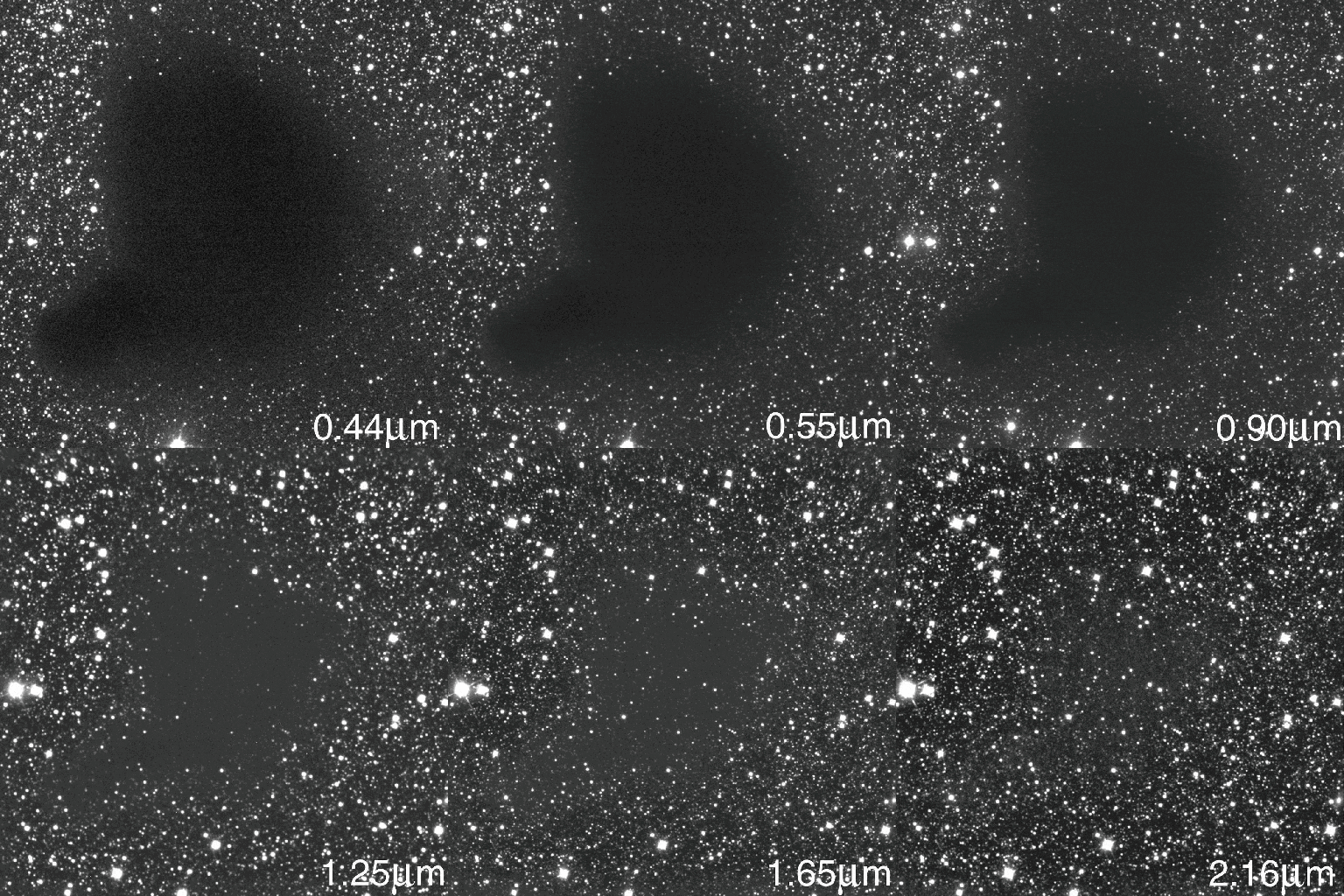
The image you're seeing isn't a hole in the Universe, and the cosmic voids that do exist aren't hole-like at all.