


Search

Our mission is to answer the biggest questions of all, scientifically.
What is the Universe made of? How did it become the way it is today? Where did everything come from? What is the ultimate fate of the cosmos?
For most of human history, these questions had no clear answers. Today, they do. Starts With a Bang, written by Dr. Ethan Siegel, explores what we know about the universe and how we came to know it, bringing the latest discoveries in cosmology and astrophysics directly to you.
Read Less
with
Full Profile
Ethan Siegel is an award-winning PhD astrophysicist and the author of four books, including The Grand Cosmic Story, published by National Geographic.
Groupthink in science isn’t a problem; it’s a myth
Scientists are notoriously resistant to new ideas. Are they falling prey to groupthink? Or are our current theories just that successful?
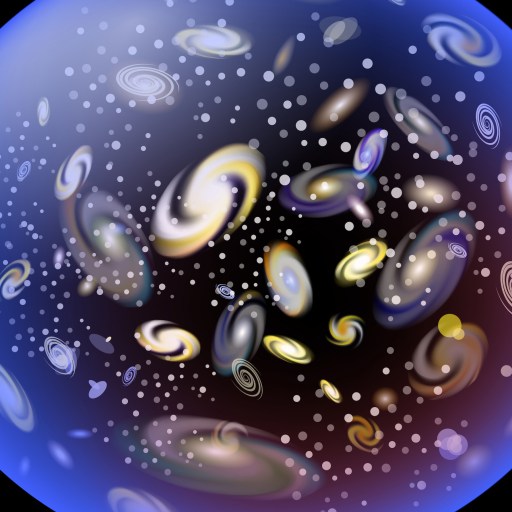
The mutual distance between well-separated galaxies increases with time as the Universe expands. What else expands, and what doesn't?

It’s not a gambit. It’s not fraud. It’s not driven by opinion, prejudice, or bias. It's not unchallengeable. And it's more than facts alone.
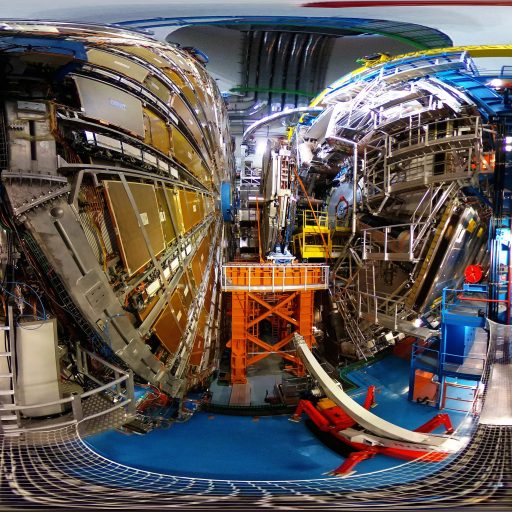
With new W-boson, top quark, and Higgs boson measurements, the LHC contradicts earlier Fermilab results. The Standard Model still holds.
The most iconic, longest-lived space telescope of all, NASA's Hubble, is experiencing orbital decay as the solar cycle peaks. Here's why.
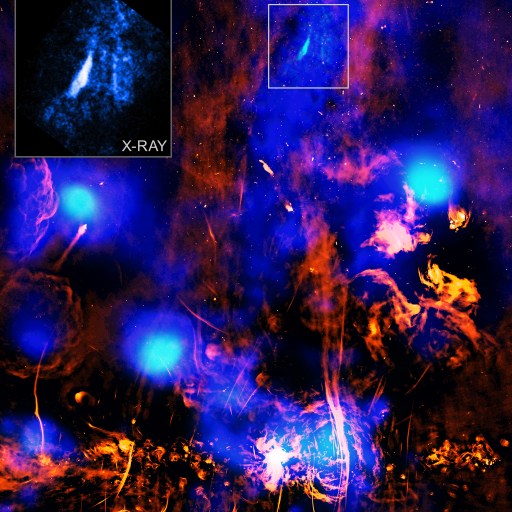
The galactic center is home to the most powerful engine in the Milky Way: a supermassive black hole. How does its energy ultimately escape?
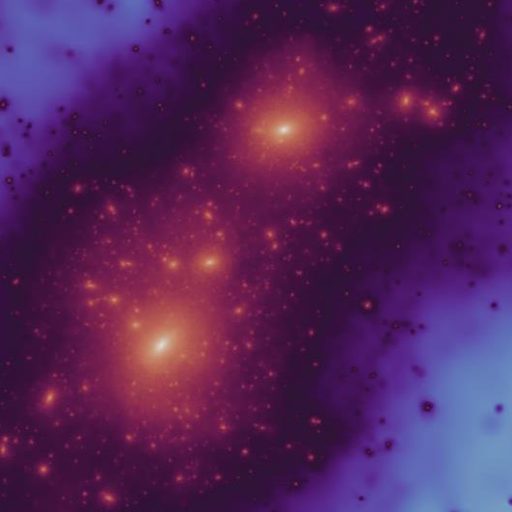
We normally think of dark matter as the "glue" that holds galaxies and larger structures together. But it's so much more than that.
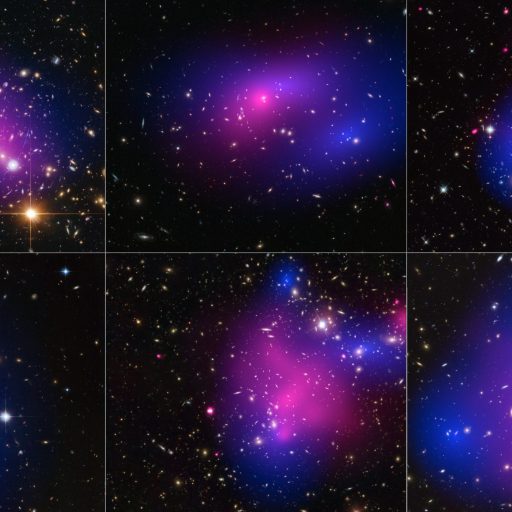
There are many theories of gravity out there, and many interpretations of wide binary star data. What have we really learned from it all?